

2026 Best Medical Injection Moulding Companies?
Choosing the 2026 best medical injection moulding companies requires more than comparing glossy websites or impressive equipment lists. This guide examines manufacturers through practical evidence: validated processes, traceable materials, controlled environments, and dependable delivery records. Medical injection moulding supports items such as diagnostic housings, inhaler components, surgical handles, and fluid-management parts. Each application demands different tolerances, polymers, and quality controls.
Experienced suppliers should explain how they manage tool design, mould maintenance, process qualification, and inspection. Look for ISO 13485-based quality systems, documented risk management, cleanroom capabilities, and transparent supplier controls. Regulatory readiness matters, but certification alone proves little. A certificate can hang on a wall while production discipline quietly fails. Evidence matters more. Strong companies usually provide measurable data, including dimensional studies, capability results, batch traceability, and change-control procedures. They also communicate clearly when a design needs revision.
This overview does not treat “best” as a permanent label. A company may excel at high-volume polypropylene parts but struggle with tight-tolerance engineering polymers. Another may offer excellent prototyping yet lack capacity for global production. Those differences deserve careful attention. Site audits, sample reviews, and technical discussions can reveal more than rankings. Ask how the supplier handles a blocked cavity, an unexpected material variation, or a late engineering change. The answers may expose practical maturity. Cost remains important, but the cheapest quotation can become expensive after tooling corrections, rejected batches, or delayed validation. The following sections compare leading companies using technical capability, quality performance, responsiveness, scalability, and documented medical manufacturing experience. Some evidence will remain incomplete. That limitation should be stated plainly.
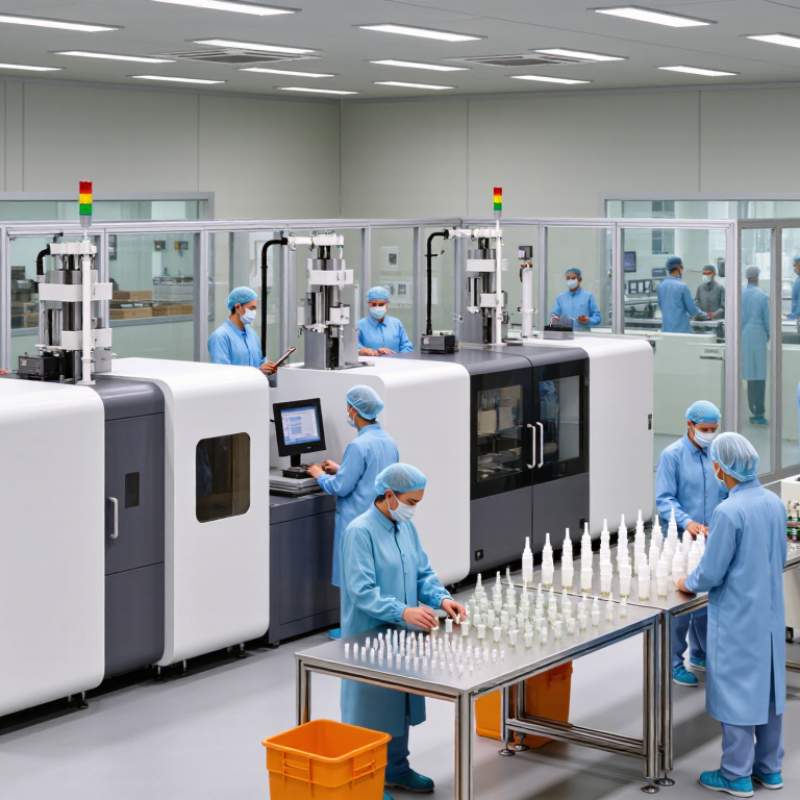
Medical Injection Moulding Scope: ISO 13485, ISO 10993, and FDA 21 CFR 820
2026 Best Medical Injection Moulding Companies?
Choosing a medical injection moulding partner requires more than comparing equipment lists. ISO 13485 shows whether the supplier controls quality through documented processes, training, and traceability. Ask to see how deviations are investigated. A certificate alone is not enough.
ISO 10993 support is essential when moulded parts contact skin, tissue, blood, or medication. The supplier should understand material selection, biological evaluation, and changing resin risks.
FDA 21 CFR Part 820 also demands controlled production, inspection, records, and corrective actions.
From 2026, stronger alignment with ISO 13485 makes practical quality evidence even more important. A clean moulding room helps, but it cannot repair weak documentation.
Tips:
- Request validation protocols, lot records, mould maintenance logs, and sample inspection data.
- Check whether process parameters are monitored during real production, not only during audits.
- Ask how the team handles colour changes, flash, warping, and particulate findings.
- Small details matter.
- No supplier is flawless.
- I have seen polished quality files hide unclear ownership during a deviation.
- That gap deserves direct questions before approval.
Classify Suppliers by Device Risk: Class I, II, and III Requirements
2026 Best Medical Injection Moulding Companies? Classifying Suppliers by Device Risk
Class II devices usually demand stronger process validation and tighter control of contamination, tolerances, and assembly conditions. Review the supplier’s cleanroom practices, material certificates, inspection plans, and corrective-action history. Ask how operators manage resin drying, machine alarms, and first-off approval. These details reveal practical experience better than polished marketing language. Documentation matters.
Class III components may support life-sustaining or high-risk devices, so supplier selection becomes more rigorous. Expect validated processes, robust change control, biocompatibility evidence, complete traceability, and frequent quality reviews. Tool design should reduce flash, trapped air, and stress marks before production begins. Supplier audits should examine training records, deviation handling, and disaster recovery plans.
Classification rules differ between markets, and a device can move into a higher risk category after design changes. That point is easy to miss. An experienced supplier will question assumptions and involve quality engineers early. No supplier is flawless; even strong systems can overlook a small cavity defect or an unclear work instruction. The best partner detects those weaknesses, records them honestly, and improves the process before patient safety is affected.
Evaluate Cleanroom Production Against ISO 14644-1 Classes 5–8
2026 Best Medical Injection Moulding Companies?
Cleanroom capability should be judged by evidence, not attractive claims. ISO 14644-1 Classes 5–8 define airborne particle cleanliness, with Class 5 being stricter than Class 8. They do not prove sterility or control every biological risk. A reliable medical injection moulding company should match the cleanroom class to the product, resin, assembly step, and patient risk. Class 7 or 8 may suit controlled moulding, while sensitive assembly can require Class 5 conditions.
Look closely at daily practice. Ask for particle monitoring records, pressure maps, gowning procedures, cleaning schedules, and documented qualification results. Watch the process, too. Operators should move carefully around moulds, material containers, and cooling equipment. Resin handling needs protection from moisture, dust, and mix-ups. Temperature logs should remain readable, not handwritten guesses. Strong suppliers also investigate deviations and preserve full batch traceability. Experience matters here.
Tips: Compare actual monitoring trends, not one successful audit. Check whether the company validates recovery time after door openings. Ask how it controls people, tools, packaging, and mould maintenance. A cleanroom can look perfect during a visit. Daily discipline is harder. One limitation deserves attention: a lower ISO class number is not automatically better for every component. Over-specification can increase cost without improving product safety. Review the risk assessment with qualified quality and engineering teams, then confirm that evidence supports every cleanliness claim.
Compare Validation, Cpk ≥1.33, Automation, and Traceability Metrics
Choosing a leading medical injection moulding company in 2026 requires more than a cleanroom tour. In supplier audits, I look for validation evidence tied to actual production conditions. Process validation should define mould temperature, injection pressure, cooling time, and acceptable limits. Installation and operational qualification records matter too. Small gaps become expensive. A capable supplier repeats studies after tooling, resin, or software changes, not only during launch.
Cpk is useful when the measurement system is stable and the specification is clinically relevant. A Cpk of at least 1.33 is a practical screening threshold, not proof of permanent capability. Ask for subgroup data, control charts, gauge studies, and recent lot results. One impressive report may hide seasonal drift or operator variation. I would inspect parts from several shifts, then compare cavity-level results. This is where confidence becomes measurable.
Automation should reduce handling risk while preserving alarms, access controls, and documented intervention rules. Traceability should connect resin lot, cavity, machine recipe, inspection result, packaging line, and operator action. Scan points must work on the shop floor, even with gloves and poor lighting. Useful metrics include genealogy completeness, reject response time, electronic record accuracy, and changeover errors. Yet automation is not automatically better. Poorly configured systems create fast, invisible mistakes. The uncomfortable question remains: can the supplier retrieve one suspect lot within minutes and explain every decision? If not, the spreadsheet is decoration.
Rank 2026 Medical Moulding Companies by Five Weighted Performance Factors
2026 Best Medical Injection Moulding Companies?
A credible 2026 ranking should measure more than machine capacity or advertising claims. I would score medical moulding companies across five weighted performance factors. Regulatory quality and traceability could carry 30 percent. Process capability and repeatability deserve 25 percent. Validation records and technical documentation should receive 20 percent. Delivery reliability could represent 15 percent, while total cost receives 10 percent. These weights reflect real production risks, where a clean audit trail often matters more than a low quotation.
Tips: Request recent validation examples. Check cavity-to-cavity consistency. Review material-lot controls. Ask how deviations are investigated. Visit the quality area if possible. Small details matter.
Evidence should include dimensional reports, mould maintenance logs, batch records, and controlled change procedures. A strong supplier can explain how it manages temperature, pressure, cooling time, and contamination risks. Delivery data should cover ordinary months, not only successful projects. Cost comparisons must include tooling repairs, inspection, packaging, and rejected parts. No scoring model is perfect. I might adjust the weights for a simple diagnostic housing or a high-volume sterile component. That weakness should remain visible, rather than hidden behind a polished ranking. Companies with transparent evidence, trained personnel, and stable processes are more likely to earn trust in 2026.
Related Posts
-
Top 10 Benefits of Automotive Injection Molding for Buyers?
-
Exploring the Future of Plastic Injection Process at the 138th Canton Fair 2025 in China
-

Top Benefits of the Injection Moulding Process for Manufacturing Success
-
5 Key Benefits of Investing in Injection Tooling for Global Buyers
-

2026 Best Insights on Medical Injection Molding for Innovation and Efficiency?
-

Top Benefits of Short Run Injection Molding in Custom Manufacturing