

2026 Best Testsealabs Rapid Test Which Type to Choose?
Choosing the right Testsealabs Rapid Test in 2026 requires more than comparing package colors or advertised speed. Different formats serve different situations. Nasal antigen tests may suit quick screening at home, while professional-use kits may require trained handling, controlled storage, and documented procedures. Some products detect one target, while others identify multiple respiratory pathogens. That difference matters when symptoms overlap.
Dr. Michael Mina, a physician-scientist known for his work on rapid testing, has said, “The rapid antigen tests are very good at detecting infectiousness.” His point offers useful context, but it should not replace the manufacturer’s instructions or medical advice. A negative result can be misleading during early infection, after poor sampling, or when the test is stored outside its recommended temperature range. Read the label carefully. Timing matters.
This guide will compare test type, specimen collection, intended user, result time, storage needs, and clinical limitations. It will also examine practical details, such as whether the swab feels comfortable, whether the instructions are easy to follow, and whether a second test is recommended. The best choice is not always the fastest one. It is the test that matches the person, setting, and testing purpose.
There is room for doubt.
Product information can change. Availability can vary by region. Readers should verify current authorization, expiration dates, and official instructions before use. A rapid test supports a decision; it does not provide a complete medical diagnosis. When symptoms are severe, persistent, or unusual, professional evaluation remains important. This comparison aims to be useful, but it cannot remove every uncertainty.
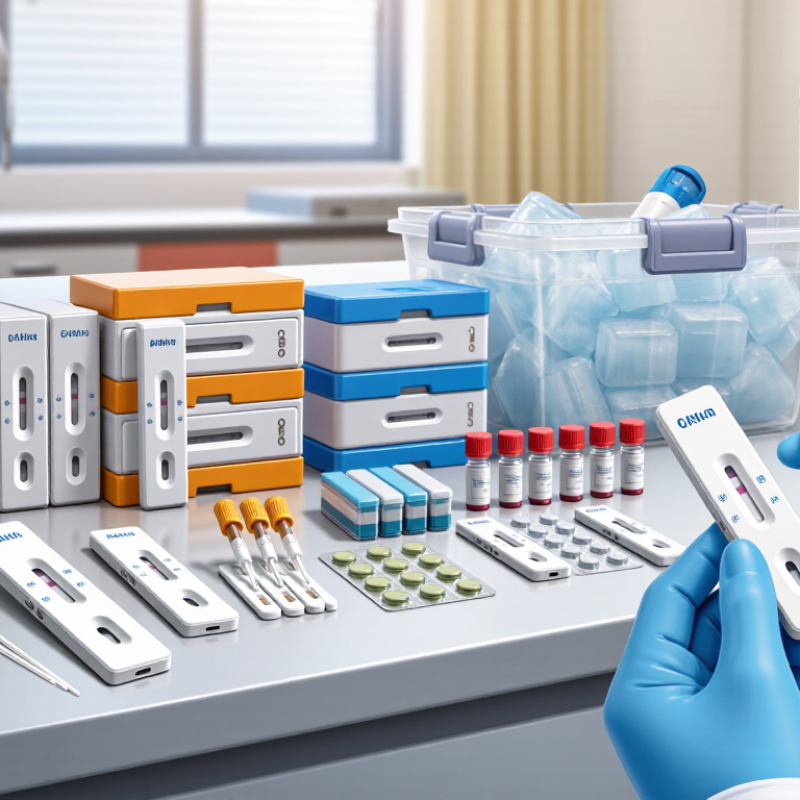
What Is Testsealabs Rapid Test and How Does It Work?
A rapid test is a compact diagnostic tool that can produce results within minutes. Most antigen tests detect specific proteins from a virus or bacterium. A sample, often collected from the nose, is placed into a chemical solution. The liquid then moves across a test strip. If target proteins are present, visible lines may appear.
The test type should match the health question. Antigen tests are fast and practical, but molecular tests usually detect smaller amounts of genetic material. A 2022 Cochrane review found respiratory antigen tests had about 69% sensitivity in symptomatic people and 55% in asymptomatic people. Specificity reached roughly 99.6%. Results still varied by timing, sample quality, and test design. WHO guidance also notes that antigen detection works best when the viral load is higher. A negative result can feel reassuring, but it is not proof. I would not ignore symptoms after one negative test.
Tips: Check the expiration date and follow the collection steps exactly. A poorly collected sample can weaken accuracy. Test near symptom onset when recommended. Repeat testing may help when exposure or symptoms continue. Confirm unexpected results through a qualified healthcare professional. Instructions can seem simple, yet small timing errors matter. Reading the result too early or too late may create confusion.
2026 Best Rapid Test: Which Type to Choose? — What Is a Rapid Test and How Does It Work?
| Test Type | What It Detects | Common Sample | Typical Time to Result | Best Use Case | Main Limitation |
|---|---|---|---|---|---|
| Antigen Rapid Test | Detects specific proteins, or antigens, from a target pathogen | Nasal, throat, saliva, or other validated specimens | Usually 10–30 minutes | Fast screening when a person has a high level of infection-related antigen | May miss early or low-level infections; a negative result may require confirmation |
| Molecular Rapid Test | Detects genetic material such as DNA or RNA | Nasal, throat, saliva, blood, urine, or other validated specimens | Approximately 15–60 minutes, depending on the platform | Higher-sensitivity testing when rapid confirmation is important | Usually costs more and may require an instrument or trained operator |
| Antibody Rapid Test | Detects antibodies produced by the immune system | Usually blood from a finger prick or venous sample | Usually 10–30 minutes | Indicating prior immune response or supporting selected serology screening | May not identify a current infection and can be negative before antibodies develop |
| Combination Rapid Test | Detects two or more targets, such as different antigens or an antigen and antibody | Specimen depends on the specific test design | Usually 10–30 minutes | Situations where broader screening is useful and multiple targets can improve coverage | May have different performance levels for each target and can be more difficult to interpret |
How a Lateral-Flow Rapid Test Works
| Step | Process | What Happens |
|---|---|---|
| 1 | Specimen collection | A specimen is collected using the method specified in the instructions for use. |
| 2 | Sample preparation | The specimen is mixed with a buffer that helps release the target material and supports the test reaction. |
| 3 | Application | A measured amount of prepared sample is placed into the test device. |
| 4 | Capillary flow | The liquid moves across a membrane and interacts with labeled antibodies or antigens. |
| 5 | Signal development | A visible line, symbol, or digital signal appears when the target is captured at the test region. |
| 6 | Result validation | The control line must appear to show that the test has run correctly; the test line is interpreted according to the instructions. |
Selection Checklist
| Decision Factor | What to Check | Why It Matters |
|---|---|---|
| Intended purpose | Screening, diagnosis support, monitoring, or prior-exposure assessment | Different purposes require different targets and levels of sensitivity. |
| Timing of testing | Time since symptoms, exposure, or suspected infection | Antigen, molecular, and antibody tests detect different markers at different stages. |
| Sample requirements | Collection method, specimen type, storage conditions, and sample volume | Incorrect collection or handling can reduce result reliability. |
| Performance data | Sensitivity, specificity, intended population, and study conditions | Performance may vary with disease prevalence, timing, and user technique. |
| Regulatory status | Authorization or registration in the country where the test will be used | Approval requirements and permitted uses differ between jurisdictions. |
| Result interpretation | Control-line requirements, reading window, invalid-result procedure, and confirmation guidance | Reading outside the specified time or ignoring an invalid result may lead to misinterpretation. |
Note: Exact accuracy, specimen type, operating temperature, storage period, and result time vary by product and intended use. Always follow the current instructions for use and consult a qualified healthcare professional when symptoms are serious, results conflict, or confirmation is recommended.