

2026 Top EC Meter Types for Global Buyers?
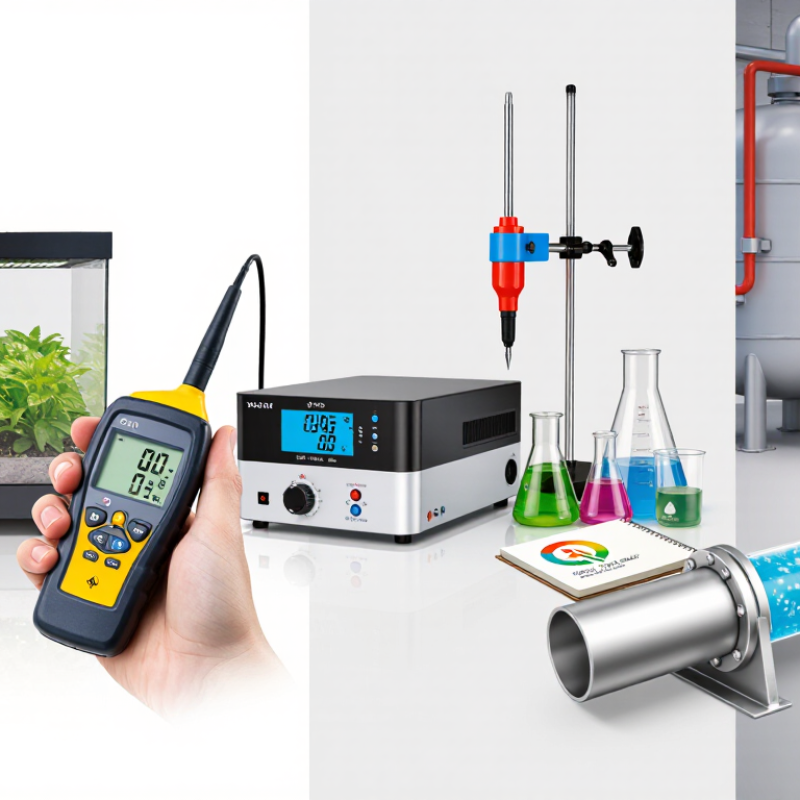
Choosing the right Ec Meter in 2026 requires more than comparing screen size, price, or advertised accuracy. Global buyers must match the meter type with the testing environment, sample range, and daily workload. A pocket meter suits quick checks in hydroponic tanks or small laboratories. A handheld model offers stronger protection for field inspections. Benchtop units provide stable readings beside a quality-control workstation. Inline systems support continuous monitoring in treatment lines, aquaculture facilities, and manufacturing processes.
Conductivity specialist Dr. Andrew J. Cole offers a practical reminder: “A meter reports a number; the user must confirm what that number means.” This principle remains important because temperature, electrode condition, cell constant, and calibration solution can change the result. Even a premium Ec Meter can produce questionable data when its probe is dirty or poorly stored. Small details matter.
This guide compares the leading Ec Meter types for global buyers, including pocket, handheld, benchtop, inline, and multiparameter designs. It considers measurement range, automatic temperature compensation, IP protection, calibration flexibility, display usability, and long-term maintenance. No single model fits every market. A rugged handheld unit may outperform a laboratory meter outdoors, while an inline meter may be unsuitable for occasional sampling. Buyers should also verify regional service support, documentation quality, and replacement-probe availability. The best choice is not always the most advanced one. It is the meter that delivers dependable readings under real working conditions.
What EC Meters Measure and Why Global Buyers Need Them
2026 Top EC Meter Types for Global Buyers
An EC meter measures electrical conductivity in water or another liquid. Conductivity rises when dissolved ions increase. Common ions include calcium, magnesium, sodium, nitrate, and chloride. The meter does not identify each ion. It reports conductivity, usually in µS/cm or mS/cm. Many devices also estimate TDS or salinity. These values are useful, but they are not direct chemical analyses. Readings can change with temperature, electrode condition, and sample contamination.
Global buyers usually choose among pen-style, portable, benchtop, and inline EC meters. Pen meters suit quick checks in irrigation tanks or nutrient solutions. Portable units offer stronger housings and replaceable probes for field work. Benchtop models provide stable readings for laboratories and water-testing rooms. Inline meters monitor flowing water continuously, reducing manual sampling. For international purchasing, confirm voltage, connector standards, measurement range, temperature compensation, and calibration support. A broad range is not automatically better.
Reliable use depends on calibration with suitable standard solutions. Rinse the probe with clean water, remove droplets gently, and avoid touching the sensing surface. Wait for the reading to stabilize. Small habits matter. A meter may show impressive precision while the sample itself is poorly mixed. That is an uncomfortable limitation. Buyers should also check IP protection, probe replacement costs, data records, and operating instructions. In practice, the best EC meter is the one staff can calibrate correctly and use consistently.
The Main EC Meter Types Available in 2026
In 2026, EC meters remain essential for checking dissolved salts in water, nutrient solutions, and industrial liquids. The main types differ by portability, accuracy, and installation method. A pen-style EC meter fits easily into a pocket or sampling case. It suits quick checks in hydroponic reservoirs, irrigation tanks, and laboratories with limited testing needs. Readings are fast, but small probes may foul easily.
Handheld EC meters offer stronger housings, replaceable probes, and wider measurement ranges. Many include automatic temperature compensation, which improves readings when water changes from 20°C to 30°C. Some models measure EC, TDS, salinity, and temperature together. They are useful for field technicians who test several sites each day. Calibration still matters. A dirty probe can produce convincing, incorrect numbers.
Benchtop EC meters support controlled laboratory work. Their larger displays and stable probe connections help during repeated testing. Inline and panel-mounted meters serve treatment systems, manufacturing lines, and greenhouse dosing equipment. These units monitor conductivity continuously and may connect with controllers or data systems. Smart wireless versions are becoming more common in 2026, although connectivity can add setup problems.
Buyers should compare range, resolution, cell constant, temperature compensation, and water resistance. Low-conductivity samples need a sensitive probe, while concentrated solutions require a higher range. Calibration solutions should match the expected testing range. I have found that convenience often hides maintenance needs. Battery life, probe replacement, and cleaning instructions deserve equal attention. No meter stays accurate by itself.
How EC Meter Technologies Differ in Accuracy and Use
2026 Top EC Meter Types for Global Buyers?
How EC Meter Technologies Differ in Accuracy and Use
Electrical conductivity (EC) meters estimate dissolved ionic content by measuring how easily current moves through water. Their accuracy depends on sensor design, temperature control, calibration, and sample conditions. A low-cost handheld meter may work well for routine irrigation checks, but it can drift when the probe becomes dirty.
Contacting EC meters use two or four electrodes placed directly in the sample. Two-electrode models are affordable and practical for clean water. Four-electrode designs usually handle a wider conductivity range and reduce measurement errors caused by electrode polarization. They still need careful rinsing between samples.
Small errors matter.
Inductive, or toroidal, EC meters measure conductivity without exposing electrodes to the liquid. This design suits wastewater, fertilizer solutions, and process lines because coatings are less likely to distort readings. However, these meters may respond slowly in small containers or very low-conductivity water. They also require suitable pipe installation.
Temperature compensation is essential. Conductivity can change noticeably with only a few degrees of temperature difference. Automatic compensation improves comparison, but it cannot correct every problem. I have seen stable readings from a poorly maintained probe, which looked reliable until checked against a certified reference solution. That is an easy mistake to make.
For global buyers, the best choice depends on the measurement range, sample cleanliness, response time, and calibration routine. A portable meter supports field decisions. An inline unit supports continuous monitoring. Accuracy should be verified regularly, not assumed from the display alone.
Choosing an EC Meter for Water, Agriculture, or Industry
2026 Top EC Meter Types for Global Buyers?
Choosing an EC Meter for Water, Agriculture, or Industry
For water testing, a handheld EC meter suits drinking-water checks, aquariums, and field sampling. Choose automatic temperature compensation and a clear calibration reminder. A conductivity range around 0–20 mS/cm covers many freshwater tasks, but not every source. Salty water needs a wider range. Look for IP-rated housing if wet hands are unavoidable. A replaceable probe can reduce long-term waste and downtime.
Agricultural users need stable readings from irrigation water, nutrient tanks, and drainage. A pocket meter is convenient, while a portable kit offers better control during repeated greenhouse checks. Confirm whether the probe handles fertilizers and frequent cleaning.
In industry, select a benchtop or inline EC meter for continuous process monitoring. Verify cell constant options, output compatibility, and calibration records. A low-cost meter may look attractive, yet unstable readings can distort dosing decisions. I have seen operators trust a number without checking temperature or probe condition. That mistake is easy to repeat.
Tips: Calibrate with fresh standard solutions before critical measurements. Rinse the probe with distilled water, then gently blot it. Do not wipe the sensing surface aggressively. Record temperature, sample location, and calibration date. Compare unusual results with a second meter when possible. Manuals matter, but real samples can still expose weaknesses.
Global Buying Factors: Standards, Calibration, and Connectivity
2026 Top EC Meter Types for Global Buyers?
Global buyers should treat standards as a purchasing filter, not a certificate checklist. For conductivity meters, IEC 60746-3 supports performance expectations for electrolytic conductivity measurement. ISO/IEC 17025 strengthens confidence in calibration laboratories. Ask for traceable calibration records, stated uncertainty, and test conditions. A meter reading of 1,413 µS/cm means little without temperature details. Small omissions create expensive disputes.
Calibration needs practical evidence. NIST Technical Note 1297 explains how measurement uncertainty should be evaluated and reported. Buyers should compare repeatability, temperature compensation, cell constant stability, and calibration intervals.
Portable meters suit field sampling, while benchtop systems support controlled laboratory work. Inline instruments reduce manual checks, but installation quality becomes critical. The pipe was clean. The sensor was not.
Connectivity is now a separate buying decision. A 2024 International Telecommunication Union report recorded 5.5 billion internet users worldwide, yet industrial sites still face weak signals and restricted networks. Choose data export that matches the site: USB for controlled transfer, Bluetooth for short-range checks, or industrial wireless links for remote monitoring. Security settings, offline storage, and readable timestamps matter more than impressive app screens.
One practical weakness remains. Buyers often compare advertised accuracy, but ignore calibration drift after cleaning chemicals, temperature shocks, or long storage. Request a sample data file and a real calibration certificate before approval. The best EC meter is not always the most connected. It is the one that keeps trustworthy records under actual operating conditions.
