
2026 Top Plastic Injection Process Types for Global Buyers
Global buyers entering 2026 face a broader plastic injection process landscape than ever before. Material choice, part geometry, production volume, tooling budget, and regional supply capacity all influence the right decision. No single process wins every project. That sounds obvious, yet many sourcing plans still begin with machine price alone.
Plastics remain a massive manufacturing resource. Plastics Europe reported approximately 414 million tonnes of global plastics production in 2023. Its Plastics—The Fast Facts 2024 report also highlighted continuing pressure for stronger circularity and recycling systems. The OECD Global Plastics Outlook projects that plastic waste could nearly triple by 2060 without further policy action. These findings matter to buyers because process selection increasingly includes energy use, recycled content, scrap control, and end-of-life planning.
Market research supports continued demand for injection molding across automotive, electronics, medical devices, packaging, and consumer products. Grand View Research identifies injection molded plastics as a growing global market, supported by lightweight components and high-volume manufacturing. However, market estimates vary by research method, region, and product definition. Buyers should treat forecasts as decision inputs, not guarantees.
This guide examines leading process types for 2026, including conventional injection molding, insert molding, overmolding, gas-assisted molding, micro injection molding, and two-shot molding. Each section connects technical capability with practical purchasing questions. Can the supplier maintain dimensional stability across 500,000 cycles? Can the tool handle recycled resin consistently? Will a complex mold reduce assembly work, or simply create new maintenance risks?
The answers are rarely perfect. They require verified samples, transparent cost models, process records, and supplier experience. That is where informed global sourcing begins.
Classify Injection Processes by Material, Volume, and 15–4,000 t Clamps
For global buyers, injection process selection starts with material behavior, annual volume, and clamp range, not machine size alone. Thermoplastics suit most high-volume parts, while thermosets need controlled curing and different mold temperatures. Elastomers require careful filling, venting, and demolding. Filled resins can improve stiffness, but they may increase tool wear. That risk is often underestimated. In practical sourcing work, I check resin grade, moisture sensitivity, shrinkage, and recycled content before comparing quotations. A low price can hide drying equipment, slower cycles, or higher scrap.
Volume changes the process decision. Prototype and low-volume orders may use standard injection with soft tooling or aluminum molds. Stable production often benefits from hardened tooling, automated feeding, and cavity balancing. Thin housings, metal inserts, and soft-touch grips may need insert molding, overmolding, or gas-assisted injection. These methods can reduce assembly, but they also raise mold and validation costs. Not always. Sometimes a simpler mold produces more reliable parts.
Clamp capacity should match projected part area, cavity count, injection pressure, and mold dimensions. A 15-ton machine may handle small caps or precision components. Mid-range equipment often serves consumer, electrical, and industrial parts. Large housings may require 1,000–2,000 tons, while structural panels can approach 4,000 tons. These ranges are practical guides, not promises. I have seen buyers select tonnage from part weight alone, then face flash, short shots, or restricted mold space. Review trial data, cycle time, and dimensional results before approval. Leave room for uncertainty.
2026 Top Plastic Injection Process Types for Global Buyers
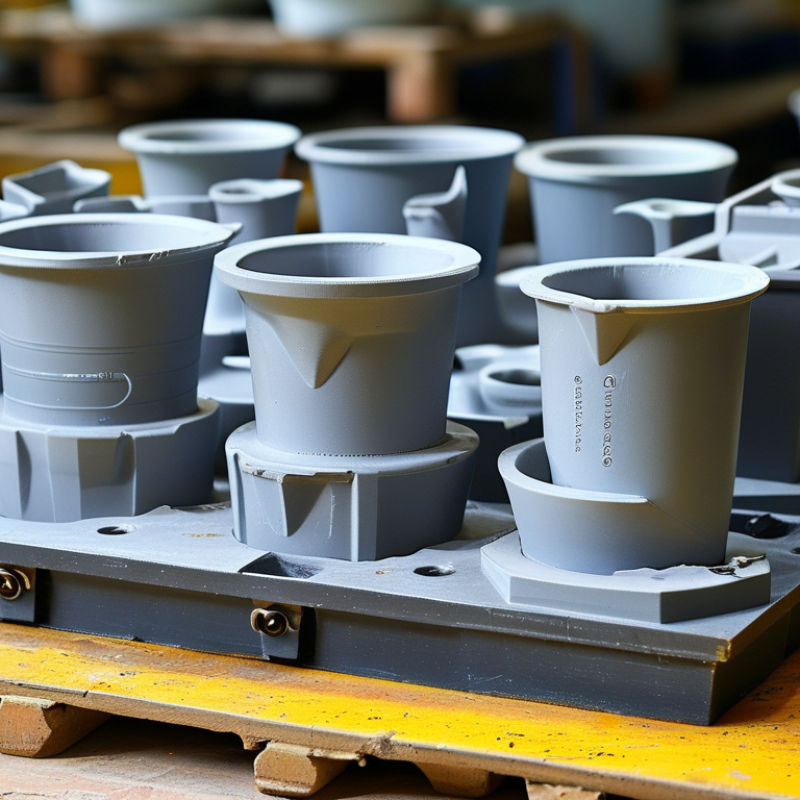
Process selection classified by material, production volume, and typical machine clamp-force range from 15 to 4,000 tonnes.
Thermoplastic injection is suitable for low-to-mass production volumes and covers the broadest clamp-force range. Micro-injection typically uses small presses for precision parts, while structural foam and larger engineering components require higher clamp forces. The ranges are industry-typical planning values; the final machine size depends on projected part area, cavity pressure, material viscosity, mold design, and safety margin.
Define Standard Injection Molding: 0.01–0.1 mm Tolerances for Mass Production
Standard injection molding is a repeatable process for producing large plastic volumes with controlled dimensions. For global buyers, a typical tolerance range is about 0.01–0.1 mm, depending on part size, resin, tooling, and geometry. This range is not universal.
A 0.01 mm tolerance usually applies to small, critical features under carefully controlled conditions. It may require stable mold temperatures, precise machine settings, and frequent dimensional inspection. A 0.1 mm tolerance is more practical for many housings, covers, clips, and functional components. Material shrinkage can still change results.
Experience shows that drawings often promise tighter limits than production can maintain. That is worth questioning. Thin walls, deep ribs, and uneven cooling can create warpage. Tool wear may also increase variation after thousands of cycles. Engineers should identify critical dimensions instead of assigning 0.01 mm everywhere.
During production, inspectors may use coordinate measuring machines, gauges, or optical systems. Sampling plans should check dimensions across different cavities and production stages. A reliable supplier should record temperature, pressure, cycle time, and inspection results. Clear datums and realistic tolerances reduce disputes between design and manufacturing teams. Small changes matter.
2026 Top Plastic Injection Process Types for Global Buyers - Define Standard Injection Molding: 0.01–0.1 mm Tolerances for Mass Production
Practical comparison of major plastic injection processes for international sourcing, including typical applications, production scale, material compatibility, dimensional capability, and cost considerations.
| Process Type | Typical Production Volume | Common Materials | Typical Part Size | Practical Dimensional Tolerance | Surface / Feature Capability | Tooling Requirement | Best-Fit Applications | Relative Unit Cost |
|---|---|---|---|---|---|---|---|---|
| Standard Injection Molding | Medium to very high; generally suitable for thousands to millions of parts | ABS, PP, PE, PS, PC, PA, POM, TPE, TPU and many engineering thermoplastics | Small to medium parts; large parts are possible with suitable machine capacity and mold design | About ±0.05–±0.10 mm for many commercial features; ±0.01–±0.05 mm may be specified for selected small, well-controlled features | Good repeatability, ribs, bosses, snap-fits, textured surfaces and cosmetic finishes | Production mold, usually steel or aluminum; cooling, ejection and shrinkage compensation required | Housings, closures, consumer products, automotive components, electrical parts and industrial assemblies | Low at high volume after tooling amortization |
| Insert Injection Molding | Medium to high; most economical when inserts are used repeatedly | Thermoplastics combined with metal, ceramic or preformed plastic inserts | Small to medium parts, depending on insert geometry and mold handling | Typically ±0.05–±0.15 mm for molded features; final accuracy also depends on insert tolerances and positioning | Strong mechanical integration between the insert and molded polymer; supports threaded or conductive elements | Specialized mold and reliable insert-loading method; automation may be required for high volume | Threaded components, electrical contacts, bushings, reinforced knobs and structural assemblies | Medium; labor and insert cost can be significant |
| Overmolding | Medium to high; suitable for repeat production with controlled material bonding | Rigid thermoplastics combined with TPE, TPU, silicone-compatible systems or a second thermoplastic | Small to medium parts, including multi-material assemblies | Typically ±0.05–±0.15 mm; soft-material shrinkage and interface alignment may reduce effective tolerance | Two-material appearance, soft-touch grips, sealing lips, vibration isolation and improved ergonomics | Two-shot, transfer or insert-based mold; material compatibility and bond design must be validated | Handles, medical grips, seals, cable protection, wearable components and consumer controls | Medium to high, with added tooling and process-control costs |
| Thin-Wall Injection Molding | High to very high; designed for fast-cycle production | PP, PS, ABS, PC and other high-flow thermoplastics selected for short filling distances | Thin sections commonly below approximately 1.5 mm, depending on resin and flow length | Typically ±0.05–±0.15 mm; wall thickness uniformity and warpage control are critical | Fast filling, lightweight construction and high material efficiency; sensitive to weld lines and filling balance | High-performance mold with balanced gating, efficient cooling and high-speed injection capability | Packaging, disposable containers, consumer electronics housings and lightweight closures | Low at very high volume; tooling and machine requirements are comparatively high |
| Gas-Assisted Injection Molding | Medium to high; beneficial when hollow or thick-section parts are needed | PP, ABS, PC/ABS, PA and other thermoplastics compatible with controlled gas penetration | Medium to large parts, especially parts with thick ribs or long flow paths | Typically ±0.10–±0.25 mm; internal gas channels and local wall variation affect precision | Reduced sink marks, lower part weight, improved stiffness and the ability to form hollow sections | Gas-injection controller, specialized mold design and carefully located gas pins or valves | Automotive handles, structural panels, appliance components and long decorative parts | Medium; lower material use may offset additional equipment costs |
| Structural-Foam Injection Molding | Medium to high; suitable for larger, rigid components | PP, ABS, PS, PE, PC/ABS and other polymers formulated for physical or chemical foaming | Medium to large parts with thicker walls and lower cosmetic requirements | Typically ±0.20–±0.50 mm because of cellular structure, surface variation and greater shrinkage variability | High stiffness-to-weight ratio, reduced sink marks and lower part weight; usually less suitable for Class-A cosmetic surfaces | Conventional-style mold with process controls for foam density, venting and surface quality | Equipment covers, pallets, industrial housings, furniture components and large enclosures | Low to medium for large lightweight parts |
| Micro Injection Molding | Medium to very high; used when small parts justify precision tooling | PEEK, LCP, PC, PA, POM, PPS and other engineering thermoplastics, depending on equipment | Typically sub-gram parts or components with very small features; exact limits depend on machine and material | Approximately ±0.01–±0.05 mm for qualified features and processes; mold, material and measurement methods are decisive | Very small channels, thin walls, miniature gears and fine functional details | Precision mold, specialized injection unit, controlled drying and high-resolution inspection | Medical devices, microfluidic components, sensors, optical parts and miniature mechanisms | High per part unless production volume is substantial |
| Liquid Silicone Rubber Injection Molding | Medium to very high; well suited to automated repeat production | Liquid silicone rubber grades for medical, sealing, electrical and consumer applications | Small to medium parts; larger parts are possible with suitable metering and mold systems | Typically ±0.05–±0.20 mm; elastic recovery, flash control and material shrinkage must be considered | Flexible parts, thin sealing edges, high-temperature resistance and excellent chemical stability | Cold-runner or precision hot-runner mold, metering system, controlled curing and flash management | Gaskets, diaphragms, medical components, keypads, valves and protective covers | Medium to high, mainly due to material and tooling-system costs |
| Compression Injection Molding | Medium to high; commonly selected for thermosets and high-temperature materials | Thermosetting compounds, silicone systems and selected high-performance molding materials | Small to medium parts, including electrically insulating and heat-resistant components | Typically ±0.10–±0.30 mm; material cure behavior and flash control influence final accuracy | Good heat resistance, electrical insulation and suitability for materials that cannot be remelted | Heated mold and controlled metering/compression sequence; trimming may be required | Electrical insulators, automotive under-hood components, seals and heat-resistant parts | Medium; material and cycle time vary by formulation |
| Multi-Component Injection Molding | Medium to very high; most valuable when it replaces assembly operations | Compatible combinations of rigid, flexible, transparent, colored or conductive thermoplastics | Small to medium parts, with part size limited by machine configuration and mold complexity | Typically ±0.05–±0.15 mm; cumulative alignment tolerance must be evaluated across all components | Integrated color, texture, sealing, grip and functional zones in one finished component | Rotary, transfer, tandem or sequential mold system with precise material and temperature control | Automotive controls, medical devices, consumer electronics, closures and ergonomic products | Medium to high tooling cost, with potential assembly-cost savings |
Specify Insert and Overmolding: 2 Materials in One Integrated Component
Insert molding and overmolding will remain important plastic injection process types for global buyers in 2026. They combine two materials within one integrated component. The result can reduce assembly steps, wiring, fasteners, and handling costs. It can also improve grip, sealing, insulation, or impact resistance.
Industry data supports this direction. Grand View Research estimates the global plastic injection molding market will continue growing through 2030, supported by medical, automotive, electronics, and consumer applications. MarketsandMarkets also projects steady expansion in injection molding machinery demand through 2028. These figures indicate capacity growth, but they do not guarantee a successful two-material design. Material selection remains critical. Engineers should confirm bonding strength, shrinkage behavior, melt temperature, and chemical compatibility before tooling begins.
A practical example is a rigid polyamide frame with a soft thermoplastic elastomer grip. The first shot forms the structure. The second shot covers selected surfaces through overmolding. For insert molding, a metal contact, threaded insert, or sensor housing can be placed inside the mold before injection. Small dimensional errors may create flash, weak adhesion, or insert movement. That is easy to underestimate. Buyers should request mold-flow analysis, material certificates, sample validation, and measurable pull-off or torque results. A supplier’s experience matters, yet process evidence matters more. Design reviews should also examine recycling, repair limits, and end-of-life separation. Two materials are efficient, but not always simple.
Compare Two-Shot Molding: 2–4 Materials for Multicolor or Soft-Touch Parts
Two-shot molding combines two materials or colors within one molded part. Some advanced machines can process three or four materials, but the practical limit depends on tooling, mold access, and material compatibility. It suits soft-touch grips, sealed buttons, multicolor controls, and rigid-soft assemblies. The result can reduce secondary assembly and improve alignment.
A 2024 Grand View Research report estimated the global injection molded plastics market at about USD 271.8 billion in 2023. It also projected roughly 4.8% annual growth through 2030. These figures show strong demand, but they do not guarantee two-shot savings. The mold is more complex. Cycle control becomes stricter. Engineers must check shrinkage, bonding strength, melt temperature, and second-shot pressure.
Small details matter. A soft elastomer may peel from a rigid substrate after repeated flexing. Colorants can also change flow behavior. Industry testing should include peel strength, aging, thermal cycling, and dimensional inspection. ISO 20457 provides useful guidance for molded plastic part tolerances, although two-shot designs often need tighter project-specific controls. From practical sourcing experience, suppliers should request material datasheets, mold-flow results, and sample parts before approving production. A polished prototype can hide weaknesses. That is the uncomfortable part. Cost comparisons should include tooling maintenance, rejected parts, and qualification time, not only the quoted unit price.
Assess Gas-Assisted and Microcellular Molding: 10–30% Weight Reduction
For global buyers, gas-assisted and microcellular injection molding deserve closer attention in 2026. Both can reduce part weight by roughly 10–30%, but the range is not automatic. Actual savings depend on resin, wall thickness, rib layout, cavity pressure, and production targets. Strength matters more. Production audits often reveal failures when weight reduction becomes the only design goal.
Gas-assisted molding injects gas into selected regions after partial filling. The gas forms internal channels and presses plastic against cavity walls. This method suits thick handles, frames, tubes, and panels requiring lower sink marks. Engineers must control gas timing, melt temperature, and venting. Poor control is costly. It can create blow-through, uneven walls, or visible surface changes. These defects may appear after painting or assembly.
Microcellular molding introduces a physical blowing agent, creating fine cells through the melt. It can lower density while preserving useful stiffness in broad, lightweight housings. However, cell size affects appearance, impact performance, and dimensional stability. Buyers should request molded samples, density records, cross-section checks, and load testing. Do not accept a percentage without test conditions. A 25% lighter part may need thicker ribs or tighter process control. That trade-off can erase savings. Process data should also be reviewed across multiple production lots, not one successful trial.
Related Posts
-
What is the Plastic Injection Process in China Manufacturing?
-
How to Optimize Your Plastic Injection Tooling Process for Maximum Efficiency
-
Essential Tips for Mastering the Plastic Injection Process?
-
How to Optimize Your Production Process with Medical Injection Moulding Techniques
-
Why Automotive Plastic Injection Molding is Essential for Modern Manufacturing
-
10 Best Injection Moldable Plastics for Your Next Project?