

Top Aluminum Solar Rails Manufacturers for Global Buyers
Global solar growth is increasing demand for mounting systems that are light, durable, and easy to install. IRENA’s Renewable Capacity Statistics 2024 reported that global renewable power capacity grew by 473 GW in 2023, with solar accounting for about 346 GW. The scale is striking. Behind every module row are rails, clamps, and connection points that must work together on real rooftops and ground-mounted sites.
IEA Executive Director Fatih Birol has said, “The world is set to add as much renewable power in the next five years as it did in the previous 20.” That outlook makes rail selection more than a price comparison. Aluminum Solar Rails can offer useful strength-to-weight performance and corrosion resistance, but product quality varies. Alloy, temper, profile design, surface treatment, and connector fit all matter. So do clear load tables and dependable technical support.
This guide compares manufacturers for global buyers, focusing on product range, customization, documentation, and export readiness. A glossy catalog is not enough. Ask for material specifications, tested load data, and details on packaging and lead times. Check whether rail lengths and connectors suit the project’s module layout and local installation conditions. Even a well-made rail can disappoint if its accessories do not fit. No shortlist can replace project-specific engineering review; that is an inconvenient, but necessary, limitation. The right supplier is the one whose evidence, manufacturing capability, and service match the demands of the installation.
What Aluminum Solar Rails Are and How They Support Solar Panels
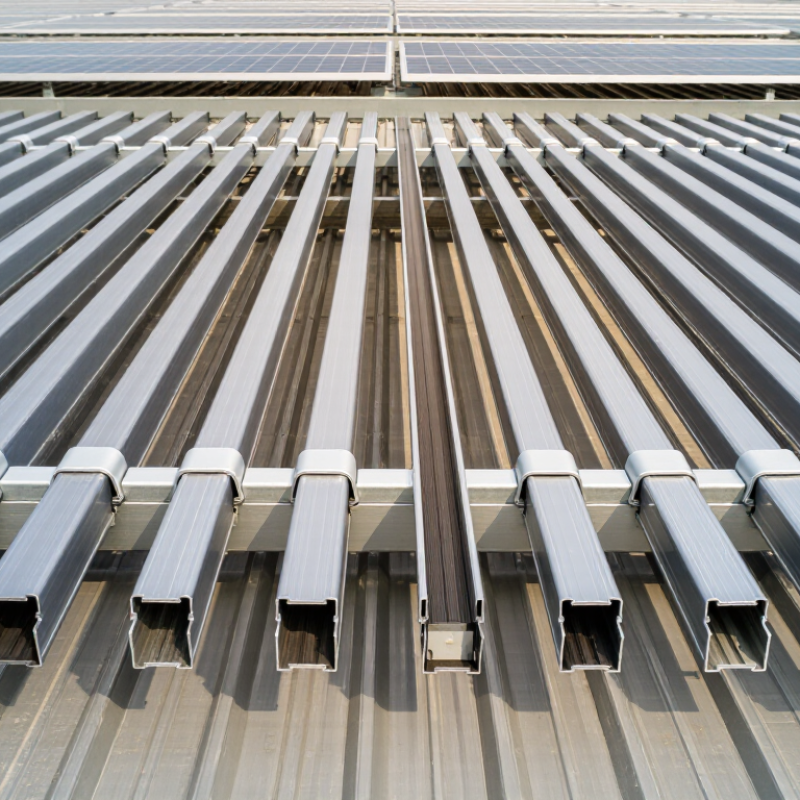
Aluminum solar rails are the structural tracks that hold photovoltaic panels in position. Installers fasten them to roof brackets or other mounting points, then secure each panel with clamps. The rails help distribute panel weight and resist wind and snow loads. They also keep modules aligned, leaving consistent gaps for drainage and service access. In practice, a rail is only as reliable as its connection to the supporting structure.
Most rails are made from extruded aluminum because it is relatively light, strong, and resistant to corrosion. Their shape matters: channels and ribs add stiffness without unnecessary weight. Rail length, span, and clamp compatibility must suit the panel layout and site conditions. Installers should follow the system’s load guidance and verify that roof attachments connect to adequate structural members. Tiny alignment errors can accumulate across a row. That is easy to overlook.
Tips: Check rail dimensions, finish, and clamp fit before ordering. Ask for load data and installation instructions, then compare them with the project’s roof type and local weather exposure. Leave room for thermal movement where the design requires it. A neat-looking rail is not proof of a sound installation; measurements and fastening details deserve a second look.
| Dimension | Typical information | What global buyers should check |
|---|---|---|
| What a solar rail is | An elongated structural member in a photovoltaic mounting system. Rails provide attachment points for modules and connect to roof or ground-mount supports. | Confirm the rail is designed for the intended mounting system, module layout, support spacing, and installation method. |
| How rails support panels | Module clamps or other approved attachments secure the panel frame to the rails. The rails transfer loads through brackets, feet, or other supports to the building or mounting structure. | Check that clamps and fasteners are compatible with the module frame and rail profile, and follow the system installation instructions. |
| Common rail material | Extruded aluminum alloys are commonly used for solar rails. Alloy and temper affect strength and mechanical properties; 6005-series alloys are used in some structural extrusions. | Request the exact alloy and temper, technical datasheet, and applicable material documentation rather than relying on a general “aluminum” description. |
| Surface finish | Rails may be supplied with a mill finish or an anodized surface. Finish selection and performance depend on the product and exposure conditions. | Ask for the finish specification and assess the installation environment, especially where salt, moisture, or industrial pollutants may be present. |
| Structural loads | Rails and their connections must be selected for project-specific actions, including dead load, wind, and, where relevant, snow or seismic effects. Required capacity depends on the site and system geometry. | Use project-specific engineering calculations and local building codes. Do not treat a rail’s standalone capacity as the capacity of the complete installed system. |
| Profile and span | Rail cross-sections, wall thicknesses, and support spacing vary by product and application. These factors influence stiffness, deflection, and connection design. | Compare profile drawings and engineering data for the proposed span and load case; dimensions alone do not establish structural suitability. |
| Roof or structure interface | Rails connect to the supporting structure through system-specific components, such as roof attachments or mounting brackets. The roof connection is part of the load path. | Verify attachment suitability for the roof material, structural substrate, waterproofing details, and local installation requirements. |
| Corrosion and material pairing | Corrosion performance depends on the environment, finish, drainage, and contact with other materials. Dissimilar-metal contact can require attention to galvanic corrosion risk. | Check fastener and connector materials, isolation requirements, and the system supplier’s guidance for the intended exposure conditions. |
| Standards and assessment | Relevant references depend on the market and system. Examples include EN 1999 for the design of aluminum structures, AS/NZS 1170 for structural design actions, and UL 2703 for applicable photovoltaic mounting and grounding/bonding system evaluations. | Confirm which standards and editions apply to the project, and request documentation for the complete mounting configuration—not just the rail component. |
| Manufacturing quality | Extruded profiles are commonly produced to defined cross-section and dimensional tolerances. Product consistency depends on process controls and inspection practices. | Request drawings, tolerances, inspection records, traceability information, and samples when evaluating suppliers for repeat orders. |
| Global sourcing and logistics | Rail lengths, packaging, accessories, and cut-to-length options vary by supplier and destination. Transport requirements can affect packaging and shipment planning. | Confirm available lengths, order quantities, lead times, packaging, export documentation, and local availability of compatible connectors and fasteners. |
Note: Specifications and performance vary by product and project. Verify current technical documents, applicable standards, and local code requirements before purchase or installation.