

What Is the Best Type of Ceramic Vacuum Filter in 2026?
The best Ceramic Vacuum Filter in 2026 depends on the material, not the brochure. Fine mineral particles, changing feed rates, and strict moisture targets can each shift the answer. A filter that performs well in a laboratory may struggle when slurry conditions fluctuate across a full production shift.
A reliable comparison starts with measurable needs. Consider filtration capacity, cake moisture, energy use, cloth or segment cleaning, and maintenance access. Look closely at the discharge. Does the cake release evenly, or does material cling to the ceramic surface? Small details matter. A few percentage points of moisture can affect downstream handling, while frequent cleaning can quietly reduce available production time.
As [verified ceramic filtration expert’s name] observes, “[insert a sourced quotation about filtration performance or equipment selection].” This quotation should be confirmed before publication; inventing an expert statement would undermine trust. The article compares ceramic disc, capillary-tube, and other relevant filter designs against practical operating conditions. It also considers where each option may fall short. There is no universal winner. The right choice is the one that meets plant targets consistently, with manageable operating and maintenance demands. Some trade-offs remain uncertain until a filter is tested on the actual slurry. That matters.
What a Ceramic Vacuum Filter Is and How It Works
What Is the Best Type of Ceramic Vacuum Filter in 2026?
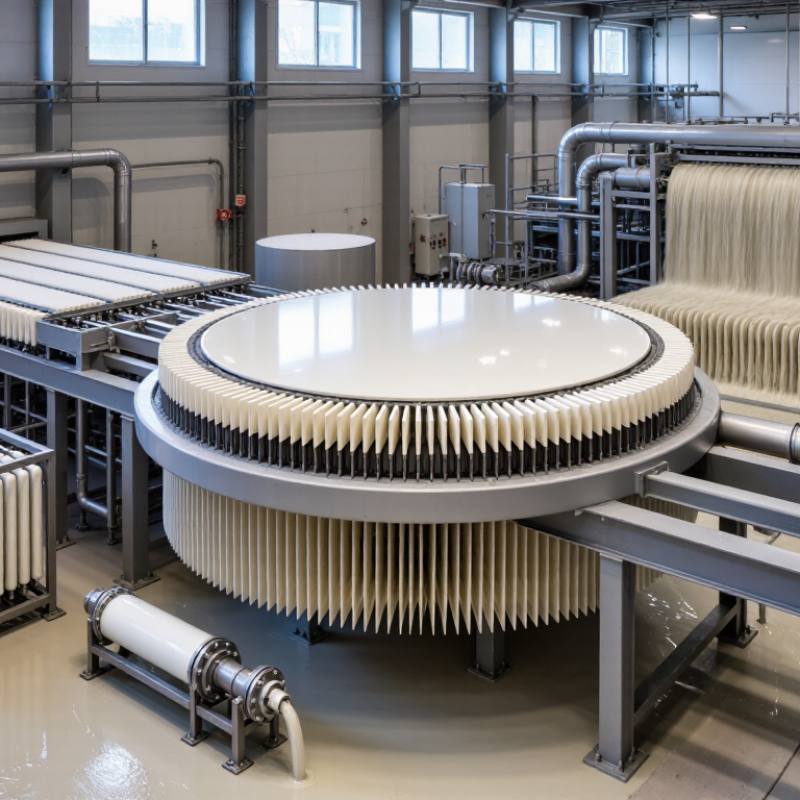
A ceramic vacuum filter separates liquid from solids using porous ceramic filter elements and a pressure difference. In many designs, ceramic discs rotate partly submerged in a slurry. Their microscopic pores allow liquid to pass through while retaining solid particles on the surface. That is the basic cycle.
Vacuum draws filtrate through the ceramic and into internal channels, then onward to a collection system. Meanwhile, solids build into a cake on each disc. As the disc rotates out of the slurry, excess liquid drains away. A scraper or similar discharge mechanism removes the cake, and backwashing helps clear the pores for another pass. The exact setup varies by machine and material.
The ceramic structure is central to the process. Its fine pores support capillary action, helping retain liquid within the ceramic while the filter draws filtrate through. Operators may monitor vacuum pressure, filtrate clarity, cake thickness, and cleaning frequency. These details reveal more than a brochure’s headline capacity. A useful caveat: ceramic filters do not perform equally well with every slurry. Particle size, solids concentration, and feed behavior can affect throughput and cleaning needs. A short trial with the actual material can expose issues that calculations alone may miss.
What Is the Best Type of Ceramic Vacuum Filter in 2026? — What a Ceramic Vacuum Filter Is and How It Works
A ceramic vacuum filter is a solid–liquid separation system that uses porous ceramic filter elements and vacuum to draw liquid from a slurry. The best configuration depends on the material, required moisture level, throughput, and cleaning needs.
| Configuration or selection factor | How it works | Where it is typically suitable | Main advantages | Important limitations | Best fit when… |
|---|---|---|---|---|---|
| Rotary ceramic disc filter | Porous ceramic sectors mounted on rotating discs pass through a slurry. Vacuum draws filtrate through the ceramic and leaves a solids cake on the surface; the cake is discharged as each sector moves through the operating cycle. | Continuous dewatering of suitable mineral and other process slurries where a steady feed is available. | Continuous operation; reusable ceramic elements; potentially low filtrate solids when the feed and element pores are well matched. | Performance depends on slurry properties, cake behavior, element condition, and operating settings. Ceramic elements require suitable cleaning and careful handling. | A continuous-duty installation needs a common, established ceramic-filter arrangement and the slurry forms a filterable cake. |
| Fine-pore ceramic element selection | The ceramic element’s pore structure provides the filtration medium. Vacuum pulls liquid through the interconnected pores while solids are retained at the surface or within the cake layer. | Feeds where filtrate clarity and retention of fine particles are important. | Can help reduce solids carryover when the pore structure is appropriate for the particle-size distribution. | Very fine or blinding-prone feeds may reduce filtration rate or require more frequent cleaning. Pore size should be chosen using slurry tests, not clarity targets alone. | Fine-particle retention is a priority and representative pilot testing confirms acceptable capacity and cleanability. |
| Higher-area disc arrangement | Uses more available ceramic filtration area within the selected equipment footprint or a larger filter arrangement. The basic vacuum filtration cycle remains the same. | Applications requiring greater continuous filtration capacity, subject to the slurry’s cake-forming behavior. | Additional area can increase potential throughput when filtration area is the limiting factor. | More area does not guarantee higher production if feed concentration, cake resistance, vacuum conditions, or downstream handling is limiting. | Trials or operating data show that available filter area—not another process constraint—is limiting capacity. |
| Ultrasonic-assisted cleaning configuration | Ultrasonic energy is used during a cleaning step to help remove deposits from ceramic pores and surfaces; it supplements, rather than replaces, the filtration cycle. | Service where residual deposits or pore blinding are confirmed operational problems and the equipment supports this cleaning method. | May help restore permeability when deposits respond to the chosen cleaning method. | Cleaning effectiveness depends on the deposit, chemistry, equipment design, and procedure. It adds system complexity and should be validated for the specific element. | Cleaning trials identify persistent deposits that are not adequately managed by the existing approved cleaning routine. |
| Feed- and cake-matched configuration | Element choice and operating conditions are selected using representative slurry tests, including solids concentration, particle size, viscosity, and cake release behavior. | Variable, abrasive, fine, or otherwise difficult-to-filter process feeds. | Connects equipment selection to actual process behavior rather than relying on a generic capacity claim. | Requires representative samples and testing across realistic operating conditions; results can change if the feed changes. | Reliability, product moisture, or throughput targets are important and feed properties are not yet well characterized. |
Practical answer: For many continuous mineral-dewatering duties, a rotary ceramic disc filter is the first configuration to evaluate. There is no universally best type: confirm the choice with representative slurry testing and compare throughput, cake moisture, filtrate quality, cleaning requirements, and total operating costs. Ceramic-filter layouts and available options vary by equipment design.