

Quality Mold

What Types of Dirt Tires Are Best for Different Terrains?

Choosing Dirt Tires for a ride is less about aggressive looks than about how the ground behaves under your wheels. Hard-packed trails, loose gravel, wet clay, and deep sand each place different demands on tread and tire construction. A pattern that grips well in soft soil may feel slow or vague on firm ground. Small details matter.

This guide compares common tire types by terrain, explaining how tread spacing, knob shape, rubber compound, and casing affect traction and control. Closely spaced knobs can roll smoothly on compact surfaces, while wider gaps help shed mud and bite into loose dirt. Sand often calls for a broader footprint and a tread that floats rather than digs too deeply. Wet roots and slick clay bring different challenges again.

It depends.

Terrain is rarely consistent from one mile to the next. A dry trail can hide damp patches beneath trees, and gravel can conceal sharp stones. Tire pressure, rider weight, bike setup, and riding style also change how a tire performs. Manufacturer guidance is a useful starting point, but specifications alone cannot promise the same feel on every trail. That matters.

The sections ahead will help match tire features to riding conditions and explain the trade-offs behind each choice. No single tire suits every surface. The goal is a practical fit for the terrain you ride most, with enough flexibility for the surprises along the way.
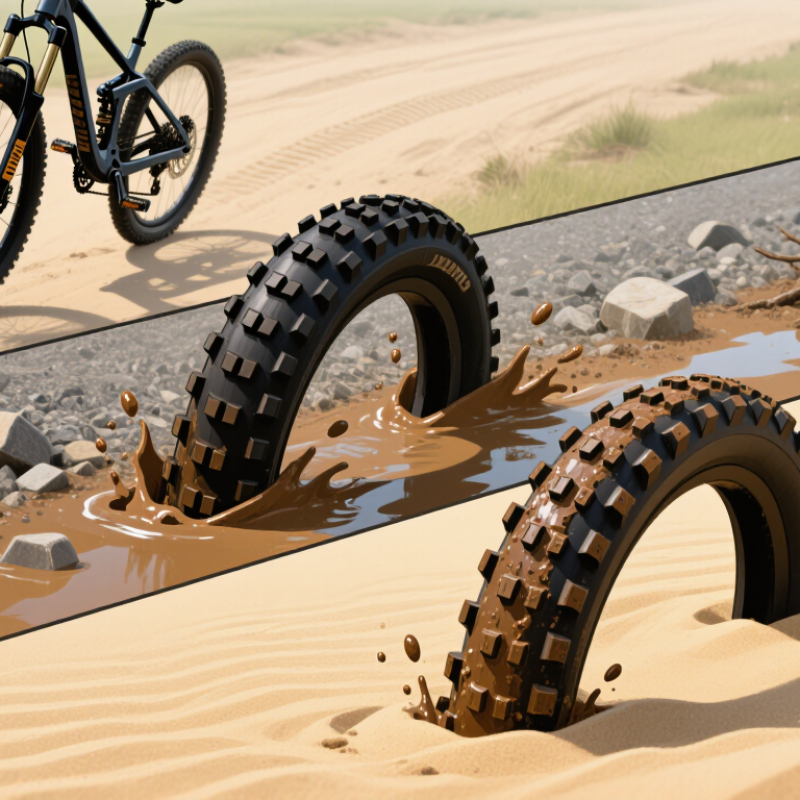
What Types of Dirt Tires Are Best for Different Terrains?

How Dirt Tires Are Designed for Different Riding Conditions

Dirt tires are shaped around the ground they need to grip, shed, or roll across. Their tread pattern, knob height, rubber flexibility, and internal construction all affect how they behave. On firm, dry trails, shorter knobs with closely spaced blocks can provide a steady contact patch and predictable cornering. Tall, widely spaced knobs can dig into soft soil and clear mud as the wheel turns. The trade-off is real.

Sand calls for a different balance. Wider tread and supportive shoulders help a tire float and hold a line, while overly aggressive knobs may feel vague on loose, deep sections. Rocky trails put more demand on casing strength and rubber grip. A flexible tread can conform to small edges, but it may wear faster on abrasive ground. Not always.

Tire choice also depends on speed, rider weight, bike setup, and how wet the trail is that day. A pattern that hooks up in damp clay may skate across baked dirt. Tire pressure matters, too: too high can reduce grip over roots, while too low risks rim impacts or unstable handling. Small adjustments can change the feel noticeably. I’d treat tread descriptions as a starting point, then assess traction, wear, and steering on familiar ground. Even experienced riders sometimes choose a tire for one terrain and find it compromises another.

Key Tread and Rubber Features That Affect Traction

Traction depends on how a tire’s tread meets the ground. Tall, widely spaced knobs can dig into loose soil and shed mud as the wheel turns. The open gaps matter: tightly packed tread may clog, leaving a smooth layer of dirt between the tire and trail. In deep sand, broader knobs can help spread the load, while sharp edges offer bite on slopes. No pattern works equally well everywhere.

Rubber compound changes how those knobs grip. Softer rubber can flex around small rocks and roots, improving contact on hard, uneven ground. It may wear faster on abrasive surfaces. Firmer rubber often lasts longer on dry, rocky trails, but can feel less forgiving on wet stone. Feel the difference. A tire that grips well in cool conditions may behave differently when the trail is hot or dusty.

Match tread depth and spacing to the ground you ride most, then check pressure and wear before judging the design. Rounded knobs can lose their edges and struggle to brake in loose dirt. Very aggressive tread can also feel vague on packed trails. I’d treat these choices as trade-offs, not fixed rules; soil moisture, rider weight, and tire pressure can change traction more than expected.

What Types of Dirt Tires Suit Different Terrains?

Qualitative terrain-fit ratings for common dirt-tire tread categories (1 = lower fit, 5 = best fit).

How to read this: Soft-terrain tires typically use taller, widely spaced knobs to dig into loose ground; hard-terrain tires generally have shorter, more closely spaced knobs for firmer surfaces. Intermediate tires balance the two designs. Softer rubber can improve conformity and grip but often wears faster, while harder compounds tend to last longer. Ratings are a qualitative guide based on these design characteristics, not standardized test measurements.

Dirt Tires for Hard-Packed and Rocky Terrain

Hard-packed dirt rewards a tire that stays planted rather than one with tall, widely spaced knobs. Look for closely spaced tread, a firm center row, and modest shoulder blocks. The center helps maintain contact on smooth, dry ground, while the edges add grip through turns. Less knob movement can also make steering feel steadier.

Rocky terrain calls for a durable casing and side knobs that can hold their shape over sharp edges. A softer rubber compound may grip stone better, but it can wear faster on abrasive trails. Small trade-off. Tire pressure matters, too: a slight reduction can improve contact over rocks, while too little pressure risks pinching or rim damage. Follow the vehicle maker’s guidance and adjust in small steps. A tread that works well on loose gravel may skate on flat rock. Easy to miss. There is no perfect tire for every surface, so prioritize the terrain you ride most and inspect for chipped knobs or sidewall damage after rough outings. I would reassess that choice if the trail conditions change.

Dirt Tires for Mud, Sand, and Loose Soil

Mud demands tread that can clear itself. Deep, widely spaced lugs help eject sticky soil instead of packing it smooth. On a muddy trail, that can preserve forward grip, but tall lugs may feel harsh on firm ground. Slow down before ruts, and avoid sharp steering inputs when the surface is slick. Mud depth changes quickly. A tire that works in shallow muck may clog in clay-rich paste.

Sand needs a different balance. A broader footprint can help the tire float over soft ground, while an overly aggressive tread may dig in and bog the vehicle down. Use smooth, steady throttle; sudden wheelspin often makes a trench. Loose soil sits between these conditions: moderate tread spacing can provide bite without excavating the surface. These are useful starting points, not guarantees. Vehicle weight, tire pressure, and soil moisture all change the result.

Soil composition helps explain the difference. The USDA NRCS Soil Survey Manual classifies sand particles as 0.05–2 millimeters, silt as 0.002–0.05 millimeters, and clay as smaller than 0.002 millimeters. Fine, wet soils can cling to tread; dry sand shifts beneath it. Check the vehicle maker’s pressure guidance and the tire’s load limits before adjusting pressure. There is no universal “best” setting. That trade-off is easy to underestimate.

How to Choose Tires for Mixed Terrain and Riding Style

Choosing tires for mixed terrain starts with the ground you ride most, not the hardest section you might encounter. Note how often your route includes loose sand, packed soil, rocks, or wet roots. A soft, widely spaced tread can dig into loose ground, but its knobs may feel vague on hardpack. Tighter knobs usually track smoothly on firm trails, yet can clog in sticky mud. Transitions matter. If your rides shift between surfaces, look for a balanced tread with enough space to clear dirt and a stable center row for straight-line control.

Your riding style changes the choice. Aggressive cornering and quick acceleration benefit from predictable side knobs and a casing that resists folding under load. For relaxed trail rides, comfort and easy steering may matter more than maximum grip. Tire width and pressure also affect how the tread behaves; check the tire and bike maker’s recommended range, then adjust in small steps. Keep notes after each ride. There is no perfect compromise, and I would not assume one tire suits every route. A short test on familiar ground can reveal whether the front washes out, the rear spins, or the ride simply feels harsh.