

Quality Mold

7 Best Gel Extraction Kits for DNA Purification

A clean DNA band is only the beginning. The real test comes after the gel slice dissolves: does the recovered fragment remain intact, concentrated, and ready for the next step? Gel Extraction kits promise a quick route from agarose to purified DNA, but their results depend on more than the label. Buffer chemistry, membrane design, fragment size, and careful handling can all shape recovery.

Molecular biologist Joseph Sambrook is widely known for his work on molecular cloning. Rather than inventing a direct quotation, here is a practical takeaway, paraphrased from the careful approach central to that work: “Protect the DNA at every step, and check the result.” A useful reminder. Even a well-designed column cannot rescue a band cut too broadly or a sample overheated during dissolution.

This guide compares seven kits for different lab needs, including routine cloning, small fragments, and workflows where time matters. It considers stated yield, cleanup performance, protocol clarity, and practical handling—not just marketing claims. No kit is magic. A bright band under blue light may look reassuring, yet the final DNA concentration still needs measurement. Some trade-offs are easy to miss. Read the details before choosing, and treat manufacturer specifications as guidance rather than a guarantee.
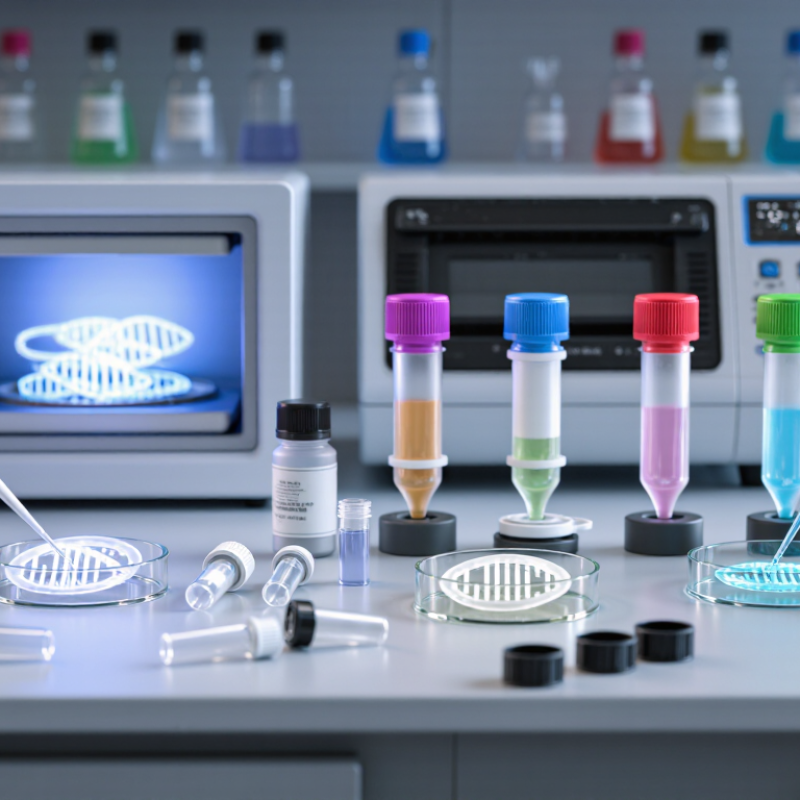
7 Best Gel Extraction Kits for DNA Purification

How Gel Extraction Kits Purify DNA from Agarose Gels

Gel extraction turns a bright agarose band into purified DNA through controlled binding and washing. After electrophoresis, the target band is cut out with a clean blade. Blue-light viewing can reduce DNA damage compared with prolonged ultraviolet exposure.

The gel slice is warmed with a chaotropic salt solution until it dissolves. These salts help DNA bind to a silica membrane while agarose and many impurities pass through. Small fragments suffer. They can be lost during handling or bind less efficiently, so use the smallest practical gel slice.

The membrane is washed, often with an alcohol-containing buffer, then dried before elution in low-salt buffer or water. Residual wash solution can inhibit later reactions, so an extra drying spin is useful.

Industry technical performance sheets for silica-membrane gel extraction kits commonly report DNA recovery around 50–80%; these are product-validation figures, not a universal independent benchmark. Actual yield varies with fragment size, gel concentration, staining, and handling.

Details matter. A tiny band can disappear during excision, while excess agarose may slow dissolution and reduce binding. Check DNA concentration with a fluorometric assay when accurate measurement matters, since absorbance readings can be unreliable at low concentrations.

The trade-off is real: cleaner DNA may mean less recovered DNA.

Which Features Matter When Choosing a Gel Extraction Kit

Choosing a gel extraction kit means matching its chemistry to your fragment size and downstream experiment. Check the stated recovery range, binding capacity, and minimum elution volume. Small fragments suffer. Very short DNA can be lost during binding or washing, while larger fragments may need longer dissolution. A low elution volume can concentrate DNA, but may reduce total recovery. Residual salts or ethanol can also disrupt PCR or ligation, so purity matters alongside yield. An absorbance ratio near 1.8 can be a useful check, but it does not prove the sample will perform well.

Workflow details matter at the bench. Compare hands-on time, spin steps, buffer volumes, and whether the kit requires hazardous solvents. Then test a representative gel slice and measure both recovered DNA and downstream performance.

The trade-off is not always obvious: a fast protocol may save minutes but cost usable DNA. Grand View Research estimated the global nucleic acid isolation and purification market at USD 5.31 billion in 2023, with projected growth through 2030. That market figure signals broad demand, not proof that any kit performs better.

Treat supplier recovery claims as test conditions, not guarantees; gel percentage, fragment size, and handling can change results.

How Seven Leading Gel Extraction Kits Compare

Comparing seven gel-extraction kit designs means looking beyond the advertised yield. A 2024 Fortune Business Insights market report valued the global DNA extraction kits market at about USD 1.1 billion in 2023, reflecting broad demand for purification workflows. Market size, however, does not prove that one kit performs better. For a real comparison, check recovery, processing time, input range, elution volume, and compatibility with downstream cloning or sequencing.

Silica spin-column kits are familiar and straightforward, but columns can clog when gel slices are overloaded. Vacuum formats may speed up several samples, though uneven flow can affect consistency. Magnetic-bead kits suit automation; they need careful mixing and magnetic separation. Low-melt agarose workflows can reduce heat exposure, while broad-range kits handle varied fragment sizes. Rapid protocols save minutes, but may leave less room for troubleshooting. High-recovery formats can help with faint bands, yet their extra steps may increase handling losses.

Small details matter. A 50-microliter elution is not automatically better than 20 microliters if the DNA becomes too dilute for the next step. Compare vendor-reported recovery only when fragment size, gel percentage, and starting mass match your experiment. These conditions often do not match. That is the awkward part. The best choice is the kit whose validated range fits the actual band, sample count, and downstream application—not simply the highest headline yield.

7 Best Gel Extraction Kits for DNA Purification — How Seven Leading Gel Extraction Kits Compare
Kit Profile Purification Format Best Suited For Typical DNA Size Range Typical Elution Volume Workflow Considerations Main Trade-Off
Standard silica spin-column kit DNA binds to a silica membrane under high-salt conditions; contaminants are washed away and DNA is eluted. Routine recovery of DNA fragments from agarose gels. Commonly used for fragments from approximately 100 bp to 10 kb; performance depends on the specific membrane and protocol. Often 20–50 µL; the recommended volume varies by product and desired concentration. Usually requires dissolving the gel slice, loading the column, washing, and centrifuging. Simple and widely compatible, but DNA recovery can decrease for very small fragments or oversized gel slices.
Low-elution-volume spin-column kit Silica membrane spin column with a protocol optimized for concentrated recovery. Small DNA quantities or downstream reactions that benefit from a concentrated eluate. Generally intended for the fragment range specified for the particular column; check its protocol before use. Often 10–20 µL, subject to the minimum volume recommended by the manufacturer. Prewarming the elution buffer and allowing it to sit on the membrane can improve elution. Produces a smaller-volume eluate, but may yield less total DNA if the membrane is not fully wetted.
Broad-size-range silica kit Silica-based binding and washing, with buffer conditions designed to accommodate a wider range of fragment sizes. Workflows involving mixed fragment sizes or variable insert lengths. May cover fragments from below 100 bp to tens of kilobases, depending on the product-specific protocol. Typically 20–50 µL. Follow the product’s gel percentage and buffer guidance, especially for large fragments. Versatile, but recovery may not be equally high across the entire stated size range.
Low-melt agarose-compatible kit Silica-based purification using gel-dissolution conditions compatible with low-melting-point agarose. Fragments recovered from low-melt agarose, including workflows that require gentler gel handling. Depends on the kit and fragment size; verify compatibility for the intended DNA length. Commonly 20–50 µL. Use the specified dissolution temperature and buffer conditions to avoid incomplete melting or DNA damage. Useful for low-melt gels, but not every standard gel extraction protocol is validated for this agarose type.
Magnetic-bead gel extraction kit DNA binds to magnetic particles and is separated with a magnetic rack rather than a spin column. Batch processing, automation, or laboratories already using magnetic-bead workflows. Size selectivity and recovery depend on bead chemistry and the bead-to-sample ratio. Protocol-dependent; often adjustable to the required downstream concentration. Requires thorough mixing, magnetic separation, and careful removal of residual wash solution. Can support scalable processing, but bead ratios and handling can affect fragment-size recovery.
High-throughput plate-format kit Membrane- or bead-based purification in a multiwell plate format. Processing many gel-extracted samples in parallel, often with a vacuum manifold or automation. Defined by the plate chemistry and protocol; confirm the validated fragment range before use. Protocol-dependent and usually set by the elution step. Designed for parallel processing; requires compatible plate-handling equipment or a specified vacuum setup. Improves throughput, but may be less convenient for processing only a few samples.
Low-input DNA recovery kit Silica- or bead-based chemistry intended to reduce losses during purification. Low-abundance bands or samples where maximizing recovered DNA is important. Product-specific; check the validated lower size limit because short-fragment recovery can vary substantially. Often 10–30 µL, depending on the protocol and required concentration. Minimize transfers and use the recommended elution conditions to reduce handling losses. Designed for scarce material, but the workflow may be more sensitive to sample handling and buffer ratios.
Comparison note: These are representative, brand-free kit profiles rather than specifications for named products. Recovery, fragment-size limits, gel-load capacity, processing time, and elution volume vary by product and protocol. Check the current kit manual for validated performance and compatibility.

How to Extract DNA from a Gel Step by Step

How to Extract DNA from a Gel Step by Step

After electrophoresis, check the gel under the recommended light source and locate the DNA band you need. Wear gloves and use a clean blade to cut around it, keeping the gel slice as small as practical. Limit exposure to ultraviolet light, which can damage DNA. Place the slice in a clean tube and follow the kit instructions to dissolve it with the specified buffer and temperature. The gel should be fully melted before you continue.

Tips: Keep tools clean. Avoid cutting neighboring bands. A smaller gel piece usually means less unwanted material to remove. If the band is faint, photograph it quickly and minimize extra illumination; recovery can vary.

Transfer the dissolved sample to the kit’s binding column, following its volume limits. Spin as directed so the DNA binds to the membrane, then discard the flow-through. Wash with the supplied wash solution. A final dry spin matters: leftover ethanol may interfere with later reactions. Move the column to a clean tube and add the recommended elution buffer or water. Let it sit briefly, then spin to collect the DNA. Follow the kit manual for exact volumes and timing, since procedures differ. Check the recovered DNA concentration before using it. Yield may be lower than expected, especially with a tiny band. That can happen.

DNA Fragment Size and Approximate Molecular Mass

Gel extraction separates DNA fragments by length, allowing a band of interest to be excised and purified. This chart shows the approximate molecular mass of double-stranded DNA fragments at common length benchmarks, estimated using about 660 daltons per base pair. It is a reference for DNA size, not a comparison of extraction-kit performance.

How to Check DNA Yield, Purity, and Downstream Compatibility

After excising a DNA band, measure the recovered DNA rather than relying on the original band’s brightness. For low-yield fragments, a fluorescence-based double-stranded DNA assay is often more dependable than absorbance alone. Absorbance readings can be noisy when samples are dilute. Small numbers matter.

Use A260/280 and A260/230 ratios as warning signs, not pass-or-fail scores. Residual salts, ethanol, or chaotropic agents can interfere with ligation, restriction digestion, and PCR. Follow the kit’s wash instructions, remove leftover wash buffer, and let the column drain before elution. A clear tube proves little. When concentration is low, purity ratios can swing sharply and mislead.

Match the check to the next step. Run a small aliquot on an analytical gel when fragment integrity matters. For PCR or ligation, test a tiny amount before committing the full sample. Eluting in less buffer may raise concentration, but recovery can fall; there is no perfect setting. Record fragment size, measured yield, and elution volume for each preparation. A disappointing result may reflect sample loss, measurement limits, or carryover, so avoid drawing conclusions from one number alone.

Article Source: