

What Are the Best Insulated Metal Panels in 2026?
Choosing the best Insulated Metal Panels in 2026 means looking beyond advertised R-values. A panel may perform well on paper yet disappoint when joints, corners, or fasteners are poorly detailed. The right choice depends on the building’s use, climate, fire requirements, budget, and installation team. Small details matter.
Building-science expert Dr. Joseph Lstiburek has described the “perfect wall” as “not an assembly; it is a concept.” That principle is useful when comparing insulated metal panel systems: evaluate the complete wall, not just the panel core. Consider thermal performance, air and water control, metal facings, joint design, tested fire performance, and manufacturer support. Confirm product data against current documentation; specifications and test results can vary by model and configuration.
This guide compares leading options and explains where each may fit, from refrigerated facilities to warehouses and commercial façades. It also examines practical trade-offs, including appearance, lead times, repair access, and the skill required for installation. No single panel is best for every project. A familiar brand can still be the wrong choice. Use the comparisons as a starting point, then check project-specific requirements with qualified designers and manufacturers. One overlooked seam can matter more than a glossy brochure suggests.
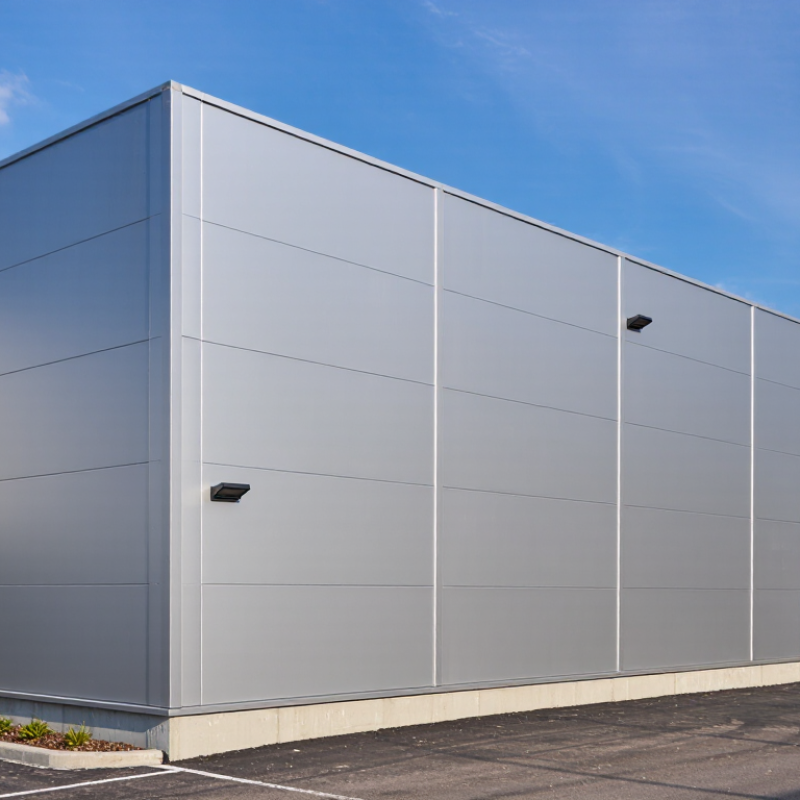
What Insulated Metal Panels Are and How They Work
What Are the Best Insulated Metal Panels in 2026?
What Insulated Metal Panels Are and How They Work
Insulated metal panels are factory-made building components with metal facings bonded to an insulating core. They arrive at the jobsite as large panels, reducing the number of separate layers crews must install. Core materials vary, and each affects fire performance, thermal resistance, weight, and cost. No single panel suits every wall or roof.
The panels slow heat flow through the core, while interlocking edges and sealed joints help limit air and water entry. Details matter. Gaps around fasteners, windows, or roof transitions can weaken the finished assembly, even when the panel itself performs well. Specifiers should review tested thermal values and installation details, not just the center-of-panel rating. ASTM C1363 provides a hot-box method for measuring thermal performance of building assemblies.
The 2024 Global Status Report for Buildings and Construction estimates that buildings account for 32% of global energy use and 34% of energy- and process-related carbon dioxide emissions. That context makes envelope design consequential, but insulation alone cannot solve poor ventilation or leaky joints. In practice, site conditions can also differ from drawings. Inspecting seals and connections during installation is worthwhile, though it is easy to rush.
What Are the Best Insulated Metal Panels in 2026? — What Insulated Metal Panels Are and How They Work
Insulated metal panels (IMPs) are factory-made sandwich panels consisting of metal facings bonded to an insulating core. Their best use depends on the project’s thermal, fire, moisture, acoustic, and installation requirements.
| Panel or Core Type | How It Works | Typical Thermal Resistance per Inch of Core | Often Best Suited For | Key Considerations |
|---|---|---|---|---|
| Polyisocyanurate (polyiso) IMP | A rigid foam core slows heat transfer; bonded metal skins provide a finished surface and help the panel act as a structural sandwich. | Approximately R-5.6 to R-6.5 per inch (RSI 0.99–1.14 per 25.4 mm), depending on product and test conditions. | Projects prioritizing high thermal resistance with relatively slim wall or roof assemblies. | Actual performance varies with temperature, panel joints, fasteners, and the complete assembly. Confirm the tested fire performance for the specific panel system. |
| Polyurethane (PUR) IMP | A closed-cell foam core provides insulation and is bonded between interior and exterior metal facings. | Approximately R-5.5 to R-6.5 per inch (RSI 0.97–1.14 per 25.4 mm), with values varying by formulation and test method. | Enclosures needing strong insulation performance and factory-finished construction. | Check the product’s fire classification, temperature limits, joint details, and applicable building-code approvals. |
| Expanded polystyrene (EPS) IMP | A lightweight cellular plastic core reduces conductive heat flow between the metal faces. | Approximately R-3.6 to R-4.2 per inch (RSI 0.63–0.74 per 25.4 mm). | Applications where cost, low weight, and straightforward thermal insulation are important. | Typically needs more core thickness than higher-R foam types for the same nominal insulation level. Review fire, moisture, and code requirements for the complete assembly. |
| Mineral wool IMP | Fibrous mineral insulation limits heat transfer; the metal facings protect and contain the core within the panel assembly. | Approximately R-3.0 to R-4.3 per inch (RSI 0.53–0.76 per 25.4 mm), depending on density and product. | Projects where noncombustible insulation or particular fire-performance objectives are a priority. | Often requires greater thickness to reach the same nominal thermal resistance as higher-R foam cores. Fire ratings apply to tested assemblies, not to a core description alone. |
| Roof IMP | Interlocking insulated panels span between designed supports; joints and attachment details help control water entry and air leakage. | Depends on core type, panel thickness, joint design, and support conditions. | Commercial, industrial, and other buildings needing an insulated, factory-finished roof enclosure. | Compare structural capacity, slope, drainage, weather seals, fasteners, and tested roof-system performance—not just nominal R-value. |
| Wall IMP | Interlocking panels create an insulated wall enclosure; the metal faces provide the exterior and interior finishes when designed for that use. | Depends on core type, thickness, panel joints, and installation details. | New construction or retrofit projects seeking a fast-to-install insulated wall system. | Specify joint configuration, air and water control, thermal bridges, corrosion protection, finish, and compatibility with openings and adjacent assemblies. |
How IMPs work: The insulating core slows heat flow through the panel, while the metal facings protect the core and form a stiff sandwich panel. Interlocking joints and properly designed seals help limit air and water leakage. Whole-wall or whole-roof performance can differ from the core’s nominal R-value because of joints, fasteners, supports, openings, and installation. Values shown are general reference ranges, not product guarantees; verify tested data, code compliance, and assembly details for the project.