

Which Intel 12th Gen Industrial Computer Is Best in 2026
Choosing the best Intel 12th Gen Industrial Computer in 2026 is less about picking the fastest processor and more about matching a system to its working environment. A factory vision station, a roadside cabinet, and a compact machine controller place very different demands on a computer. The right choice depends on workload, available space, operating conditions, and the cost of downtime.
Intel’s 12th-generation processors offer a range of performance options, but processor names alone do not settle the decision. Check memory capacity, expansion slots, network ports, storage options, and the exact I/O required by connected equipment. Small details matter. A missing serial port or an awkward cable path can create more trouble than a modest performance gap. Review the manufacturer’s stated temperature range, power requirements, and vibration specifications against the actual installation. Do not assume that every industrial model supports the same conditions.
This guide compares the practical factors buyers should weigh, including computing performance, connectivity, durability, serviceability, and vendor support. It also considers how a system may handle future software and peripheral changes. A datasheet is a starting point, not proof of fit. Real deployment conditions can expose limitations that product pages do not make obvious, and not every requirement can be predicted in advance. The strongest choice is the one whose documented capabilities align with the application, with enough headroom for realistic growth but not unnecessary cost. Before ordering, confirm the precise configuration and support terms with the manufacturer.
What Defines an Intel 12th Gen Industrial Computer in 2026?
In 2026, a 12th-generation industrial computer is defined by more than its processor. Its hybrid architecture combines performance cores with efficiency cores, helping it handle control tasks alongside heavier workloads. The exact core count and memory options depend on the processor and motherboard. That distinction matters. A system’s actual capability should be checked against its published specifications, not inferred from the generation label.
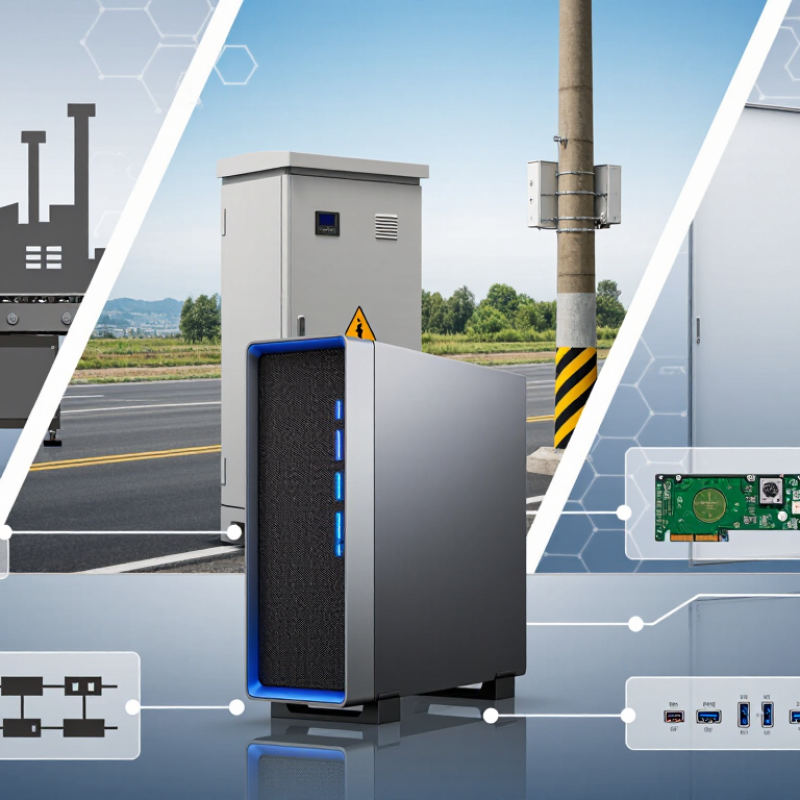
Industrial use brings different demands. A compact unit may sit beside a production line, where dust, vibration, heat, and limited airflow affect reliability. Check the rated operating temperature, cooling design, mounting method, and available ports. Serial connections, multiple network interfaces, and expansion slots can matter more than peak benchmark scores. Test the configuration with the intended sensors, displays, and software before deployment. A crowded cabinet can expose cooling weaknesses quickly.
Long service life also depends on details beyond raw performance. Confirm memory type, storage options, remote-management features, and the supplier’s documented support period. Standards and temperature ratings should be verified for the specific configuration. An awkward truth: newer hardware does not automatically make a better control system. Some projects may not need the extra processing headroom, and a poorly matched system can create needless cost or integration work.
Which Intel 12th Gen Industrial Computer Is Best in 2026 - What Defines an Intel 12th Gen Industrial Computer in 2026?
| Selection Dimension | What to Check | Relevant 12th Gen Facts | Best Fit in 2026 |
|---|---|---|---|
| Processor architecture | Match processor performance and core layout to the application. | 12th Gen Core processors use the Alder Lake generation. Many models combine Performance-cores and Efficient-cores, but core counts and layouts vary by model. | Choose a balanced or lower-power model for continuous control tasks; consider a higher-core model for parallel workloads such as machine vision or edge analytics. |
| Core and thread capacity | Check the exact processor SKU, workload concurrency, and software support. | Core and thread counts differ across the range. Some desktop models provide up to 16 cores and 24 threads; that maximum does not apply to every 12th Gen processor. | For simple HMI or gateway duties, prioritize a suitable power envelope over maximum core count. For several simultaneous services, assess core count and sustained cooling together. |
| Memory | Confirm memory type, capacity, ECC support, and the number of slots on the actual system board. | Supported memory depends on the processor and board. Many desktop 12th Gen platforms support either DDR4 or DDR5; a board generally determines which type can be installed. | Select capacity based on the operating system, application, and data buffers. Verify ECC requirements explicitly rather than assuming support. |
| Expansion and PCIe | Count required expansion cards, storage devices, and available slots or lanes. | PCIe capabilities depend on processor, chipset, and board design. Select desktop configurations support PCIe 5.0 from the processor, while other connections and chipset lanes vary. | For vision or data-acquisition systems, check slot size, lane allocation, and clearance—not just the advertised PCIe generation. |
| Display and graphics | Verify display outputs, resolution, number of displays, and whether a discrete GPU is required. | Integrated graphics availability varies by processor model. Display connectors and supported configurations are determined by the system board and its firmware. | Integrated graphics can suit basic HMI and office-style visualization. Use a system with suitable expansion and thermal capacity for GPU-intensive inspection or rendering. |
| Industrial I/O | Check Ethernet, USB, serial ports, digital I/O, storage interfaces, and fieldbus requirements. | These interfaces are system-level features, not guaranteed by the processor generation. Port count, controller type, and isolation depend on the board and add-on modules. | Choose a configuration with the required ports built in where possible, and confirm electrical isolation and connector type for the installation. |
| Power and cooling | Evaluate sustained workload, enclosure airflow, power supply, and thermal limits. | Power characteristics vary substantially by processor model and form factor. The cooling solution and firmware settings affect sustained performance. | For sealed or fanless installations, prioritize a validated thermal design and confirm performance under the expected ambient temperature and workload. |
| Environmental rating | Request operating-temperature, vibration, shock, humidity, and ingress-protection specifications for the complete computer. | An industrial rating is not defined by the 12th Gen processor. Environmental limits depend on the complete system, components, enclosure, and validation conditions. | Select only a system whose published environmental specifications cover the actual installation conditions. |
| Reliability and service life | Review component availability, warranty, repair process, and long-term supply commitments. | Availability and support periods are set by the system supplier and component supply chain; they cannot be inferred from the processor generation alone. | For equipment expected to remain deployed for years, obtain written lifecycle and replacement-part information before selection. |
| Overall recommendation | Compare complete-system specifications against workload, environment, I/O, and support needs. | There is no universally best 12th Gen industrial computer. Processor model, board design, cooling, expansion, and validated operating conditions all matter. | The best choice in 2026 is the system that meets the application requirements with verified thermal and environmental performance, the necessary interfaces, and an acceptable support plan. |