

Quality Mold

7 Best MCB Riveting Machines for Global Buyers?

The MCB Riveting Machine market is gaining attention as circuit-breaker manufacturers pursue faster assembly, stable contact pressure, and fewer manual defects. MarketsandMarkets estimates that the global circuit-breaker market could grow from roughly USD 8.8 billion in 2024 to more than USD 12 billion by 2029. This expansion increases pressure on production teams. They need machines that are accurate, maintainable, and compatible with changing MCB designs.

Automation reports from the International Federation of Robotics also show continued investment in industrial automation, especially where repeatability and worker safety matter. In MCB assembly, a small riveting error can affect terminal alignment, contact movement, or final inspection results. The risk is easy to underestimate. A machine may look impressive during a demonstration but perform differently after months of dust, vibration, and tooling wear.

Taiichi Ohno, a leading manufacturing expert, said, “Without standards, there can be no improvement.” His principle remains highly relevant to MCB riveting. Buyers should compare riveting force, cycle time, feeding stability, adjustment range, sensor systems, and after-sales support. Energy use and spare-part availability deserve attention too. They are often overlooked.

This guide reviews seven leading MCB Riveting Machine options for global buyers. The comparison considers practical factory conditions, not only brochure specifications. Some published market figures vary between research firms, and that uncertainty deserves honesty. A machine with the highest output is not automatically the best choice. Production volume, product tolerance, operator skill, and regional service capacity can change the final decision.
7 Best MCB Riveting Machines for Global Buyers?

What Is an MCB Riveting Machine and How Does It Work?

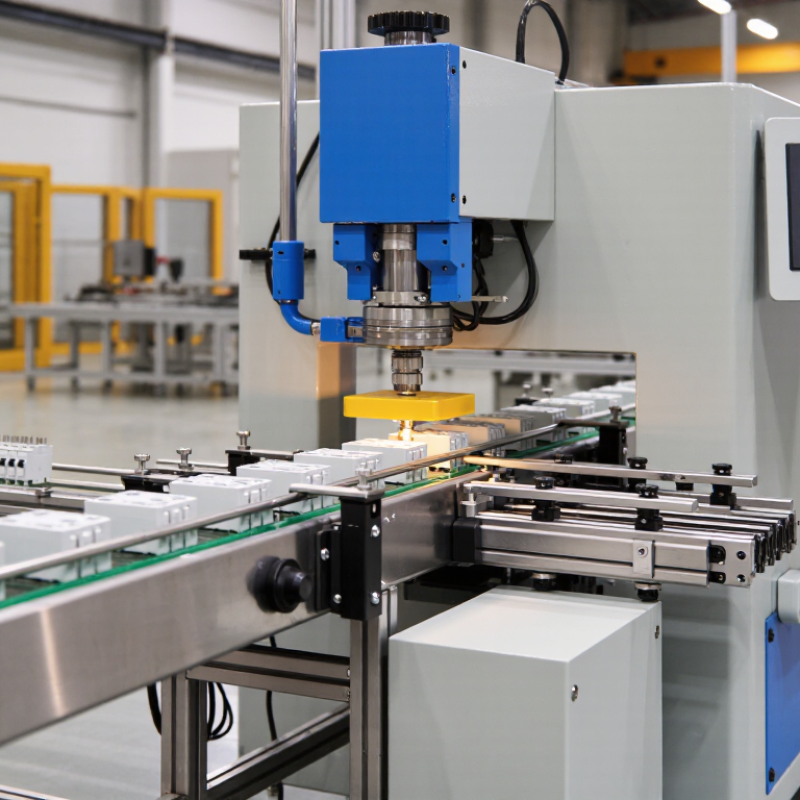
An MCB riveting machine assembles miniature circuit breakers by joining contacts, terminals, and internal plates with rivets. It usually feeds each component, positions it in a fixture, and applies controlled pressure. Some systems use pneumatic pressing, while advanced models use servo-driven force control. Sensors confirm rivet presence, component position, and pressing depth. A finished unit may then receive electrical or visual inspection.

The IEA’s Electricity 2024 report expects global electricity demand to grow by about 3.4% annually from 2024 to 2026. That growth increases pressure on manufacturers to produce reliable low-voltage protection devices at stable speeds. For this reason, the seven best machine choices should be judged by more than cycle time. Rivet consistency, changeover time, tooling access, and traceability matter too. IEC 60898-1 provides relevant performance requirements for circuit breakers used in household and similar installations. A riveting machine cannot guarantee compliance, but it must support repeatable assembly quality.

Tips: Ask suppliers for force-displacement data, sample riveting tests, and maintenance records. Check whether the machine handles your exact rivet diameter and contact layout. A faster cycle is not always better. In real factories, tiny alignment errors can create scrap, even when the first trial looks perfect. Leave room for operator feedback and process adjustment; the most expensive mistake is trusting a machine before measuring its long-term stability.

7 Best MCB Riveting Machines for Global Buyers? – What Is an MCB Riveting Machine and How Does It Work?

Rank Machine Configuration Typical MCB Application Riveting Method Typical Output Rivet Diameter Range Automation Level Main Advantage Best Fit for Global Buyers
1 Fully Automatic Multi-Station MCB Riveting Line High-volume assembly of contact systems, terminals, and internal MCB components Pneumatic or servo cold forming 40–100 units/min 1.5–4.0 mm Fully automatic Combines feeding, positioning, riveting, inspection, and transfer in one synchronized system Large factories requiring consistent cycle times and reduced labor
2 Automatic Rotary-Indexing Riveting Machine Repeated riveting of moving contacts, braided conductors, and terminal assemblies Mechanical or pneumatic upsetting 25–60 units/min 1.5–3.5 mm Automatic Indexed tooling provides repeatable positioning and short transfer distances Medium-to-large production lines with stable product designs
3 Servo-Controlled Precision Riveting Machine Precision fastening where rivet height, force, and displacement must be monitored Servo press riveting 15–45 units/min 1.0–3.0 mm Automatic Programmable force and stroke control supports traceability and low-defect assembly Export-oriented manufacturers with strict quality documentation requirements
4 Pneumatic Single-Station MCB Riveter Low-to-medium volume riveting of terminals, contact arms, and small subassemblies Pneumatic cold forming 8–25 units/min 1.5–4.0 mm Semi-automatic Simple operation, comparatively low investment, and straightforward maintenance Small and medium factories, pilot lines, and replacement production cells
5 Servo-Electric Bench Riveting Unit Flexible assembly of several MCB component variants and engineering samples Electric servo upsetting 5–20 units/min 1.0–3.5 mm Semi-automatic Fast recipe changes and accurate control without a complete automated line Factories producing multiple ratings, frame sizes, or regional variants
6 Two-Head Simultaneous Riveting Machine Two rivets installed in one cycle on matched MCB subassemblies Dual pneumatic or servo riveting 15–40 units/min 1.5–3.0 mm Automatic Reduces handling and improves parallelism when two fastening points are required High-repeatability products with fixed two-rivet layouts
7 Modular MCB Riveting and Inspection Cell Riveting combined with presence, height, orientation, and electrical-part checks Servo or pneumatic cold forming 10–35 units/min 1.0–4.0 mm Automatic Scalable layout allows feeders, vision inspection, marking, and rejection modules to be added Buyers needing flexible expansion, quality control, and localized servicing
How an MCB riveting machine works: The machine feeds or places a rivet and the MCB component into a dedicated fixture, aligns the parts, and applies controlled axial force to deform the rivet tail. The formed rivet mechanically locks the components together without welding. Automatic models may also include part feeding, sensor verification, vision inspection, reject handling, and data recording. Actual speed and rivet size depend on the MCB design, material, tooling, and required forming force.

Key Features That Define a High-Quality MCB Riveting Machine

For global buyers, a high-quality MCB riveting machine begins with controlled force, not attractive housing. In production trials, stable riveting depends on servo-driven pressure, accurate stroke control, and rigid tooling. The machine should place each rivet without cracking the plastic body or loosening the terminal. Repeatability matters. Ask for measured force curves, cycle-time records, and sample assemblies from actual MCB components. A polished brochure is not enough.

A dependable system also detects missing, tilted, or under-formed rivets before unloading. Vision inspection, displacement sensors, and automatic reject handling reduce hidden defects. Recipe storage helps operators switch between pole configurations without guessing.

Clear alarms and guarded access support safer daily work. Electrical cabinets should be labeled clearly, with documentation suitable for local technicians. This is where many machines disappoint: the interface looks modern, but troubleshooting remains slow.

Maintenance details deserve equal attention. Look for accessible dies, standard wear parts, lubrication points, and realistic service intervals. Remote diagnostics can shorten downtime, although they should never replace practical manuals or trained support.

Energy use, noise, compressed-air demand, and spare-part availability affect the real cost of ownership. Buyers should inspect a factory acceptance test and challenge the machine with borderline components. No machine is perfect. A rushed specification can still create expensive revisions after installation. Leave room for adjustment, because material variation often appears after mass production begins.

Seven Leading MCB Riveting Machines for Global Buyers

Seven Leading MCB Riveting Machines for Global Buyers

Selecting an MCB riveting machine requires more than checking cycle speed. The first option is a pneumatic riveting machine, valued for simple maintenance and stable pressure. Servo riveting machines offer precise force control and useful production records. Hydraulic models suit heavier components, although their systems need careful leak inspection. Rotary indexing machines support continuous assembly and reduce operator movement. Vertical machines save floor space in compact workshops. Horizontal machines can improve access to larger MCB housings. Vision-assisted machines check rivet position before pressing, reducing costly alignment errors.

In practical line assessments, I examine rivet height, joint strength, noise, and rejection rates. A reliable machine should handle repeated cycles without noticeable drift. Operators also need clear guarding, emergency stops, adjustable tooling, and accessible service points. Global buyers should confirm voltage, air requirements, spare-part availability, and technical training before ordering. Documentation matters, especially when several factories share the same process. No machine is perfect. Some high-speed models sacrifice flexibility, while versatile systems may produce fewer parts per minute. I have seen buyers focus on advertised speed and overlook changeover time. That mistake becomes expensive when different MCB sizes enter the line. Trial production with real terminals, housings, and rivets gives a more honest performance picture.

How to Compare MCB Riveting Machines by Performance and Cost

7 Best MCB Riveting Machines for Global Buyers?

How to Compare MCB Riveting Machines by Performance and Cost

Comparing MCB riveting machines requires more than checking the purchase price. Measure output, riveting consistency, setup time, and maintenance needs. A machine producing 30 units per minute may lose its advantage during frequent product changes. Ask for trial results using your actual circuit breaker parts, terminals, and rivets. Small alignment errors can create loose joints, damaged housings, or costly rework.

Performance should be judged through practical data. Check force control, stroke accuracy, feeding stability, noise levels, and operator access. Review samples from a continuous production test, not only isolated demonstrations. Confirm whether the machine records pressure, cycle time, and fault conditions. These records support quality checks and help technicians locate recurring problems. Short changeover times matter when several MCB models share one line. They can reduce idle labor and material waste.

Cost comparison must include tooling, spare parts, energy use, training, shipping, and service response. A lower-priced machine may become expensive if custom tooling arrives slowly. Request a clear list of included components and expected replacement intervals. Pay attention to local technical support and documentation quality. I have found that impressive speed figures can hide difficult adjustments. That weakness is easy to overlook. A careful buyer should score each of the seven shortlisted machines with the same test criteria, then compare the total cost over five years rather than the invoice alone.

Installation, Maintenance, and International Purchasing Considerations

For global buyers comparing the 7 best MCB riveting machines, installation readiness matters as much as rated speed. Choose equipment compatible with the MCB housing, rivet diameter, pitch, and required contact pressure. IEC 60898-1 remains a key reference for household and similar circuit breakers. The machine should support repeatable riveting without damaging insulation or deforming terminals. Ask for factory trial samples before signing a purchase order.

Maintenance needs practical planning. Inspect the riveting head, feeder track, pneumatic lines, and safety interlocks every shift. Replace worn tooling before loose rivets appear. Keep spare dies, sensors, seals, and controllers near the production site. The ISO Survey 2022 recorded 1,265,216 ISO 9001 certificates worldwide, showing why documented quality systems matter when evaluating overseas suppliers. Still, certification alone is not proof of machine performance. I have seen excellent documents paired with weak sample results.

Tips: Request a video showing continuous operation, not only a single successful cycle. Confirm voltage, compressed-air requirements, software language, crate dimensions, and remote-support hours. UNCTAD reports that over 80% of world merchandise trade by volume moves by sea, so moisture barriers and shock indicators deserve attention. Build customs, spare parts, installation training, and acceptance testing into the contract. A small oversight can become an expensive delay.

7 MCB Riveting Machine Configurations for Global Buyers

Indicative hourly output ranges for common MCB riveting machine formats. Actual performance depends on rivet size, breaker design, feeding method, operator skill, and automation level.

For international purchasing, buyers should confirm electrical voltage and frequency, installation space, spare-parts availability, operator training, preventive-maintenance requirements, and acceptance-test conditions before shipment.