

Quality Mold

7 Best Multi Stage Cylinders for Industrial Buyers

Choosing a cylinder for an industrial system involves more than comparing bore size or price. A Multi Stage Cylinder can deliver a long extension from a compact retracted length, which is useful in lifting platforms, dump bodies, and material-handling equipment. But the right model depends on the job. Load, stroke, operating pressure, mounting space, and duty cycle all affect performance.

This guide reviews seven options for industrial buyers, with attention to practical specifications and application fit. A cylinder that works well in a clean factory may struggle in a dusty yard or under frequent side loading. Look closely at materials, seals, stage sequence, port placement, and available service support. Small details matter.

There is no universal winner. Some buyers need maximum reach; others value a compact installation, predictable motion, or easier maintenance. Product data should be checked against the actual system design, and critical selections should be confirmed with the manufacturer or a qualified engineer. Catalog figures do not tell the whole story. Installation quality and operating conditions can change real-world results, too. This comparison aims to make those trade-offs easier to see, while recognizing that specifications and availability may change. A careful shortlist is a useful start, not a substitute for verifying fit before purchase.
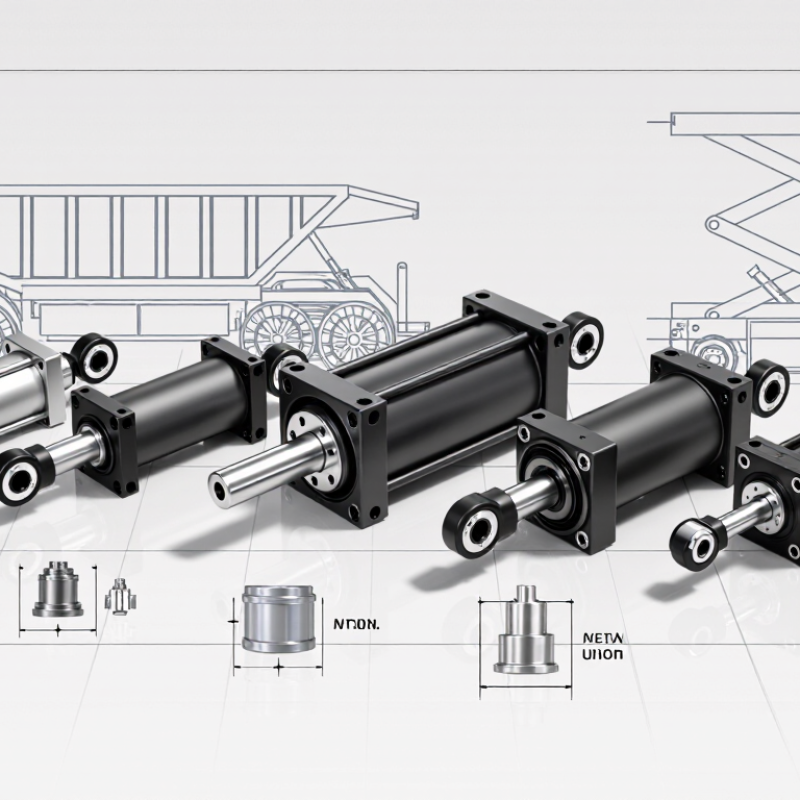
7 Best Multi Stage Cylinders for Industrial Buyers

Understanding Multi-Stage Cylinders and Their Industrial Role

Multi-stage, or telescopic, cylinders create a long working stroke from a short retracted package. Nested steel sleeves extend one after another, making them useful where frame space is tight: dump bodies, lifting platforms, and mobile equipment. The trade-off is visible in operation. Smaller stages generally provide less force, while seals and sliding surfaces add friction. Not magic.

Grand View Research’s hydraulic-cylinder market report estimated a global market value of USD 14.4 billion in 2023 and forecast USD 21.4 billion by 2030. That figure covers hydraulic cylinders broadly, not telescopic units alone; it signals industrial demand, not a product-performance guarantee.

For buyers, the working load, stroke, mounting angle, oil pressure, and available retraction space matter more than market growth. Check the load through the full stroke, especially near maximum extension, when side loading can damage guides and seals. A clean spreadsheet can still hide a bad side-load assumption. Also confirm whether gravity can retract a single-acting design, or whether the machine needs powered retraction. Measure the actual space around the cylinder, not just the drawing’s nominal envelope.

How Telescopic Stages Deliver Long Strokes in Compact Spaces

Telescopic cylinders solve a simple space problem. Several nested sleeves retract into one compact body, then extend in sequence to produce a long working stroke. A truck-mounted tipper, for example, can raise its bed without storing a cylinder as long as its full extension. Grand View Research’s 2024 hydraulic-cylinder market report valued the global market at about USD 15 billion in 2023, reflecting broad use across construction and material-handling equipment. That figure covers many cylinder types, not telescopic units alone.

The stage arrangement matters. The largest sleeve extends first; smaller stages follow, giving long reach from a short closed length. But each added stage brings seals, overlap, and friction. Engineers should check the load through the full stroke, not just at the retracted position. A side load can cause uneven wear, while rapid extension may make the final stage feel abrupt. Small details matter. Match the bore, stroke, mounting geometry, and operating pressure to the machine’s actual duty cycle. ISO 10100 provides acceptance-test procedures for hydraulic cylinders, but a passed test does not replace application-specific checks. Compactness is useful, yet it can hide trade-offs. Stage timing and maintenance access deserve a second look.

Key Cylinder Types and Performance Factors for Industrial Use

Industrial buyers should distinguish telescopic hydraulic cylinders from pneumatic multi-position designs. Telescopic cylinders use nested stages to deliver a long stroke from a compact retracted length. Single-acting models extend under pressure and usually rely on gravity or an external load to retract; double-acting versions provide powered retraction. Pneumatic designs can create several fixed positions, but their force and load capacity differ from hydraulic units. That distinction matters.

For telescopic cylinders, compare rated pressure, load, stroke, retracted length, extension sequence, and mounting limits. Each extending stage generally has a smaller effective area, so available force can change across the stroke. Check side-load tolerance, seal compatibility, end cushioning, and cycle-life data for the actual fluid, temperature, and duty cycle.

One easy-to-miss trade-off: a compact package may mean less stability when extended.

The U.S. Department of Energy’s Improving Compressed Air System Performance sourcebook reports that compressed air accounts for roughly 10% of manufacturing electricity use. That figure is not a cylinder efficiency rating, but it makes leakage and operating pressure worth checking in pneumatic applications. It is easy to overlook leaks. Request test conditions with quoted performance figures, and verify that they match the real load and cycle.

Seven Multi-Stage Cylinder Options for Industrial Buyers

Industrial buyers can compare seven practical multi-stage cylinder options: single-acting hydraulic telescopic, double-acting hydraulic telescopic, pneumatic telescopic, tandem-stage, compact nested, high-pressure small-bore, and corrosion-resistant washdown designs. Each solves a different space, force, or operating challenge. Space is tight. A nested cylinder can deliver a long stroke from a short closed length, while a tandem arrangement can increase force within a limited footprint. Check stroke, collapsed length, load, mounting, and duty cycle together.

Efficiency deserves equal attention. The U.S. Department of Energy’s Improving Compressed Air System Performance: A Sourcebook for Industry reports that leaks can waste 20–30% of a plant’s compressed-air output. For pneumatic options, specify suitable seals, clean air, and accessible leak checks. For hydraulic units, review pressure ratings, side-load limits, and fluid compatibility. Small details matter.

A washdown cylinder may resist moisture and cleaning exposure, but its seals still need inspection. High-pressure designs can reduce bore size, yet may increase component stress and service demands. I would not choose by maximum stroke alone; that shortcut can overlook mounting space and replacement access. Ask suppliers for load curves, cycle-life assumptions, and test conditions, then compare them with real machine data. Some estimates remain imperfect, especially when duty cycles change between shifts.

7 Best Multi Stage Cylinders for Industrial Buyers - Seven Multi-Stage Cylinder Options for Industrial Buyers

Compare these common hydraulic telescopic-cylinder configurations by stage count, action, packaging, and application. Actual stroke, collapsed length, force, speed, and pressure rating depend on the selected design and must be verified against the manufacturer’s engineering data.

Option Typical configuration Action and movement Packaging and stroke Suitable applications Key selection checks
1. Two-stage single-acting Two telescoping sections: a barrel and one extending stage. Hydraulic pressure extends the cylinder; gravity or an external load typically retracts it. Shorter retracted package than a single-stage cylinder delivering a comparable overall reach; stroke depends on stage geometry. Tilting platforms, compact lifts, and equipment with a dependable return load. Confirm the load can retract the cylinder and that the mounting arrangement limits side loading.
2. Three-stage single-acting Three telescoping sections with two extending stages. Pressure-driven extension; retraction is generally load- or gravity-assisted. More reach from a compact closed length than a two-stage design of similar application class; stage overlap and stroke affect stability. Dump bodies, material-handling equipment, and compact lifting systems. Check extension sequence, end-of-stroke loads, mounting alignment, and the required retraction force.
3. Four-stage single-acting Four telescoping sections with three extending stages. Hydraulic extension with a typically passive, load-assisted return. Long reach from a relatively short retracted package; additional stages increase design and guidance complexity. Applications with limited installation length and substantial required travel. Verify fully extended stability, side-load limits, retraction conditions, and available installation space.
4. Five-stage single-acting Five telescoping sections with four extending stages. Pressure extends the stages in a designed sequence; the load usually provides retraction. Very long travel can be packaged into a short closed length; the narrowest extended stages require careful load and guidance review. Specialized high-reach lifting or tipping applications where space is highly constrained. Check load at each stage, buckling and side-load requirements, stroke limits, and the complete duty cycle.
5. Two-stage double-acting Two telescoping sections with hydraulic control for extension and retraction. Hydraulic pressure is used to control both directions through the cylinder’s designed fluid passages. Compact extended reach with powered return; porting and internal passages make the design more involved than a basic single-acting unit. Machines that need controlled retraction or cannot rely on gravity to return the cylinder. Confirm hydraulic circuit compatibility, retraction force, hose routing, and the specified stage sequence.
6. Three-stage double-acting Three telescoping sections with hydraulically controlled extension and retraction. Powered movement in both directions, subject to the cylinder’s specified hydraulic circuit and sequencing. Longer reach than many two-stage packages, with additional internal routing and control considerations. Industrial positioning, handling, and lifting systems requiring a powered return over a long stroke. Review circuit diagrams, stage synchronization, pressure losses, maintenance access, and retraction behavior.
7. Synchronized multi-stage Multiple stages designed to extend at a coordinated rate, using a specified hydraulic or mechanical arrangement. Stage movement is coordinated by the design; synchronization method and behavior vary by cylinder. Available in different stage counts; packaging, total stroke, and stage travel must be confirmed from the cylinder drawing. Platforms or mechanisms where coordinated movement across stages is important. Specify acceptable stage-position variation, load distribution, operating speed, and failure response.

Buyer note: Request a dimensioned drawing and rated performance data for the exact configuration. Do not infer maximum pressure, lifting capacity, extension speed, or service life from stage count alone.

How to Select a Cylinder for Your Application and System Requirements

A multi-stage cylinder can provide a long stroke in a compact retracted length, but the right choice depends on the whole machine. Start with the load, required travel, available mounting space, and operating pressure. Measure the load at its worst position, not only at rest. Measure twice. A tilted load or side force can shorten seal life, so use guides when the cylinder should not carry those forces.

Check the duty cycle and the speed needed under load. A cylinder that works well for occasional movement may overheat or wear quickly in continuous service. Confirm the extension sequence, retracted length, port location, and available cushioning. In a telescopic design, the smallest stage may extend last and have a different force capacity. Verify the manufacturer’s stage-by-stage data against the actual load. Guessing from the largest bore is a common mistake.

Match seals and materials to the working fluid, temperature, dust, and moisture in the installation area. Allow room for hoses, fittings, and service access; cramped connections can make routine inspection awkward. The system’s relief setting and flow rate also affect performance. They deserve a check. I would leave some margin for changing loads, while avoiding an oversized cylinder that adds cost and demands more fluid. Before ordering, compare the cylinder drawing with the machine layout and ask a qualified supplier to review unusual loads or mounting angles.