

What is the Best UV Flatbed Printer for Your Business Needs?
Choosing the right UV Flatbed Printer can transform your business. This technology offers versatility and quality. However, selecting the best printer isn’t straightforward. It requires careful consideration of various factors.
A UV Flatbed Printer excels in printing on diverse materials. Businesses often seek printers that can handle wood, glass, and metal. These printers utilize UV light to cure ink instantly. This results in vibrant colors and sharp details. Many companies experience increased efficiency and reduced waste with this technology.
However, different models exist, and each has its strengths and weaknesses. Price, print speed, and maintenance vary significantly. Businesses should reflect on their specific needs and budget. Assessing your requirements can avoid costly mistakes. An informed choice leads to better productivity and customer satisfaction. Investing in a UV Flatbed Printer could be a game changer for your business. Balancing quality and cost is key.
Understanding the Basics of UV Flatbed Printers
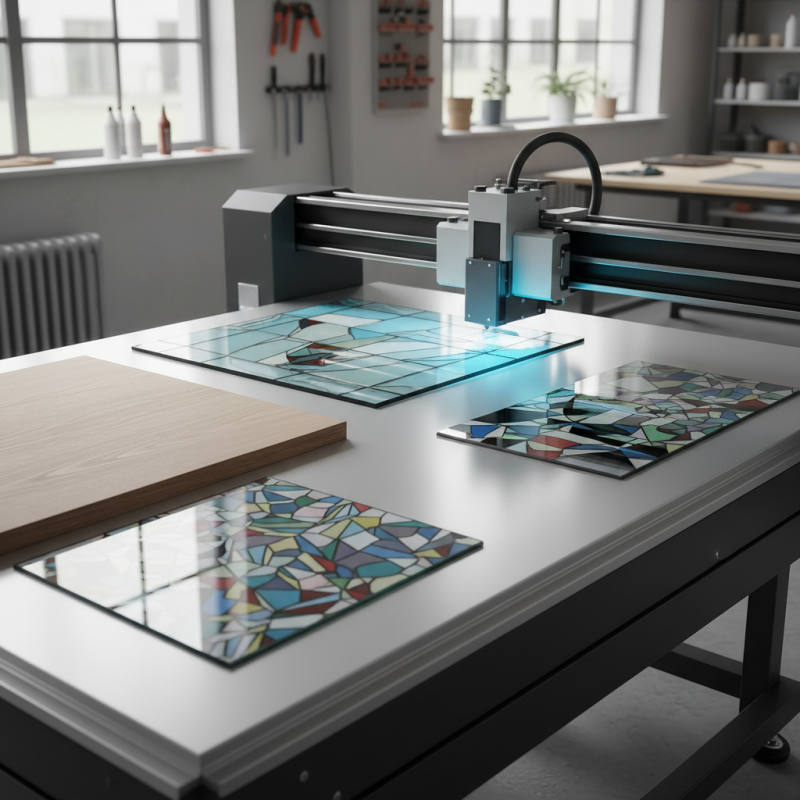
UV flatbed printers are a game changer in many industries. They offer the ability to print on a wide range of materials, from wood to glass. This flexibility opens doors for businesses looking to expand their product offerings. The technology uses UV light to cure inks, providing vibrant colors and high durability. Understanding how these printers work is essential for making an informed choice.
When considering a UV flatbed printer, pay attention to the printing capabilities. Different models have varying resolutions, affecting print quality. A resolution of 1200 dpi is generally sufficient for most applications. However, higher resolutions can enhance detail but may slow down production speed. Think about your specific needs before investing.
Tips: Evaluate the materials you'll be printing on most often. Choosing a printer that accommodates those materials will boost productivity. Also, consider the maintenance requirements of your printer. A model that requires frequent service can disrupt workflow. Always weigh these factors against your business goals to ensure the right fit.
Key Features to Consider When Choosing a UV Flatbed Printer
When choosing a UV flatbed printer, several key features are crucial to your decision-making process. Print quality is vital. High-resolution capabilities ensure your images are sharp and vibrant. Consider the color gamut as well; a wider range allows for more accurate color reproduction.
Versatility is another factor. Look for machines that handle various materials. Wood, glass, and metals should be easily accommodated. A printer that adjusts easily to different substrates saves time and increases efficiency.
**Tip:** Invest in a printer with easy maintenance. Regular upkeep helps avoid costly repairs. Check user reviews on service reliability; these can expose potential issues.
Speed also matters. Fast print speeds can greatly enhance productivity, especially during peak times. Assess the balance between speed and quality. Sometimes, faster isn’t always better if it compromises image fidelity.
**Tip:** Analyze your typical workload. If you frequently handle large files, a printer with robust processing power can streamline your operations.
Keep an eye on the printer's operating costs. Ink consumption and maintenance expenses can add up. It’s essential to evaluate these costs concerning your expected volume and revenue.
Choosing the right UV flatbed printer is not purely about specs. Reflect on your specific needs and limitations to make an informed decision.
UV Flatbed Printer Key Features Comparison
Comparing Leading UV Flatbed Printer Brands on the Market
When evaluating UV flatbed printers, it's crucial to consider several key brands in the market today. The technology in each printer varies, targeting different business needs. Some models excel in speed, while others focus on print quality. This can impact the choice depending on your specific tasks, like signage or packaging.
The material compatibility of printers can also dictate their effectiveness. Some units can handle a diverse range of materials, including wood and metal. Others may be limited to specific substrates. It's worth noting that not all brands provide complete transparency in their specifications. Users often report discrepancies between advertised capabilities and actual performance, leading to potential frustration.
Price points vary significantly across brands. Budget-friendly options may compromise on longevity or support. Meanwhile, high-end models promise durability but might require a steeper initial investment. This decision requires careful consideration and reflection on your unique business requirements. Ultimately, understanding the nuances between brands will help make a more informed choice.
What is the Best UV Flatbed Printer for Your Business Needs?
| Feature | Option 1 | Option 2 | Option 3 |
|---|---|---|---|
| Print Area (mm) | 2500 x 1300 | 3200 x 1600 | 2000 x 1500 |
| Max Resolution (dpi) | 1200 | 1440 | 1200 |
| Speed (m²/hr) | 60 | 80 | 50 |
| Ink Type | UV Curable | UV Curable | Solvent-Based |
| Dimensions (L x W x H mm) | 3500 x 2000 x 1250 | 4000 x 2500 x 1500 | 3000 x 2200 x 1300 |
| Weight (kg) | 1500 | 2300 | 1800 |
| Price Range ($) | 20,000 - 25,000 | 30,000 - 40,000 | 15,000 - 20,000 |
Assessing Your Business Needs for Optimal Printer Selection
When selecting the best UV flatbed printer for your business, understanding your specific needs is vital. Consider the types of materials you will print on. Different substrates demand different printer capabilities. For instance, printing on wood requires different settings than printing on acrylic. Evaluate the thickness and size of the materials as well.
Speed can be a significant factor for productivity. However, don’t rush into a decision. A fast printer may not always deliver high-quality results. Take the time to analyze your workflow. Will a higher volume printer benefit your business, or do you need versatility? Reflect on past projects to inform your choice.
Additionally, think about your budget in relation to maintenance costs. Some printers may have lower upfront costs but higher upkeep. Invest in a printer with a balanced equation between initial price and long-term reliability. Research industry needs and trends. Your printer choice should align with future growth plans, not just immediate demands. The right printer can enhance your production and overall business efficiency.
Evaluating Cost vs. Performance for UV Flatbed Printers
When considering UV flatbed printers, evaluating cost versus performance is essential. The initial investment can be substantial, but understanding your business needs is critical for making a smart decision. A more expensive model may offer higher print quality and faster speeds. However, it's vital to analyze how much you will print. If your volume is low, a less expensive option may suffice.
Tips: Assess your daily printing volume. A lower upfront cost might lead to higher long-term expenses. Reliability is key. Research the printer's track record for performance and maintenance. Investigate user reviews for real-world insights on longevity and upkeep costs.
One must also reflect on scalability. A printer that meets your current needs could become inadequate as your business grows. Consider the range of materials you plan to print on. Not all machines can handle various substrates effectively. A machine should adapt to future projects, not just current ones. Balancing cost and performance is indeed a complex process.
