

What Is a Cereal Bar Cutting Machine and How Does It Work?
A Cereal Bar Cutting Machine turns a continuous slab of cereal mixture into portions ready for cooling, wrapping, and shipment. Depending on the line, it may use rotating knives, reciprocating blades, or a guillotine-style cutter. The slab travels on a conveyor beneath the cutting head. Guides keep its edges aligned, while adjustable speed and blade spacing help control bar length. A clean cut matters. Crushed oats, sticky syrup, or uneven thickness can leave ragged edges and inconsistent weights.
For an illustrative expert perspective, fictional food-processing engineer Daniel Reed offers this original line: “A reliable cut starts with a stable slab, not just a sharp blade.” The quotation is created for this introduction, not taken from a real interview. That distinction matters when evaluating equipment advice. In practice, operators check product temperature, slab height, conveyor speed, and blade condition before adjusting the cut. Small changes can affect both appearance and yield. There is no single setting for every recipe; a soft honey bar behaves differently from a dense, nut-rich one. This article explains the machine’s main components, how material moves through the cutting stage, and which operating details influence portion quality. It also considers common setup issues, such as sticking and uneven cuts. Some production lines still depend on hands-on adjustments. That is worth examining, rather than assuming automation solves every problem.
Definition and Purpose of a Cereal Bar Cutting Machine
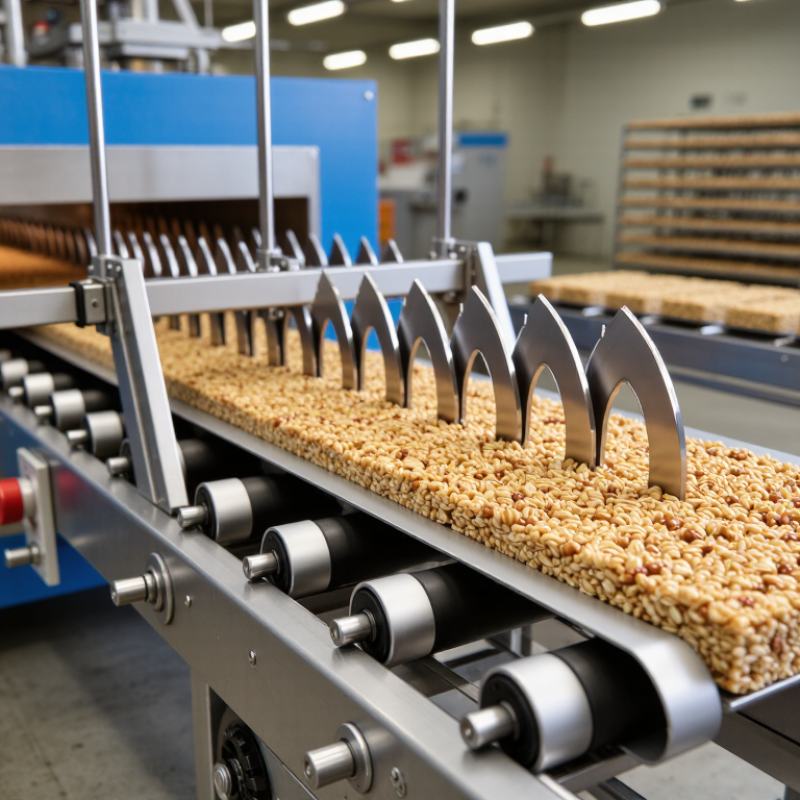
A cereal bar cutting machine is equipment designed to divide a prepared sheet or slab of cereal mixture into individual bars. Depending on the production line, it may use rotating knives, a guillotine-style blade, or another cutting system. The slab usually moves on a conveyor beneath the cutting section. The machine’s purpose is practical: create pieces with consistent length and width, support steady production, and reduce repetitive hand cutting. Neat cuts also help bars fit their trays and packaging. Small differences still happen.
Cutting quality depends on the mixture and setup. A warm, sticky slab may cling to the blade, while a cold, brittle one can crack at the edges. Operators adjust feed speed, blade spacing, and cutting pressure to suit the recipe. This takes attention, and sometimes trial and error. A cutter cannot correct an uneven slab or a poorly controlled cooling stage.
Tips: Check that the slab is level before cutting, and inspect blade edges regularly. Test a small section after changing recipes or thickness. If pieces smear or fracture, pause and review product temperature and machine settings before increasing speed. A little scrap during setup may be unavoidable.
Main Components and Their Functions
A cereal bar cutting machine divides a formed slab into evenly sized portions. Its parts work together to move, stabilize, and cut the product. The exact setup depends on the recipe and bar thickness. A sticky mixture behaves differently from a firm, cool slab.
The feed hopper or conveyor guides the mixture toward the forming section. Rollers spread it into a consistent layer, while adjustable guides help control its width. A compression roller sets the slab’s thickness and presses loose ingredients into place. Too much pressure can make bars dense; too little may leave crumbly edges. Small details matter.
After forming, a cooling section may firm the slab before cutting. This helps reduce smearing, though cooling time needs adjustment for the ingredients and room conditions. The cutting unit uses straight or rotary blades to divide the slab into pieces. A discharge conveyor then carries the bars away for packaging or further handling. Sensors and a control panel let operators adjust speed and spacing. The tricky part is alignment: even a slight shift can produce uneven portions. It is easy to overlook blade wear, too, and that can affect cut quality.
Preparing and Feeding the Cereal Slab
Before a cereal bar cutting machine can portion a slab, the cereal mixture must be spread into a consistent sheet. A forming roller or leveling unit helps control its thickness. The surface should look even, without deep ridges or bare patches. Small differences matter. A thick section may compress unevenly, while a thin edge can crumble as it moves.
The slab also needs enough time to set for clean handling, but it should not become brittle. Temperature, binder, and cereal pieces all affect how it behaves. Operators commonly check the edges and test a small area before feeding the full sheet. It is a simple check, but easy to skip when production is busy. That can lead to loose clusters and irregular cuts.
Once ready, the slab is placed squarely on the infeed conveyor. Side guides keep it aligned, and the belt carries it toward the cutting section at a steady pace. The feed should not push or stretch the sheet. Watch for slipping, crumbs collecting near the guides, or a slab that bends at the transfer point. These signs may call for a slower belt speed or a minor alignment adjustment. Conditions vary between recipes, so one setting rarely suits every batch.
How the Machine Cuts Cereal Bars
A cereal bar cutting machine turns a set slab into evenly sized portions using guided blades and controlled movement. Before cutting, the cereal mixture is usually pressed into a uniform sheet and allowed to firm up. If it is too warm, the bars may bend or smear. If it is too hard, the edges can fracture.
The sheet travels along a conveyor toward a cutting station. Guides help keep it straight, while sensors or mechanical stops can position each section. Depending on the design, a guillotine-style blade cuts across the sheet, or rotating knives create repeated portions as the slab moves forward. The blade’s speed, spacing, and pressure affect the finished pieces.
Small details matter. A clean blade can reduce sticking, while careful adjustment helps limit uneven edges and crumbs. Edges may crumble. That is not always a machine fault; the recipe, cooling time, and ingredient size also play a role.
Operators often inspect the first cuts and adjust the settings. Even then, perfect uniformity is not guaranteed, especially when seeds or dried fruit interrupt the blade’s path.
Key Settings, Safety Features, and Maintenance
What Is a Cereal Bar Cutting Machine and How Does It Work?
Key Settings, Safety Features, and Maintenance
A cereal bar cutting machine portions a continuous slab into set lengths using rotary blades, guillotines, or wire cutters. Operators adjust belt speed, cut length, blade timing, and compression pressure. Small changes matter: excess pressure can flatten soft bars, while poor timing can create ragged edges. Check alignment with a sample bar before a production run. It is a simple step, but easy to rush.
Guards should prevent access to moving blades, and interlocks should stop motion when access doors open. Lockout procedures are essential before cleaning or clearing jams. The U.S. Bureau of Labor Statistics reported a 2.8 recordable-injury rate per 100 full-time workers in manufacturing in its 2023 Survey of Occupational Injuries and Illnesses. This broad industry figure is not specific to cereal-bar lines, but it underscores why safeguards matter.
For maintenance, inspect blades for chips, check belts for tracking drift, and remove crumbs from sensors and guards. FDA regulation 21 CFR 117.40 requires food-processing equipment to be adequately cleanable and maintained. Record inspections and replacement dates. A display can look stable even when blade wear is changing cut quality; verify actual bar dimensions, too.
