

Quality Mold

China Best Furniture Side Drilling CNC Machine Price?

China has become an important sourcing base for woodworking machinery, but “best price” is not a single figure. It depends on what the machine must do. A Furniture Side Drilling Cnc Machine may vary in price with drilling capacity, spindle configuration, workpiece size, control system, automation, and included software. Freight, installation, training, and spare parts can also change the delivered cost. Details decide.

The market context is useful, but it should not be mistaken for machine-price evidence. Grand View Research valued the global furniture market at USD 677.09 billion in 2023 and projected a 5.0% compound annual growth rate from 2024 to 2030. That broad outlook suggests continued investment across furniture production, yet it does not tell buyers what a specific CNC machine should cost. Not always. A larger market does not guarantee a better machine or a faster return.

This guide examines how to compare Chinese suppliers and assess quotations against real production needs. It considers practical details such as drilling accuracy, cycle time, clamping method, electrical requirements, warranty coverage, and local service support. Ask for a configuration sheet and a sample-work demonstration, not just a headline price. A low quote can omit important items; a high quote can include options your workshop may never use. I would treat any price range as a starting point, not a verdict. The right comparison is the machine’s full delivered cost, verified against your materials, daily output, and maintenance capacity.
China Best Furniture Side Drilling CNC Machine Price?

What Is a Furniture Side Drilling CNC Machine?

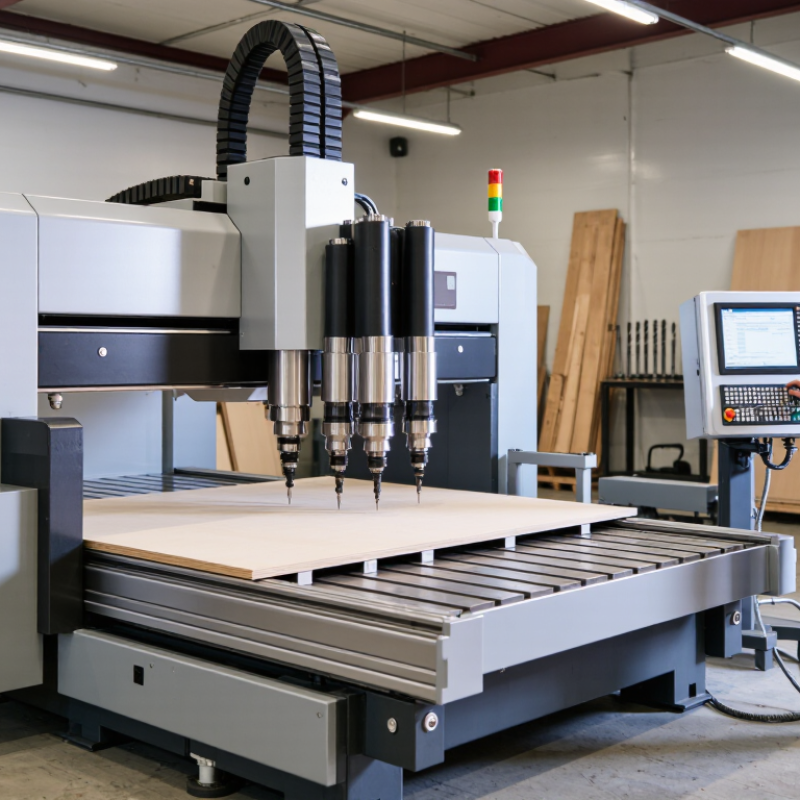
A furniture side drilling CNC machine is built to bore accurate horizontal holes into panel edges or faces. These holes commonly receive dowels, screws, and connector fittings. The operator loads a board against locating stops, clamps it, and runs a drilling program. Depending on the machine, one or more drill heads can work across different sides. The result is consistent hole spacing, especially useful when many cabinet parts must align. Small details matter: a slightly misplaced hole can leave a visible gap at assembly.

It is part of a wider shift toward automated manufacturing, not a guarantee of better production by itself. The International Federation of Robotics reported 4,281,585 industrial robots operating in factories worldwide in 2023, up 10% from 2022, in its World Robotics 2024 report. That figure covers many industries, but it shows how widely automated equipment is being adopted. For furniture workshops, machine value depends on panel size, drilling directions, spindle configuration, software, and operator skill. Still, the word “CNC” can sound more capable than the actual setup; programming and clamping errors remain possible.

Tips: Before comparing prices, test a representative panel with your usual fittings. Check hole position, edge quality, loading time, and how quickly operators can change programs. Ask for cycle-time figures based on your own part sizes, not only a supplier’s sample.

How Does the Machine Support Furniture Production?

A side drilling CNC machine supports furniture production by making repeatable holes along panel edges and faces. It can process cabinet sides, shelves, drawer parts, and bed rails with less manual marking. Operators enter hole positions and spacing, then secure each panel against the machine’s reference fence. A row of dowel holes can be drilled in one setup. That helps on repeat orders. Consistent positioning also makes later assembly easier, especially when several parts must align closely.

In a typical workflow, workers cut panels first, then move them to drilling and edge-banding stations. The CNC unit can reduce measuring time and limit misplaced holes, but it does not fix inaccurate panel dimensions or poor setup. Small errors still matter. Dust extraction, sharp tools, and regular checks help maintain clean holes and steady results. Setup may take longer than expected when job sizes change often. For a workshop comparing machine prices, consider the control system, drilling capacity, tooling, service support, and operator training—not just the purchase cost. A lower price may still bring extra setup work or downtime.

Which Factors Determine Its Price in China?

A side-drilling CNC machine’s price in China depends on the work it must handle, its output speed, and its accuracy. Key cost drivers include spindle count, drilling-head layout, servo axes, tool-changing options, and maximum panel size. A compact machine for occasional cabinet production differs greatly from an automated unit processing varied panels all day. More automation usually raises the purchase price. It may also reduce manual handling. The International Federation of Robotics’ World Robotics 2024 report recorded 541,302 industrial robot installations worldwide in 2023, with about 70% in Asia. This is not a furniture-machine price index, but it shows the region’s strong automation activity.

Configuration is only part of the quote. Software compatibility, dust extraction, installation, operator training, shipping, and taxes can change the final cost. Ask suppliers to specify drilling accuracy, cycle time, supported panel thickness, and what commissioning includes. A detailed test using your own cabinet panels can reveal issues that a headline speed figure misses. Easy to overlook. Two machines with similar motor power may perform differently because of their frames, control systems, and drilling layouts. I would not judge value from the lowest quote alone; a missing service item can become an expensive surprise.

How Do Models and Specifications Affect Cost?

The price of a furniture side drilling CNC machine depends on what the machine must do, not just its size. A basic setup may handle standard panel holes, while a model with multiple drilling heads can process more patterns in one cycle. Spindle quantity, drilling direction, working area, and positioning accuracy all affect the final cost. Faster feed rates and stronger servo systems can also raise the price. More speed is not always useful if daily orders are modest.

Specifications should match your panels and production rhythm. Check the maximum workpiece length and thickness, the number of drilling rows, and whether the machine supports your required hole spacing. Software compatibility matters, too. A lower-priced machine may need extra setup or operator adjustments, which can reduce its real value over time. This is easy to overlook when comparing quotes. Ask suppliers to list included tooling, installation, training, and service terms so you compare equivalent packages.

Tips: Bring sample panel drawings when requesting a quote. Ask for a test cycle using your common hole pattern, and confirm the machine’s actual output with your material. A larger model may be tempting, but unused capacity still costs money.

How to Compare Suppliers and Estimate Total Purchase Costs?

A fair supplier comparison starts with the same job description. Specify panel dimensions, material, hole patterns, daily output, and required drilling directions. Ask each supplier to demonstrate those settings on a sample panel. Watch for clean hole edges, repeatable positioning, and clear setup instructions. A machine with more drilling heads is not automatically the better choice. That matters. Check spindle configuration, clamping method, control software, and compatibility with your existing design files. Request written details for accuracy tolerances and warranty coverage. If a specification is vague, ask for a measurable answer rather than relying on sales language.

Compare the full purchase cost, not only the machine price. Include tooling, software licenses, packing, freight, installation, operator training, and any electrical or air-line preparation. Confirm which parts are included and how quickly replacement components can be supplied. Small details add up. A low quote may exclude commissioning or essential tooling, while a higher quote may include useful support. Build a simple cost sheet with one line per item, then ask suppliers to confirm exclusions in writing. It is easy to focus on the headline price; I would also question whether the machine fits your actual production mix. A detailed quote makes that judgment easier.

China Best Furniture Side Drilling CNC Machine Price? - How to Compare Suppliers and Estimate Total Purchase Costs?

Supplier Profile Typical Machine Configuration Indicative Machine Price (USD) Tooling & Starter Spares Freight & Insurance Installation & Training Brokerage & Local Handling Allowance Estimated Purchase Total (USD) Warranty / Lead-Time Terms to Confirm
Supplier A — Standard configuration Automatic side drilling for furniture panels; CNC positioning; approximate panel range 10–60 mm thick; standard drilling head and basic control package. $12,800 $900 $1,450 $750 $500 $16,400 Confirm warranty duration, remote support coverage, production lead time, and whether commissioning is included.
Supplier B — Higher automation package Side drilling system with automatic positioning and additional tooling options; intended for repeat production of cabinet and furniture panels. $15,600 $600 $1,800 $950 $600 $19,550 Request a written list of included tooling, software functions, warranty exclusions, and shipment-ready date.
Supplier C — Lower-cost configuration Basic CNC side drilling setup; fewer included accessories; verify panel support, drilling capacity, dust extraction connections, and control features. $10,900 $1,400 $2,100 $1,200 $550 $16,150 Check what is excluded from the base price, availability of replacement parts, and whether on-site service is available.

Cost-comparison note: These are illustrative planning estimates, not current supplier quotations or verified market prices. Totals are calculated as machine price + tooling and starter spares + freight and insurance + installation and training + brokerage/local handling allowance. They assume one machine shipped to a U.S. destination; import duties, taxes, electrical upgrades, unloading equipment, and ongoing operating costs are excluded. Obtain comparable written quotations using the same specifications, delivery term, destination, and included services before purchasing.