

China Top 10 Metal Distribution Box Manufacturers?
China’s metal enclosure sector serves a wide range of electrical projects, from factory control rooms to commercial buildings. A Metal Distribution Box may look simple on a specification sheet. In practice, its enclosure, busbar arrangement, protection rating, and assembly quality all matter. A poorly matched box can complicate installation, maintenance, or future expansion.
This overview introduces ten manufacturers operating in China’s market. It is intended as a starting point, not a definitive ranking. Buyers should compare product drawings, material and coating details, test records, customization options, and after-sales support. Ask for evidence. Check the terminal layout. Confirm that the stated enclosure rating suits the installation environment. Small details, such as door clearance or cable-entry position, can affect work on site.
“A dependable enclosure begins with the right specification, but careful assembly and verifiable testing complete the picture.” — Chen Wei, illustrative expert voice; this quotation is drafted for this article and is not an independently verified statement.
Manufacturer information can change, and public product data may not answer every technical question. That limitation deserves attention. Use the list to develop a shortlist, then request current documentation and assess each supplier against your project requirements. A familiar name alone is not enough. Reliable selection depends on evidence, fit, and clear communication.
What Metal Distribution Boxes Are and Where They Are Used
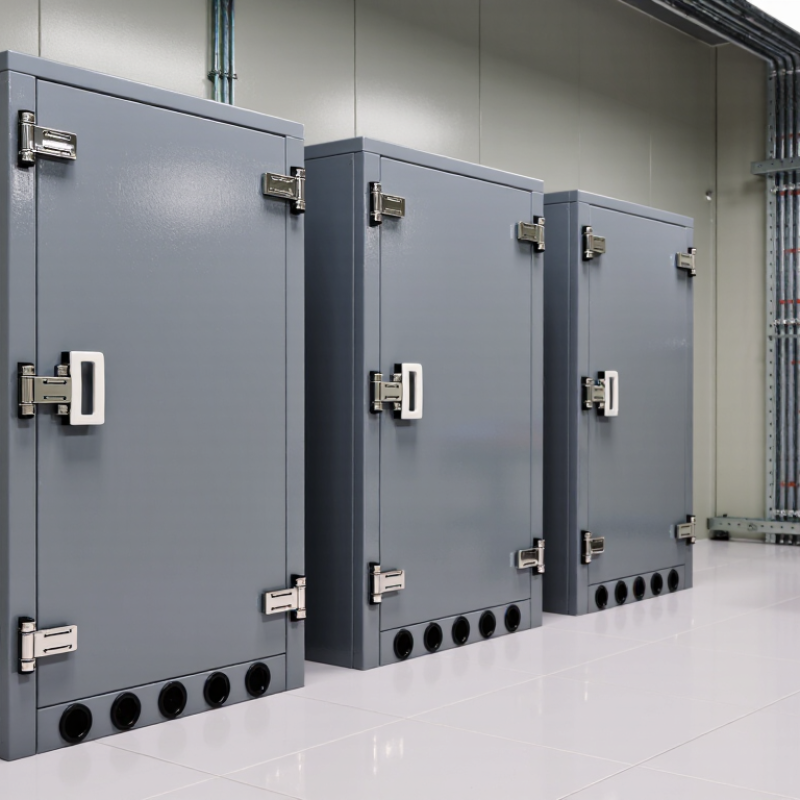
Metal distribution boxes are enclosures that protect electrical connections and equipment, such as circuit breakers, busbars, and terminal blocks. They help limit exposure to dust, accidental contact, and mechanical damage. Small, but critical. Installers use them in factories, commercial buildings, utility rooms, and outdoor infrastructure, choosing designs suited to the site’s moisture, corrosion, and temperature conditions.
A metal enclosure alone does not guarantee safe operation. The door, cable glands, earthing points, and ventilation all matter; poor sealing can let water or fine dust reach live components. For low-voltage switchgear assemblies, IEC 61439-2:2020 specifies verification requirements. The enclosure’s ingress-protection rating should match the actual environment, rather than relying on appearance.
Their role is gaining importance as power networks expand. The International Energy Agency’s 2023 report, Electricity Grids and Secure Energy Transitions, estimated annual grid investment needs to rise from about USD 300 billion to more than USD 600 billion by 2030. That forecast concerns grids broadly, not distribution boxes alone, but it highlights the infrastructure context. A practical detail is often overlooked: installers need enough room inside the box to bend conductors and inspect terminals later. Even a well-made enclosure can become difficult to maintain when crowded.
How to read this chart: Under IEC 60529, the first digit of an IP rating describes protection against access to hazardous parts and solid objects; the second describes protection against water. These selected ratings illustrate classification levels, not a universal specification for metal distribution boxes. Choose an enclosure based on its installation conditions and applicable requirements.
How China’s Metal Distribution Box Industry Is Organized
China’s metal distribution box industry is organized around several linked roles, not just finished-product factories. Sheet-metal workshops cut, bend, weld, and coat steel or stainless-steel enclosures. Component suppliers provide hinges, locks, mounting plates, and cable-entry parts. Assembly companies then fit electrical components to project specifications. Some manufacturers focus on standard cabinets; others handle custom sizes and small production runs. The boundaries can blur.
This structure helps buyers compare suppliers by capability. Ask whether a factory controls its own metalwork and coating, or outsources either step. Request drawings, material details, enclosure dimensions, and inspection records before approving a sample. A neat product photo proves little. It matters. Lead times may also depend on custom tooling, surface treatment, and component availability, so confirm these details in writing. The supplier’s production scope is worth checking carefully; online descriptions do not always make it clear.
Tips: Compare sample workmanship, weld consistency, door alignment, and coating coverage. Check that cable openings and mounting points match your installation plan. If details are missing, ask for clarification rather than assuming the standard version will fit. A small assumption can become expensive.
Criteria for Selecting a Metal Distribution Box Manufacturer
A metal distribution box manufacturer should be assessed on more than price and catalogue dimensions. Check the enclosure’s steel thickness, door alignment, weld finish, and mounting points against your actual installation. Ask how dimensions are measured and whether samples can be inspected before an order. Small gaps matter.
Coating quality deserves a close look. Request details about surface preparation, coating thickness, and corrosion testing, rather than relying on a glossy finish. Confirm the stated ingress-protection rating with relevant test documentation. A neat exterior is not proof of durable protection. It can be misleading.
Review how the manufacturer handles custom cutouts, cable entry, hinges, and internal mounting rails. Provide a drawing and ask for a production sample or inspection photos. Also check whether inspection records identify the batch and material used. Traceability helps when a defect appears months later. Ask about lead times, replacement parts, and response procedures for out-of-spec units. One detail is easy to miss: heat from installed equipment may affect enclosure choice, so discuss ventilation and expected operating conditions. A specification can look complete and still leave that question unanswered.
Profiles of Ten Chinese Metal Distribution Box Manufacturers
Grand View Research estimated the global electrical enclosure market at about US$7.6 billion in 2023. Its outlook points to continued expansion through 2030. This market figure covers more than metal distribution boxes, so it should not be treated as a box-specific sales estimate.
The ten profiles here describe common Chinese manufacturing strengths without naming or ranking companies. One profile centers on laser-cut sheet metal and clean edges. Another focuses on stamped boxes for larger production runs. A third handles custom cabinets with varied dimensions. Outdoor enclosures form a fourth profile, where seals and drainage details matter. Stainless-steel fabrication is the fifth, often serving corrosive or washdown environments.
The remaining profiles include modular cabinet makers, compact control-box producers, export-oriented OEM workshops, low-voltage assembly specialists, and regional custom fabricators.
Details matter.
Buyers can compare material thickness, weld consistency, coating quality, and door alignment using sample units. Ask for dimensional inspection records and enclosure protection test evidence; a catalogue claim alone is weak proof.
IEC 60529 defines IP code classifications, but the rating depends on tested product configuration. A changed cable gland can affect protection. I would also check lead times against actual production capacity, not just a sales estimate. Supplier descriptions often sound similar, and that makes independent verification essential.
How the Manufacturers Compare in Products and Capabilities
A comparison of China’s top ten metal distribution box manufacturers should look beyond catalog size. Their products may range from compact indoor enclosures to larger floor-standing cabinets for workshops and commercial buildings. Check enclosure dimensions, mounting options, sheet thickness, coating, and the stated protection rating. These details affect installation and service life. Details matter.
Manufacturing capabilities can differ just as much. Some suppliers offer laser cutting, bending, welding, powder coating, and assembly under one roof. Others rely on partner workshops for certain steps, which may affect lead time and process control. Ask how drawings are reviewed, how dimensions are checked, and whether sample units can be inspected before a larger order. A clean product photo cannot answer those questions.
Customization is another useful point of comparison. A capable producer should clarify cable entry positions, gland plates, door swing, and internal mounting rails before production begins. Request material and finish specifications, inspection records, and a clear explanation of what testing covers. Not always. A long feature list may sound impressive, yet it can leave practical gaps around documentation or after-sales support. Buyers should compare response quality alongside price, because a slow clarification during design can become a costly delay during installation. Even experienced teams can miss a small detail, such as a cable bend radius, when reviewing a drawing too quickly.
