

Quality Mold

China Top Crankshaft Bearing Manufacturers for Global Buyers

Choosing reliable Crankshaft Bearing manufacturers is a practical decision for engine builders, distributors, and maintenance teams worldwide. A bearing may look simple, yet its performance depends on alloy quality, surface finish, oil compatibility, and production control. A few microns of variation can influence clearance, heat, and engine life.

Dr. Michael M. Khonsari, a recognized tribology researcher, has said, “Friction is not simply a nuisance; it is a design variable.” This idea matters when comparing Chinese suppliers. A capable manufacturer should explain its bearing materials, load ratings, fatigue testing, dimensional tolerances, and quality inspection process. Buyers should also examine factory experience, export records, technical support, and traceability. Product samples alone are not enough.

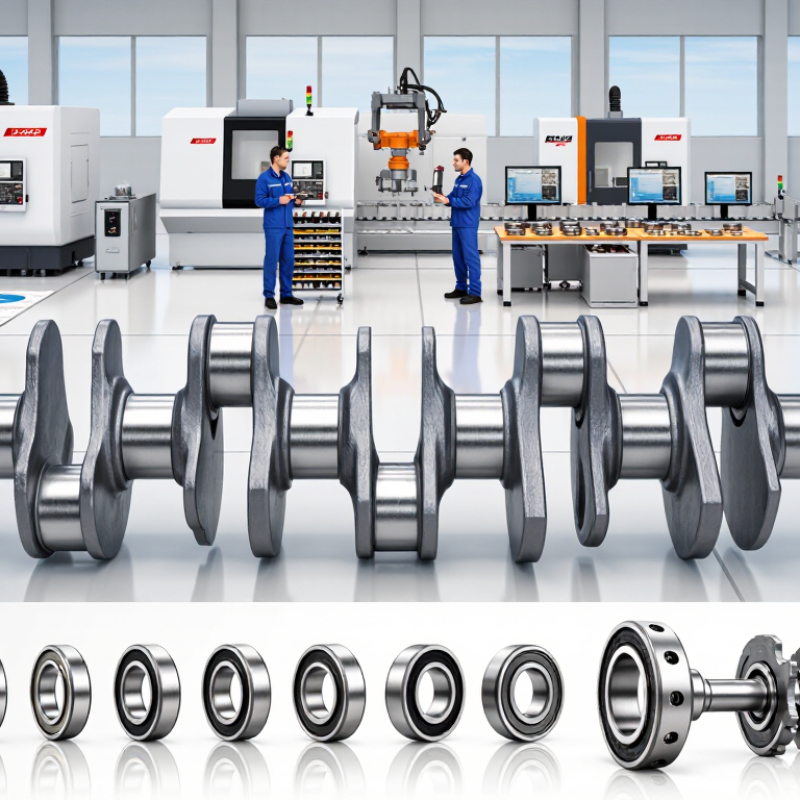
The strongest manufacturers usually combine modern machining with experienced technicians. Their workshops may include CNC equipment, automated inspection systems, coating lines, and clean assembly areas. Ask for test reports. Check the details.

This guide reviews China’s leading Crankshaft Bearing manufacturers for global buyers. It considers manufacturing capacity, material options, application knowledge, customization, certifications, and after-sales communication. These factors can reveal whether a supplier supports long-term engine performance or simply competes on price.

No supplier is perfect. Even an established factory may have inconsistent communication or limited support for unusual engines. Buyers should verify claims independently, request production samples, and clarify warranty conditions before placing large orders. That extra effort feels slow, but it can prevent premature wear, scoring, overheating, and costly downtime.
China Top Crankshaft Bearing Manufacturers for Global Buyers

Crankshaft Bearings: Types, Functions, and Key Performance Standards

Crankshaft bearings support the crankshaft while controlling friction, heat, and oil flow. Common types include bimetal, trimetal, and aluminum-based bearings. Each uses a different balance of strength, embedability, and fatigue resistance. In practical engine inspections, correct clearance often matters more than appearance. A polished surface can still hide poor alignment or uneven contact.

Key performance standards include dimensional accuracy, wall thickness, hardness, surface finish, fatigue strength, and corrosion resistance. Buyers should request inspection records, material certificates, and traceability from Chinese manufacturers. Testing should follow approved ISO, SAE, ASTM, or equivalent methods when applicable. Oil compatibility also deserves attention, especially for engines operating under high temperature or heavy loads. Specifications must match the crankshaft journal, housing, lubricant, and engine duty cycle. One overlooked measurement can damage the entire assembly.

Tips: Compare finished samples with approved drawings, not photographs. Check bore clearance at several positions. Ask how cleanliness is verified after machining. Confirm packaging prevents moisture and edge damage. A supplier may offer attractive prices, but inconsistent batch control can erase those savings. I have found that communication about tolerances should be written, because verbal promises are easy to misunderstand. Some buyers focus too heavily on tensile data. That is not always enough. Real service depends on fit, lubrication, heat, and installation quality working together.

China Top Crankshaft Bearing Manufacturers for Global Buyers

Crankshaft Bearings: Types, Functions, and Key Performance Standards

This chart shows indicative allowable bearing-pressure ranges for common crankshaft bearing material families under hydrodynamic lubrication. Copper-lead materials generally support higher unit loads, while polymer-lined composites are typically selected for lower-load or special operating conditions.

Values are representative engineering ranges rather than supplier-specific ratings. Actual performance depends on journal speed, lubrication, temperature, clearance, surface finish, fatigue strength, and engine design. Common reference frameworks include ISO 3547 for plain-bearing dimensions and ISO 4386-1 for bonding-quality inspection.

How to Evaluate China’s Crankshaft Bearing Manufacturers

China Top Crankshaft Bearing Manufacturers for Global Buyers

Evaluating China’s crankshaft bearing manufacturers requires more than comparing prices. Begin with production evidence, not polished sales presentations. Request material certificates, dimensional inspection reports, and batch traceability records. A reliable manufacturer should explain its alloy composition, bonding process, surface treatment, and clearance control. Ask how technicians measure bearing thickness at several points. Small variations can affect oil flow and engine life.

Inspect quality systems and testing equipment. Look for fatigue testing, hardness checks, surface roughness testing, and simulated operating conditions. Factory photos are useful, but a live video audit reveals more. Check storage areas, calibration labels, worker procedures, and rejected-part handling. Sample bearings should be tested independently when possible. One sample can look perfect. It cannot prove stable production. I have learned that this step is often underestimated.

Tips: Ask for three recent production records, not one selected report. Compare sample dimensions with the approved drawing. Confirm packaging protects parts from moisture and impact. Request realistic lead times and written replacement procedures. Also verify export documents and communication practices. If answers remain vague, pause the evaluation. A low quotation may hide weak inspection or inconsistent materials. That mistake becomes expensive after installation.

Leading Chinese Manufacturers and Their Product Capabilities

Chinese crankshaft bearing manufacturers serve engine builders, repair networks, and industrial equipment exporters worldwide. Many operate integrated lines for alloy preparation, shell forming, precision machining, and final inspection. Their product ranges may include main bearings, connecting-rod bearings, thrust washers, and custom-sized sets. Material selection commonly involves aluminum alloys, copper-based alloys, and tri-metal constructions. Engineers match each design with load, speed, temperature, and lubrication conditions. Small details matter. Some suppliers still describe capacity too broadly, so buyers should verify equipment lists and monthly output. Reliable factories share drawings, tolerance data, sample reports, and traceable material records. That evidence is more useful than polished promises.

Manufacturing strength appears in repeatability. Computer-controlled forming helps maintain shell thickness and oil-groove geometry across production batches. Precision boring and sizing support stable crankshaft alignment during installation. Surface treatments can improve fatigue resistance and reduce friction when correctly specified. Testing may include hardness checks, dimensional inspection, bond-strength evaluation, and simulated load testing. Yet quality is not automatic. An experienced buyer should request first-article approval, inspection plans, and nonconformance procedures before volume orders. Factories with export experience also understand packaging, corrosion protection, labeling, and documentation requirements. These capabilities reduce delays at ports and during incoming inspection.

Communication deserves equal attention. Technical teams that answer tolerance questions clearly usually manage customization better. Ask how they handle mixed models, urgent replacements, and design changes. Response speed is useful, but written accuracy matters more. Some capable manufacturers remain less polished in English, which can create avoidable misunderstandings. A shared drawing review, signed samples, and staged inspections can reduce that risk. Buyers should also examine audit history, worker training, calibration records, and corrective-action evidence. Price alone is a weak quality indicator. Long-term reliability depends on controlled processes, honest reporting, and engineering discipline.

Quality Control, Certifications, and Export Compliance

For global buyers, crankshaft bearing quality begins with controlled materials and repeatable production. Reliable manufacturers verify alloy composition through mill certificates and incoming laboratory checks. Each batch receives a traceable identification number. Operators record casting temperature, surface hardness, coating thickness, and dimensional results. Critical measurements are taken with calibrated micrometers and coordinate equipment. Small details matter here.

A practical quality system should follow documented procedures, regular internal audits, and corrective action records. ISO 9001 certification supports process consistency, while automotive programs may require additional evidence. Buyers should request inspection reports, material declarations, capability studies, and sample approval records. Testing should include clearance, bonding strength, fatigue resistance, and dimensional stability. However, paperwork alone cannot prove performance. A factory visit or independent pre-shipment inspection can reveal gaps between procedures and actual work.

Export compliance requires accurate commercial invoices, packing lists, certificates of origin, and transport documents. Product descriptions, quantities, weights, and tariff classifications must match across every document. Packaging should protect bearing surfaces from moisture, dust, and impact during long transit. Export staff should verify destination requirements before shipment, including labeling and import documentation. No audit system is perfect. A missing stamp or incorrect measurement unit can delay customs clearance. Experienced suppliers review documents twice, yet human error still deserves attention. Buyers should keep communication records and approve final documents before loading.

Global Buyer Guide: Pricing, Customization, and Supplier Selection

For global buyers, crankshaft bearing pricing depends on material, size, tolerance, tooling, and order volume. A standard aluminum-tin bearing often costs less than a copper-based design. However, surface treatment and inspection can change the final price. Request a detailed quotation with material grade, tolerance range, tooling fees, packaging, and delivery terms. A low unit price may hide expensive mold charges or weak quality control. That mistake is easy to make.

Customization should begin with accurate engine data. Share crankshaft diameter, bearing width, oil-hole position, load conditions, operating temperature, and expected service life. A capable manufacturer should review drawings and suggest suitable clearance values. Ask for sample approval before mass production. Check dimensional reports, hardness records, coating thickness, and batch traceability. Photos help, but measured data matters more. Sometimes, even a good drawing needs revision after trial fitting.

Tips: Compare at least three suppliers. Confirm minimum order quantities and lead times. Ask how rejected parts are handled. Request a pre-shipment inspection or independent testing. Review export packaging carefully; thin separators can cause scratches during ocean transport. Evaluate communication, engineering response time, and corrective-action records, not only price. A supplier that admits a production weakness may be more reliable than one promising perfection. Supplier selection requires patience.

China Top Crankshaft Bearing Manufacturers for Global Buyers - Global Buyer Guide: Pricing, Customization, and Supplier Selection

Benchmark data for evaluating China-based crankshaft bearing suppliers. Commercial terms and prices are indicative ranges and should be confirmed against the drawing, material specification, quantity, testing requirements, and shipping terms.

Evaluation Dimension Common Market Range or Requirement Typical Crankshaft Bearing Specification What Global Buyers Should Verify Procurement Guidance
Product Types Engine main bearings, connecting-rod bearings, thrust washers, and bimetal or trimetal bearing sets. Main bearing shells Rod bearing shells Thrust washers Bushings Confirm whether the supplier manufactures the complete bearing set or only selected components. Request a product matrix by engine family, dimensions, material, and application.
Indicative Unit Pricing Approximately US$2–12 per standard passenger-vehicle bearing shell; US$8–45 per heavy-duty or industrial bearing set; specialty parts may exceed these ranges. Price varies with shell size, material stack, coating, machining, packaging, and order volume. Ask whether the quotation is per shell, per pair, per complete engine set, or per carton. Compare quotations on the same basis: product scope, quantity, Incoterm, tooling, testing, and packaging.
Material Systems Common constructions include aluminum-based alloys, copper-based alloys, and multilayer steel-backed trimetal systems. Typical layers may include a steel backing, bearing alloy layer, nickel barrier, and overlay coating. Verify chemical composition, layer thickness, hardness, adhesion, fatigue strength, and corrosion resistance. Match material selection to engine load, rotational speed, lubrication conditions, and shaft material.
Dimensional Tolerance Production tolerance is drawing-dependent; precision engine bearings commonly require micrometer-level control of thickness, width, oil clearance, and locating features. Critical features include wall thickness, parting-line relief, eccentricity, chamfer, oil groove, oil hole, and tab position. Obtain the controlled drawing, inspection plan, datum definition, and sampling method before approval. Do not evaluate suppliers only by nominal dimensions; functional oil clearance is more important than nominal size alone.
Size and Customization Custom products can be developed for passenger vehicles, commercial vehicles, agricultural machinery, marine engines, generators, and industrial equipment. Possible customizations include undersize or oversize dimensions, grooves, holes, tabs, coatings, markings, and packaging. Confirm drawing revision control, prototype capability, tooling ownership, and engineering-change procedures. Provide crankshaft journal diameter, housing bore, bearing width, oil-hole layout, clearance target, and operating conditions.
Minimum Order Quantity Standard catalog items may be available from approximately 50–200 sets; custom items often require around 500–2,000 sets or a tooling commitment. MOQ depends on alloy purchase quantities, forming dies, plating or coating batches, and packaging requirements. Separate the MOQ for samples, pilot production, repeat orders, and private-label packaging. For new projects, negotiate a paid pilot order before committing to a full production MOQ.
Tooling and Development Simple tooling may cost approximately US$100–800; complex forming dies, fixtures, or special inspection gauges can cost more. Tooling may be required for stamping, forming, groove machining, oil-hole punching, and inspection. Clarify tooling lead time, ownership, maintenance, storage period, and whether the cost is refundable. Request a formal tooling quotation separate from the recurring unit price.
Sample Lead Time Existing catalog samples commonly take 7–20 calendar days; samples requiring new tooling or coating trials may take 20–45 days. Sample timing includes drawing review, material preparation, machining, inspection, and documentation. Confirm whether the sample uses production-intent material and process conditions. Approve samples using dimensional reports, material certificates, and fit or clearance checks where applicable.
Mass-Production Lead Time Commonly 25–60 calendar days after drawing approval, deposit receipt, and material confirmation. Longer lead times may result from new tooling, special alloys, low-volume production, or third-party testing. Check monthly capacity, raw-material availability, holiday schedules, and production bottlenecks. Use a written production schedule with milestones for material release, first-off inspection, and final shipment.
Quality Management International buyers commonly request an ISO 9001-certified quality management system; automotive programs may require additional customer-specific controls. Useful controls include incoming inspection, process control, traceability, final inspection, nonconformance handling, and corrective action. Verify certificate scope, issuing body, validity, manufacturing address, and audit history. Request a quality manual summary, process flow, control plan, and sample inspection report.
Testing and Inspection Typical checks include dimensions, surface finish, hardness, coating thickness, adhesion, material composition, and fatigue or wear performance when specified. Advanced validation may include oil-clearance testing, seizure resistance, fatigue testing, corrosion testing, and engine or rig testing. Confirm test method, equipment calibration, acceptance criteria, sample size, and laboratory independence. Define the inspection and test plan in the purchase contract rather than relying on a general quality statement.
Applicable Standards Standards may include ISO 9001 for quality management, ISO 14001 for environmental management, and ISO/IEC 17025 for competent testing laboratories. Engine-specific drawings and customer specifications remain the primary acceptance documents for fit and function. Check whether the supplier applies the required national, industry, automotive, marine, or customer standard. Use the latest approved drawing and clearly state the governing standard in the purchase order.
Traceability Documents Common documents include certificate of conformity, material certificate, dimensional inspection report, packing list, and commercial invoice. For controlled projects, buyers may also require batch records, coating reports, calibration records, and nonconformance reports. Confirm lot numbering from raw material through finished bearing and shipment carton. Require document submission before shipment for safety-critical or regulated applications.
Packaging and Marking Standard packaging commonly uses individual protective wrapping, partitioned cartons, moisture protection, and export-grade outer cartons. Marking may include part number, size grade, batch number, quantity, production date, and handling symbols. Verify protection against corrosion, abrasion, deformation, and mixed-part loading during transport. Approve packaging artwork and carton specifications before mass production.
Payment Terms Common international terms include a 30% deposit with 70% balance before shipment; established relationships may support other arrangements. Tooling charges are often payable partly or fully before tooling starts. Confirm beneficiary details, currency, bank charges, payment milestones, and refund conditions. Link the balance payment to final inspection and document approval for new suppliers.
Shipping Terms Common Incoterms include EXW, FOB, FCA, CIF, and DAP. Sea freight is generally economical for larger orders; air freight suits urgent samples. Shipment planning depends on carton volume, gross weight, destination port, customs requirements, and delivery urgency. Confirm the named place or port, insurance responsibility, export documentation, and customs classification. Compare total landed cost instead of comparing factory unit prices alone.
Supplier Selection Scorecard Recommended weighting: technical capability 25%, quality system 25%, total landed cost 20%, delivery performance 15%, communication and service 15%. Score evidence rather than promises: approved samples, inspection data, capacity records, certificates, and references. Assess financial stability, production location, subcontracting controls, complaint response, and business continuity. Shortlist at least three qualified suppliers and conduct a sample-based comparison before final selection.

Data note: Price, MOQ, tooling, and lead-time figures are practical market benchmarks for preliminary sourcing, not guaranteed quotations. Final commercial terms must be confirmed through a supplier quotation based on an approved drawing, technical specification, order quantity, testing plan, packaging requirement, and delivery term.

Reference framework: The evaluation structure is aligned with commonly used international procurement practices and quality-management frameworks, including ISO 9001, ISO 14001, ISO/IEC 17025, and Incoterms® rules. Product acceptance should always follow the buyer’s approved engineering drawing and contractual inspection criteria.