

How to Choose a Foam-Filled Mooring Buoy in 2026?
Choosing a Foam-Filled Mooring Buoy in 2026 is not just a matter of picking a size and color. The buoy must match the vessel, mooring arrangement, water depth, and local conditions. Start with the working load and required reserve buoyancy, then check the manufacturer’s data against the full mooring system. A buoy that looks substantial on deck may not provide enough support once chain weight, current, and wave action are considered.
Construction matters, too. Ask what foam core is used, how the outer shell resists impact and abrasion, and how eyes, lifting points, and fittings are attached. Salt spray, sharp chain links, and repeated contact can expose weak details quickly. Check inspection guidance and replacement-part availability before purchase. A clear warranty helps, but it does not replace verified specifications.
Small details count. A lot. Color visibility, lifting access, and attachment geometry can affect daily handling and inspection. Compare technical sheets from several suppliers, and ask for load ratings and buoyancy figures in writing. If a rating is unclear, pause and seek advice from a qualified mooring professional. Conditions vary from sheltered marinas to exposed working waters, so no single model suits every site. A tidy product page can still leave important questions unanswered. That is easy to miss. This guide outlines the practical checks buyers can use to assess a Foam-Filled Mooring Buoy, question assumptions, and choose a model suited to its real operating environment.
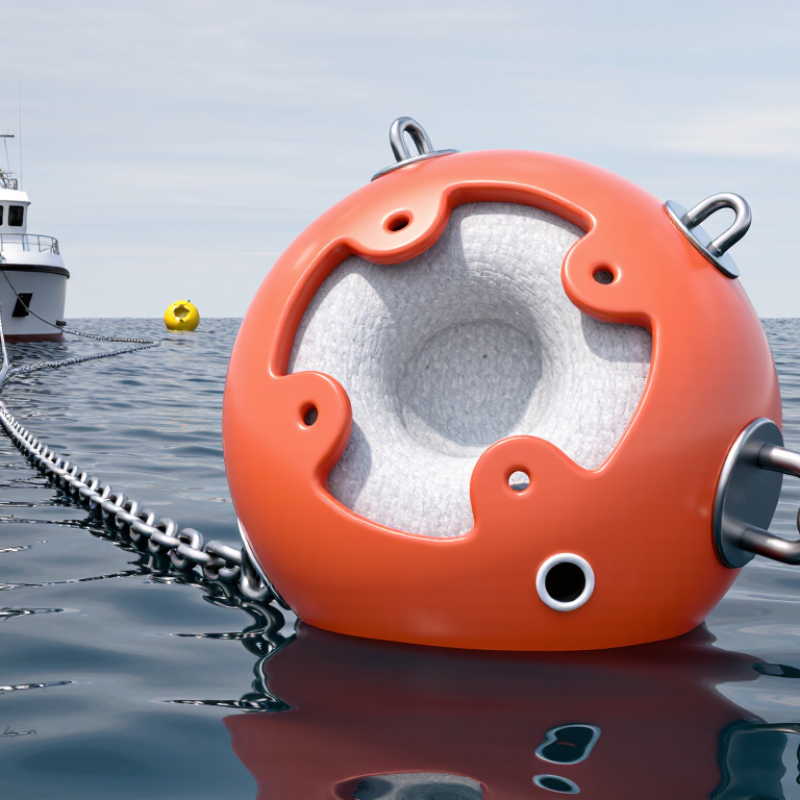
Define the Mooring Conditions and Operational Requirements
Before comparing buoy sizes, define the site and the job. Record water depth across the tidal range, prevailing and storm winds, wave height and period, current speed, and seabed conditions. Use local measurements where possible; averages can hide short, damaging load peaks. The U.S. Army Corps of Engineers’ Coastal Engineering Manual identifies waves, water levels, currents, and winds as key coastal design conditions. Small details matter. Include the vessel’s displacement, draft, expected line angles, and how often crews will connect or inspect the mooring.
Then estimate the maximum line tension and choose a foam-filled buoy with enough reserve buoyancy to support the chain and fittings, not just the line. Check how its freeboard and shape affect visibility and access in choppy water. NOAA’s 2022 Sea Level Rise Technical Report projects an average 10–12 inches of rise along the U.S. coastline from 2020 to 2050, with local variation. That projection is not a substitute for site-specific tide and storm data, but it can affect future line geometry and clearance. Measure twice.
Also document exposure to abrasion, impact, ultraviolet light, and temperature changes, plus the inspection schedule and consequences of downtime. A buoy that fits today’s vessel may be a poor choice after a heavier vessel or longer chain is introduced. I have seen small assumptions linger too long; verify the actual operating setup before ordering, and revisit it when conditions change.
Assess Foam Core, Shell Materials, and Buoy Construction
How to Choose a Foam-Filled Mooring Buoy in 2026?
Assess Foam Core, Shell Materials, and Buoy Construction
In 2026, compare documented test results, not just buoy size or advertised load. A foam core should resist water uptake and retain resilience after compression. ASTM D2842 specifies a water-absorption test for rigid cellular plastics; ask for results on the actual core material. Ask for batch records, too. A tidy specification sheet can still leave gaps.
The shell faces sunlight, salt spray, abrasion, and repeated contact with ropes. Rotomolded polyethylene can tolerate impacts, but check UV-resistance data and inspect wall thickness around lifting points. Steel shells may suit demanding handling, yet coatings and welds need regular inspection. Look closely at seams, attachment eyes, and drain or vent details. Small flaws matter.
Check construction as a system: core-to-shell fit, sealed openings, reinforced load paths, and accessible inspection points. The UNESCO/IOC TEOS-10 manual gives seawater density near 1,025 kg/m³ under typical conditions. Thus, 0.1 m³ of immersed volume displaces roughly 102.5 kg of seawater before subtracting the buoy’s own mass and fittings. That is not usable mooring capacity. Request a rated working load, reserve-buoyancy calculation, and inspection guidance for the intended sea state. I would still verify the finished buoy’s mass and dimensions; assumptions can drift between design and production.
Match Buoyancy, Dimensions, and Load Capacity to the Mooring System
Choosing a foam-filled mooring buoy starts with the load, not its color or shape. Add the weight of the chain, fittings, and supported equipment, then account for water movement and changing conditions. A buoy that works in calm water may sit too low when waves pull the line sideways. Leave reserve buoyancy; do not size it to barely float the calculated load.
Dimensions matter. A larger diameter can improve stability and visibility, while buoy height affects freeboard and how the attachment point sits above the water. Check the buoy’s displacement against the total supported weight, including the buoy’s own hardware. Then confirm the eye, shaft, and connection points are rated for the expected loading. Small details count.
A clean calculation can still miss something. Mooring angles, current, and line movement may change the forces at the buoy. Compare the manufacturer’s load data with the actual arrangement, and ask a qualified mooring professional to review uncertain or high-load installations. Inspect the outer shell and fittings regularly for cracks, corrosion, or looseness. Foam helps maintain flotation if the shell is damaged, but it does not make an undersized buoy suitable. Measure the real setup. Guessing feels easy, until the buoy rides too low.
Check Safety Standards, Inspection Needs, and Service Life
When choosing a foam-filled mooring buoy, check that its rated working load suits the vessel, mooring layout, and local sea conditions. Ask for documentation showing the buoy’s construction, load rating, and compliance with relevant project and port requirements. Confirm that lifting points and attachment hardware are rated for the same service. Details matter. A certificate alone cannot show how a buoy will perform at your berth.
Inspection needs should be practical, not just promised in a sales sheet. Check the shell, seams, lifting eyes, and fittings for cracks, distortion, corrosion, or movement. Look for exposed foam, deep scrapes, and changes in freeboard that could suggest water ingress or damage. Keep dated photographs and inspection notes. A tidy surface can be reassuring, but it does not prove the internal structure is sound; some checks may need a qualified inspection.
Service life depends on use, exposure, maintenance, and impact history, so avoid relying on a single lifespan figure. Saltwater, sunlight, repeated line loads, and vessel contact can all accelerate wear. Ask what inspection intervals and repair methods are recommended, and whether replacement components remain available. Reassess the buoy after severe weather or an unusual impact. Records help. Even a careful inspection leaves some uncertainty, so replacement decisions should reflect the buoy’s condition and the consequences of failure.
How to Choose a Foam-Filled Mooring Buoy in 2026
How to read this chart: The bars show theoretical gross displacement, calculated using a seawater density of 1,025 kg/m³. They are not working-load ratings or net buoyancy: subtract the buoy’s own mass, then confirm reserve buoyancy, freeboard, mooring loads, and safety factors against the project design and applicable standards. Before purchase, review inspection requirements for the shell, lifting points, fittings, and signs of damage or water ingress. Set service-life expectations using the manufacturer’s documentation and condition-based inspections.
Compare Supplier Specifications, Warranty, and Total Ownership Cost
How to Choose a Foam-Filled Mooring Buoy in 2026?
Compare Supplier Specifications, Warranty, and Total Ownership Cost
Do not compare prices until the buoy specifications match your site. Check rated buoyancy, dimensions, freeboard, foam type, and outer-shell thickness. Ask whether load ratings apply to the buoy alone or the complete mooring assembly. A clear specification sheet should also describe resistance to UV exposure, abrasion, and saltwater. Small details matter.
Request comparable quotes with the same configuration, fittings, and delivery terms. A lower price may exclude lifting hardware or require extra freight. Confirm the warranty period and read its exclusions: coverage may differ for seams, fittings, impact damage, or normal wear. Ask how claims are assessed and what documentation is required. Get answers in writing.
Estimate ownership cost over the expected service life, not just the invoice. Include installation, periodic inspection, replacement fittings, cleaning, repairs, and any downtime if a buoy needs attention. A supplier’s inspection guidance can help you plan, but check that it suits your actual conditions. I would not assume the longest warranty means the best value; it may come with limits that are easy to overlook. Compare the details side by side.
