

Quality Mold

How to Choose Extruded Aluminum Profiles in 2026?

Choosing Extruded Aluminum Profiles in 2026 requires more than comparing catalog prices. The right profile must balance alloy strength, wall thickness, dimensional tolerance, surface finish, thermal performance, and lifecycle cost. A rail, window frame, robotic guard, or solar mounting channel may look similar on a screen. Its performance can differ significantly in production.

The International Aluminium Institute reported approximately 72 million tonnes of global primary aluminium production in 2024. The U.S. Geological Survey also identified aluminium as a strategically important industrial material, supporting transport, construction, energy, and manufacturing applications. These figures show strong demand, but they do not guarantee that every extrusion is suitable. Design discipline still matters. Sometimes, the cheapest profile creates the most expensive assembly.

Dr. Thomas Sheppard, a recognized aluminium-extrusion researcher and author of Extrusion of Aluminium Alloys, describes extrusion as “a combination of metal forming and heat treatment.” That principle remains useful in 2026. Alloy selection, billet temperature, die design, quenching, and ageing can affect strength and stability before the profile reaches your factory. Buyers should request mill certificates, tolerance data, surface-treatment specifications, and independent test results. Ask about recycled content, too. It may support sustainability goals, but inconsistent feedstock control can affect quality. This is where many purchasing guides become too confident.

This article explains how to compare Extruded Aluminum Profiles using measurable requirements, supplier evidence, and practical application details. Expect trade-offs. There is rarely one perfect profile.
How to Choose Extruded Aluminum Profiles in 2026?

What Are Extruded Aluminum Profiles and How Are They Made?

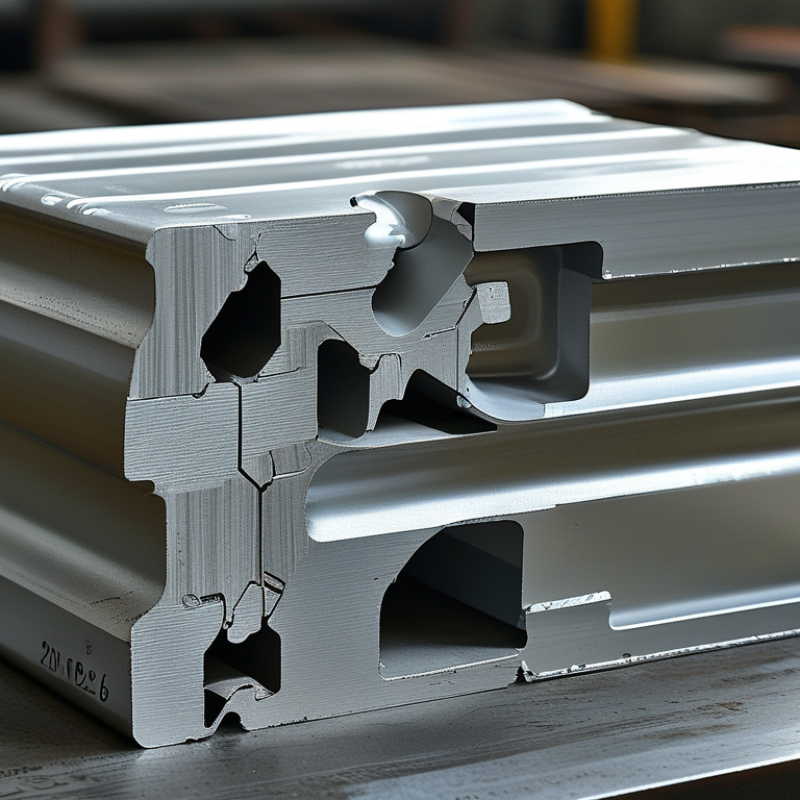
An extruded aluminum profile is a shaped section made by forcing heated aluminum through a steel die. The die creates its final cross-section, such as a channel, tube, rail, or frame member. After extrusion, the profile is cooled, stretched, cut, and heat-treated when required.

The process begins with aluminum billets, often selected by alloy and temper. Alloy 6063 suits clean surfaces and moderate structural needs. Alloy 6061 usually offers greater strength. The choice depends on loads, corrosion exposure, machining, and finishing requirements. During production, technicians check dimensions, straightness, surface marks, and hardness. Small changes in temperature can affect the result.

Choosing a profile in 2026 requires more than comparing price per meter. I check the drawing, wall thickness, load direction, connection method, and expected service environment. For outdoor use, drainage paths and protective finishing deserve attention. Anodizing can improve surface durability, while powder coating offers broader color options. Ask for alloy details, temper information, tolerances, and inspection records. These documents make supplier claims easier to verify. I have seen projects fail because a lightweight profile was selected for a hidden load. It looked efficient. It was not. No profile is perfect. Rechecking assumptions before cutting material can prevent expensive changes later.

How to Define Your Profile’s Functional and Design Requirements

Choosing an extruded aluminum profile in 2026 starts with function, not shape. Define load, span, deflection limits, temperature, corrosion exposure, and assembly method. A machine frame needs stiffness and vibration control. An indoor display may need lightness and appearance. Write measurable requirements before requesting a drawing. “Strong enough” is not a specification.

Use calculations for bending, buckling, joint strength, and thermal movement. Do not select by outside dimensions alone. Wall thickness and second moment of area often control performance. The International Aluminium Institute reports that recycled aluminum requires about 5% of the energy used for primary production. Its reports also indicate that roughly 75% of aluminum ever produced remains in use. Therefore, ask about recycled content, alloy, temper, and surface treatment. The lowest initial weight is not always the lowest-impact choice.

Specify tolerances, straightness, finish, inspection methods, and installation access. ISO 6362 provides dimensional and form tolerances for extruded aluminum products. A supplier’s sample is useful, but it is not validation. I have seen a polished profile fail because fasteners weakened its thin wall. That mistake was avoidable. Leave room for drainage, cleaning, replacement, and thermal expansion. My first designs sometimes looked perfect on paper. They were not always practical in a workshop. Recheck the drawing against real tools, hands, and maintenance time.

How to Select the Right Aluminum Alloy and Temper

How to Choose Extruded Aluminum Profiles in 2026?

Selecting the right aluminum alloy and temper starts with the profile’s working conditions. Alloy 6063 is often suitable for frames, rails, and visible architectural sections. It offers smooth extrusion and a clean surface finish. Alloy 6061 usually provides higher strength for machinery supports and load-bearing components. However, stronger is not always better. It may require more careful machining and can increase production costs.

Temper changes the alloy’s performance. T5 profiles are cooled after extrusion and artificially aged. They can provide practical strength for general structures. T6 temper usually delivers higher strength through solution heat treatment and artificial aging. This choice may affect dimensional stability, bending, and cutting behavior. Ask for verified mechanical data, not only a temper label. Real performance depends on section thickness and processing quality.

Tips: Match the temper to the actual load, not the maximum possible load. Check yield strength, corrosion exposure, surface requirements, and joining methods together. Request mill certificates and test results from a qualified supplier. A small sample profile can reveal warping, finish issues, or difficult machining before full production. I have seen designs over-specified for safety, yet still weakened by poor joints. That detail deserves review.

How to Choose Extruded Aluminum Profiles in 2026?

Selecting the Right Aluminum Alloy and Temper

The chart compares typical minimum yield-strength levels for commonly used extruded aluminum alloys and tempers. Higher-strength tempers such as 6061-T6 and 6082-T6 are suitable for load-bearing applications, while 6060-T5 and 6063-T5 are often selected for lightweight architectural profiles, surface finishing, and complex shapes. Actual mechanical values vary by product standard, section thickness, and profile geometry.

How to Compare Dimensions, Tolerances, Finishes, and Surface Treatments

How to Choose Extruded Aluminum Profiles in 2026?

Choosing an extruded aluminum profile starts with the drawing, not the finish. Check width, height, wall thickness, hole position, and cutting length. A two-millimeter error can affect brackets, glazing, or automated assembly. Measure the mating parts before requesting quotations. I have seen projects fail because the profile matched the catalog, but not the actual connector.

Compare tolerances against the profile’s function. General frames may accept wider dimensional variation, while sliding tracks and heat sinks need tighter control. Ask for the applicable extrusion standard, inspection method, and measurement records. Do not judge quality from a sample alone. Check straightness, twist, corner radius, and surface marks under realistic lighting. Anodizing gives a durable oxide layer, while powder coating offers wider color choices and stronger visual coverage. Specify coating thickness, color tolerance, gloss level, and adhesion testing. Surface treatment can hide minor defects, but it cannot repair poor extrusion.

Tips: Request a full tolerance table and a cut sample. Compare finished dimensions, not only raw profiles. Confirm whether protection film is required during transport. Ask how the supplier handles batch-to-batch color differences. Keep one approved sample for production checks. Small details matter.

One practical warning: tighter tolerances usually increase cost and may reduce extrusion efficiency. Specify only what the assembly truly needs. Recheck the design after finishing, because coatings can change fit. That step is easy to overlook.

How to Choose Extruded Aluminum Profiles in 2026? — How to Compare Dimensions, Tolerances, Finishes, and Surface Treatments
Comparison Dimension Common Option or Range Typical Technical Data What to Compare Recommended Selection Guidance
Alloy and Temper 6063-T5 / 6063-T6 Good extrudability, smooth appearance, and adequate corrosion resistance. Typical tensile strength is approximately 150–240 MPa, depending on temper and product specification. Strength, surface quality, machinability, corrosion resistance, and availability. Use 6063 for architectural profiles, frames, trims, and visible surfaces where appearance and extrusion quality are important.
Alloy and Temper 6061-T6 Higher structural strength than 6063. Typical tensile strength is approximately 260–310 MPa, depending on product form and applicable standard. Load capacity, weldability, machinability, and heat-treatment requirements. Choose 6061-T6 for brackets, supports, machine frames, and other applications requiring higher mechanical strength.
Profile Width and Height Approximately 10–300 mm for many standard commercial profiles Large or complex cross-sections generally require larger presses, more complex dies, and additional dimensional review. Envelope size, die feasibility, straightness, weight per metre, and assembly clearance. Keep the cross-section as compact and symmetrical as practical to reduce distortion and control production cost.
Wall Thickness Approximately 0.8–6.0 mm for many general-purpose profiles Very thin walls are more sensitive to die wear, local distortion, bow, twist, and surface variation. Structural sections commonly use thicker load-bearing walls. Minimum wall thickness, unsupported length, local stress, screw engagement, and machining allowance. Use thicker walls around fasteners and load points. Do not specify a minimum thickness without confirming alloy, cross-section, and extrusion capability.
Length Common commercial cut lengths: approximately 1–6 m Standard extrusion lengths may be supplied longer and cut to order. Cut-length tolerances depend on saw equipment and specified length. Required finished length, cutting tolerance, end squareness, packaging, and transport limitations. Define finished length and cut tolerance separately from the extrusion straightness requirement.
Dimensional Tolerance Standard extrusion tolerance versus precision tolerance Typical profile dimensions may be controlled to about ±0.15–±0.50 mm, but the actual value depends strongly on dimension, wall thickness, alloy, shape, and governing standard. Critical dimensions, datum references, hole locations, wall thickness, and measurement method. Reference an applicable standard such as EN 755-9 or ASTM B221 and specify tighter tolerances only for functional features.
Straightness Controlled by bow over a defined inspection length A commonly used commercial target is approximately 1–2 mm of deviation per metre, subject to profile geometry and the specified standard. Overall bow, local bow, profile length, inspection surface, and correction method. Set a measurable bow limit for long frames, sliding components, guide rails, and parts that must align during assembly.
Twist Specified as angular or dimensional deviation along the profile Thin, asymmetric, and open profiles are generally more susceptible to twist than compact, symmetrical profiles. Cross-section symmetry, mating surfaces, assembly datum, and acceptable rotational deviation. Include a twist limit when the profile must connect to panels, seals, bearings, or precision machined components.
Surface Finish: Mill Finish As-extruded aluminum surface No additional coating. The appearance may include normal extrusion die lines, minor shade variation, and handling marks within the agreed acceptance criteria. Visual uniformity, die lines, scratches, stains, storage protection, and allowable cosmetic defects. Use for concealed parts, machined components, or applications where a decorative surface is not required.
Surface Finish: Anodizing Clear, bronze, black, or other electrolytic colors Typical anodic coating thickness is approximately 10–25 µm. Anodizing improves surface hardness and corrosion resistance but does not remove extrusion marks. Coating thickness, color tolerance, gloss, sealing quality, corrosion environment, and visible-face requirements. Specify the anodizing class or thickness, color acceptance sample, and whether the requirement applies to all surfaces or visible surfaces only.
Surface Finish: Powder Coating Polyester powder coating in a selected color and gloss level Typical dry-film thickness is approximately 60–120 µm, depending on the coating system, geometry, and specification. Film thickness, adhesion, impact resistance, gloss, color difference, pretreatment, and UV exposure. Use a qualified architectural or industrial coating specification and define acceptable color and gloss variation before production.
Surface Finish: Liquid Paint Fluoropolymer or other liquid-applied coating systems Coating thickness varies by system and may be applied in multiple layers. Performance depends on pretreatment, primer, topcoat, and curing. Primer and topcoat system, dry-film thickness, adhesion, weathering, chemical resistance, and repair procedure. Choose when high weatherability, a specific appearance, or field-repair compatibility is more important than the simpler powder-coating process.
Mechanical Surface Treatment Brushing, polishing, blasting, or tumbling These processes alter texture and reflectivity but do not provide the same protective barrier as anodizing or paint. Surface roughness, directionality, reflectivity, edge treatment, and consistency between batches. Combine mechanical finishing with anodizing when both a decorative texture and improved surface protection are required.
Machining Allowance Post-extrusion drilling, milling, cutting, or CNC machining Allowance depends on the required final dimension, profile tolerance, distortion risk, and amount of material to be removed. Reference datums, flatness, hole position, burr control, coating removal zones, and final inspection method. Identify all machined features on a drawing and avoid relying on an untreated extrusion surface as a precision datum.
Corrosion Environment Indoor, outdoor, coastal, industrial, or chemically exposed service Aluminum naturally forms an oxide film, but aggressive chloride, acidic, or alkaline environments can cause localized corrosion. Exposure to salt spray, humidity, chemicals, galvanic contact, drainage, and coating system durability. For coastal or industrial exposure, specify suitable pretreatment and coating thickness, isolate dissimilar metals, and prevent water retention.
Inspection and Acceptance Dimensional, visual, coating, and mechanical inspection Inspection should be based on approved drawings, samples, defined lighting, calibrated instruments, and the selected material or coating standard. Sampling plan, measurement points, visual distance, inspection lighting, certificates, and nonconformance rules. Approve a pre-production sample and document critical dimensions, color limits, surface defects, and test requirements before mass production.
Note: The numerical ranges above are typical design and purchasing references, not universal acceptance limits. Final requirements should be confirmed against the selected alloy, temper, profile geometry, extrusion capability, surface-treatment specification, and applicable standard. For critical applications, use a controlled engineering drawing with explicit tolerances and inspection methods.

How to Evaluate Suppliers, Costs, Quality, and Long-Term Performance

How to Choose Extruded Aluminum Profiles in 2026?

Supplier evaluation should begin with evidence, not polished samples. Request alloy certificates, temper records, dimensional reports, and traceable batch numbers. ASTM B221 provides a useful reference for aluminum extrusions. ISO 9001 certification also indicates controlled processes, but it does not guarantee perfect products. A supplier should explain die design, minimum order quantities, tooling fees, and production capacity. The lowest quotation often excludes anodizing, machining, packaging, or freight.

Cost needs a longer view. The International Aluminium Institute reports that recycled aluminum uses about 5% of the energy required for primary aluminum production. Ask about recycled content and material origin. Then compare surface treatment thickness, rejection rates, delivery stability, and replacement costs. A profile that saves 8% today may create expensive assembly problems later. This happens more often than purchasing teams admit.

Tips: Order a small pilot batch before signing a long contract. Measure wall thickness at several points. Check corner radii with calipers. Test coating adhesion after cutting and drilling. For outdoor use, request corrosion data and confirm drainage details. During evaluation, I would also inspect packaging; scratched profiles reveal weak handling controls. A perfect sample can still mislead. Review performance after thermal cycles, vibration, and repeated assembly. That step is sometimes skipped. It should not be.