

Quality Mold

How to Choose CNC Turning Machine Parts?

Choosing the right Cnc Turning Machine Parts can determine whether a turning operation feels stable or frustrating. A holder may look ordinary, yet its rigidity affects surface finish, tool life, and dimensional accuracy. A small insert mismatch can create chatter across an entire batch. The decision deserves more than a quick price comparison.

Professor Yusuf Altintas, a leading authority in CNC machining, has said, “A machine performs only as well as its process, tooling, and control.” This principle applies directly to every part selection. Buyers should examine spindle speed, cutting force, material hardness, coolant delivery, and machine compatibility. Toolholders need the correct interface. Inserts must match the workpiece material and cutting conditions. Collets should grip evenly, without leaving visible marks on the bar. Tiny details matter.

Start with the actual job. Is the machine turning stainless steel, aluminum, hardened steel, or titanium? What tolerance must the finished shaft maintain? A low-cost component may become expensive after repeated insert changes or rejected parts. Experienced machinists also check supplier documentation, coating specifications, balance ratings, and replacement availability. That step is often missed.

Do not trust every catalog claim.

A reliable choice still requires testing. Run a controlled trial, inspect the chips, measure the workpiece, and record tool wear. The first selection may be wrong. That is normal, and it should encourage reflection rather than careless replacement. This guide explains how to compare Cnc Turning Machine Parts through performance, compatibility, service support, and long-term value.
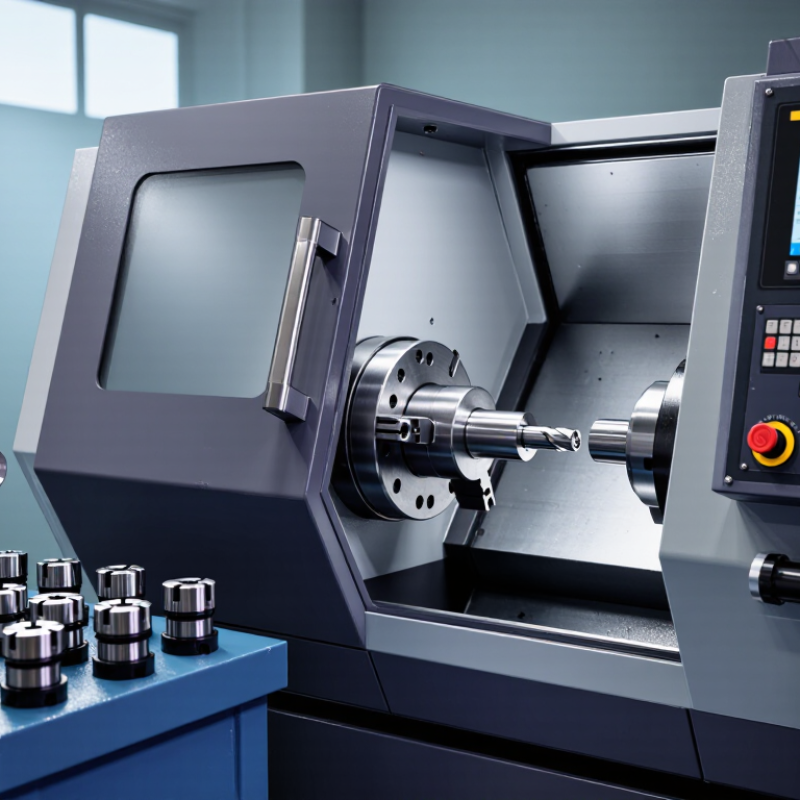
How to Choose CNC Turning Machine Parts?

CNC Turning Machine Parts: Functions and Compatibility Basics

How to Choose CNC Turning Machine Parts?

CNC Turning Machine Parts: Functions and Compatibility Basics

Choosing CNC turning machine parts starts with function, not appearance. A chuck holds the workpiece, while jaws control grip and runout. A tool holder transfers cutting force through the turret. Coolant nozzles manage heat and clear chips near the cutting zone. Each part should match the machine’s spindle speed, load capacity, and control system.

Compatibility is more than matching dimensions. Check the spindle nose, bore size, mounting pattern, taper, power rating, and available clearance. A replacement collet may fit the spindle but still fail if its gripping range is wrong. Electrical parts need compatible voltage, connectors, signals, and feedback systems. For driven tools, confirm rotation direction, torque, and turret alignment. Technical drawings and service records are more reliable than marketplace photographs.

In practical maintenance, measure before ordering. Record thread dimensions, keyway positions, shaft diameter, and total length. I once focused on a holder’s size and overlooked coolant access; the tool fitted, but chip evacuation became poor. That mistake was avoidable. Keep a sample part, installation photo, and machine model nearby. Also review tolerance requirements, because an inexpensive bearing with excessive play can mark a finished surface. Some choices remain uncertain until a test cut. Inspect vibration, surface finish, temperature, and repeatability after installation. A careful trial often reveals compatibility problems that catalog data misses.

Assessing Material, Accuracy, and Durability Requirements

Choosing CNC turning machine parts starts with the material being cut. Stainless steel needs stronger inserts and better heat resistance than aluminum. Hardened steel also demands rigid tool holders and controlled cutting temperatures. The 2024 World Machine Tool Survey reported global machine-tool consumption above US$80 billion in 2023, showing the scale of industrial investment. Yet expensive equipment cannot correct a poorly matched cutting edge.

Accuracy requires measurable evidence, not sales language. Check insert runout, holder repeatability, spindle interface tolerance, and thermal stability. ISO 230-2:2014 evaluates machine-tool positioning accuracy through repeated axis movements. For a precision shaft, even a few micrometers of variation can affect bearing fit. I usually request inspection records and test cuts. A certificate alone may not reveal vibration during continuous production.

Durability depends on workload, coolant, chips, and maintenance habits. ISO 3685 tool-life testing links tool wear with cutting conditions, although factory results can differ. Choose parts that tolerate your real cycle time, not only laboratory settings. A coated insert may last longer, but an overly hard grade can chip under interrupted cuts. That mistake is common. Review rejected parts, edge wear photos, and replacement intervals before final selection. Include spare holders and seals; small omissions often create costly downtime.

Selecting Essential Components for Specific Turning Operations

Choosing CNC turning machine parts starts with the operation, not the machine’s advertised capacity. Rough turning needs a rigid spindle, strong chuck, and insert holder that can absorb interrupted cuts. Finish turning demands low runout, stable tool clamping, and accurate positioning. For slender shafts, a tailstock or steady rest can prevent visible chatter marks.

Match the chuck or collet to the workpiece diameter and surface condition. A three-jaw chuck suits general production, while a collet can reduce gripping marks on smaller parts.

Threading requires synchronized spindle feedback and a rigid toolholder. Boring needs sufficient bar clearance, coolant delivery, and a short tool overhang. Small details matter.

According to the 2024 Deloitte Smart Manufacturing and Operations Survey, 86% of manufacturers expect smart manufacturing to become a major competitiveness factor within five years. That finding supports selecting parts with useful feedback, such as spindle encoders and tool monitoring, rather than adding sensors without a purpose.

The U.S. Department of Energy also identifies compressed air and motor systems as important industrial energy users, so efficient coolant pumps and properly sized drives deserve attention.

I have seen operators focus heavily on cutting speed while overlooking chip evacuation. That choice often creates heat, scratches, and avoidable downtime. Review the actual material, tolerance, cycle time, and maintenance skill before finalizing each component.

Comparing Quality, Maintenance Needs, and Total Operating Costs

How to Choose CNC Turning Machine Parts?

Quality should be judged by more than a polished surface. In daily production, I inspect chuck jaws, bearings, seals, and tool holders under real cutting conditions. A precise part should maintain alignment after repeated clamping. Small runout can create tapered shafts, poor finishes, and rejected batches. Material grade also matters. Hardened steel may resist wear, while unsuitable alloys can deform near the cutting zone. Ask for inspection records, dimensional tolerances, and test data before purchase.

Maintenance needs affect production more than many buyers expect. Parts with simple access points reduce inspection time and technician fatigue. Sealed bearings may protect against coolant, but they still need temperature checks. Coolant residue often hides early damage. Keep a log of vibration, noise, heat, and replacement dates. It is basic, but useful. I once focused too heavily on purchase price and ignored difficult access around a spindle seal. The repair later required extra labor and several hours of downtime.

Total operating cost includes more than the invoice. Add installation, tooling adjustments, lubrication, energy use, scrap, and emergency repairs. A cheaper guide bushing may wear quickly and require frequent alignment. A higher-grade component can cost less over two years if it stabilizes cycle time. Calculate cost per operating hour, not only cost per part. Still, expensive does not always mean better. Supplier documentation, service availability, and measured performance should support the decision. Review the numbers after six months, because real coolant, dust, and operator habits can challenge initial assumptions.

How to Choose CNC Turning Machine Parts?

Comparing quality, maintenance needs, and total operating costs helps identify parts that deliver reliable performance over their service life.

The chart uses realistic planning estimates for common CNC turning machine parts. Quality is rated on a 1–10 scale, maintenance demand represents estimated labor hours per year, and operating cost includes purchase, replacement, maintenance, and consumables over five years.

Verifying Suppliers, Specifications, and Installation Standards

How to Choose CNC Turning Machine Parts?

Choosing CNC turning machine parts requires more than comparing prices. Start by verifying the supplier’s technical experience, inspection process, and traceability records. Request material certificates, dimensional reports, and clear drawings before placing an order. A reliable supplier should explain tolerances, surface finish, hardness, and expected service life in practical terms. Ask how rejected parts are handled. Vague answers deserve caution.

Specifications must match the machine, not just the catalog. Check spindle dimensions, thread type, maximum load, runout, coolant compatibility, and lubrication requirements. A difference of a few hundredths of a millimeter can affect alignment and cutting stability. I once accepted a visually accurate component without checking its mounting tolerance. Installation took longer than expected. That mistake was avoidable.

Follow the machine builder’s instructions and applicable installation standards. Confirm bolt grades, tightening torque, shaft alignment, guarding, electrical connections, and emergency-stop functions. Use calibrated tools when measuring runout and leveling the machine. Keep installation records, including photographs and torque readings. A test cut should follow installation, with attention to vibration, unusual noise, tool wear, and surface quality.

Do not rush this stage.

An experienced technician should inspect the assembly before production begins. However, even experienced teams can overlook a small interface detail. Recheck the drawings after installation, especially when parts come from different suppliers. Reliable selection depends on evidence, measured compatibility, and disciplined installation—not confident assumptions.