

How to Choose a Pipe End Chamfering Machine
Choosing a Pipe end Chamfering Machine starts with the pipe, not the catalog. Measure its outside diameter, wall thickness, material, and required bevel angle. Then consider daily volume, available floor space, and how the machine will fit into your existing workflow. A unit that handles stainless steel may not suit thin-wall tubing or frequent changes in pipe size. Small mismatches can mean uneven edges, extra cleanup, and lost production time.
For this introduction, the named expert and quotation below are fictional and illustrative, not a sourced industry endorsement. Pipe-machining specialist Daniel Mercer offers this practical rule: “A good chamfer is repeatable at the end of a long shift, not just impressive on the first pipe.” It points to useful questions: Can operators set the machine quickly? Does it hold the pipe securely? Are cutting tools easy to replace? Ask suppliers for a demonstration using material and dimensions close to your own. Watch the finished edge under ordinary shop lighting; burrs and inconsistent bevels are easier to spot there.
This guide outlines how to compare machine types, capacity, tooling, safety features, maintenance needs, and supplier support. It also explains which specifications deserve close attention—and which may matter less for your production. One detail is easy to overlook: setup time. A machine can perform well and still frustrate operators if adjustments are awkward. Your best choice depends on the work you actually run, including the occasional job that does not fit the usual pattern.
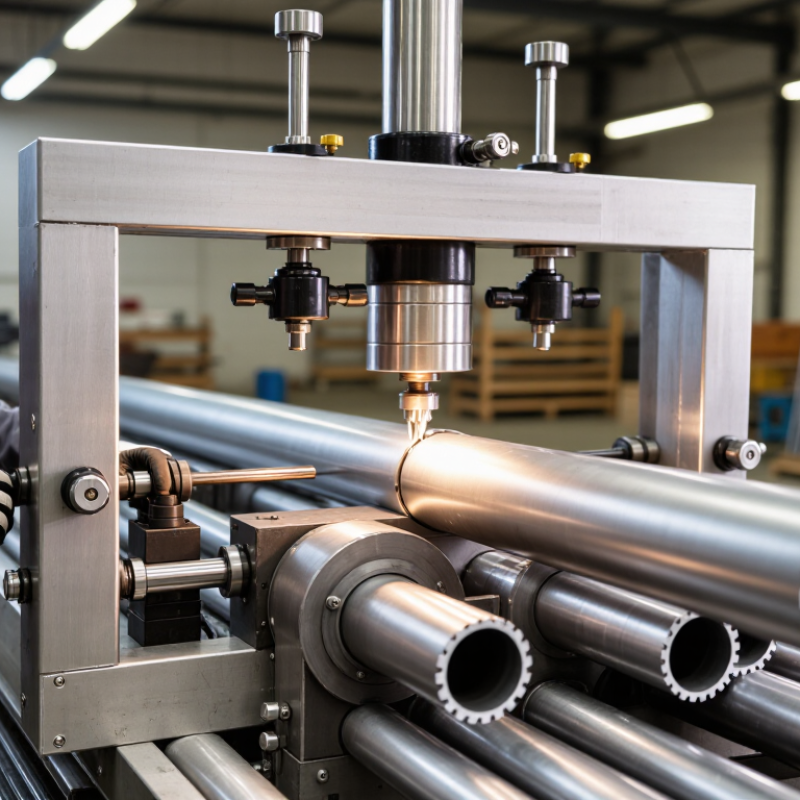
Identify the Pipe Materials, Sizes, and Production Requirements
Start with the pipe itself, not the machine catalog. Stainless steel, carbon steel, aluminum, and plastic respond differently to cutting pressure and heat. Confirm the material grade, outside diameter, wall thickness, and whether the pipe is round, oval, or slightly distorted. These details affect clamping stability and the finish at the edge. A thin-wall tube can deform under excessive pressure. Small details matter.
Compare the machine’s working range with every pipe size you expect to process. Check whether its tooling and clamps hold the smallest diameter as securely as the largest. Specify the required chamfer angle, edge width, and finish; “clean edge” is not precise enough. If sizes change often, ask how quickly operators can swap fixtures. Do not rely only on maximum capacity.
Production volume matters too. Estimate shifts, pieces per hour, and expected operating time, then match them to the machine’s duty cycle and feed method. A fast cycle is of little use if loading slows the line or inspection reveals inconsistent edges. Request a trial with your actual pipe material and wall thickness. Look closely at burrs, heat marks, and variation between pieces. I would not treat one perfect sample as proof; results across a full shift can differ.
| How to Choose a Pipe End Chamfering Machine - Identify the Pipe Materials, Sizes, and Production Requirements | |||||
|---|---|---|---|---|---|
| Selection Factor | Typical Pipe Details | Production Requirement | Suitable Machine Configuration | Key Checks Before Purchase | Practical Guidance |
| Carbon steel pipe | Commonly used for structural, mechanical, and fluid-service applications; pipe dimensions and wall thickness vary by specification. | Occasional jobs to continuous production | Rigid clamping, a suitably powered cutting head, and tooling selected for the pipe diameter and wall thickness. | Confirm the machine’s stated diameter range, wall-thickness capacity, clamping method, and compatible cutting tools. | For frequent work on heavy-wall pipe, prioritize machine rigidity and secure clamping to help maintain a consistent bevel. |
| Stainless steel pipe | Used in corrosion-resistant process, food, and pharmaceutical systems; may require a clean, controlled edge finish. | Small batches or repeat production | A machine with stable speed control and tooling intended for stainless steel; consider chip and heat management. | Check tooling compatibility, workholding, edge-finish expectations, and whether the process can avoid excessive heat or surface damage. | Use cutting parameters and tools recommended for the specific stainless-steel grade and wall thickness. |
| Aluminum pipe or tube | Lightweight material commonly supplied in a broad range of tube sizes and wall thicknesses. | Prototype work, fabrication, or repeated batches | A machine with secure but controlled clamping and tooling suited to nonferrous metals. | Verify that the clamping system will not deform thin walls and that the cutting tool is appropriate for aluminum. | Thin-wall tubing may need a supportive or adjustable clamping arrangement to reduce distortion. |
| Small-diameter pipe and tube | Smaller outside diameters; thin-wall tubing may be especially sensitive to clamping pressure. | Low to moderate volumes, or precision repeat work | Bench-mounted or compact equipment with suitable collets, inserts, or size-specific clamping components. | Check the minimum pipe diameter, available clamping inserts, and repeatability of the required bevel or edge preparation. | Confirm the machine can hold the actual outside diameter securely without crushing or marking the workpiece. |
| Large-diameter or heavy-wall pipe | Large outside diameters, substantial wall thickness, or heavy workpieces that are difficult to handle manually. | Job-shop work or dedicated production | Heavy-duty equipment with a capacity suitable for the largest pipe, adequate support, and stable workholding. | Compare maximum diameter and wall-thickness limits with the actual pipe specification; assess loading and support needs. | Do not select by outside diameter alone: wall thickness, pipe weight, and access to the pipe end also affect suitability. |
| Low-volume or varied production | Frequent changes in material, diameter, or bevel requirements; short runs and one-off jobs. | Occasional use or small batches | Versatile equipment with straightforward setup and readily available tooling for the required range of sizes. | Review setup time, changeover procedure, tool availability, and the range of workpieces that can be clamped. | A flexible machine may be more useful than a highly automated system when the work mix changes often. |
| Medium-volume production | Recurring pipe sizes and similar end-preparation requirements across repeated batches. | Regular batch work | Production-oriented equipment with repeatable settings and efficient loading and unloading. | Ask for a process trial using representative pipe and confirm cycle time under the intended setup. | Compare total cycle time, including clamping, cutting, inspection, and changeovers—not cutting time alone. |
| High-volume production | Stable product mix with frequent or continuous processing of the same or closely related pipe sizes. | Dedicated, high-throughput operation | Automated or semi-automated equipment where appropriate, with repeatable feeding, clamping, and tool-setting procedures. | Validate throughput with the actual material and dimensions; review operator safety, maintenance access, and production-line integration. | Use a documented production trial to confirm achievable output; published capacity may depend on setup and operating conditions. |
| Required end preparation | Square cut, external chamfer, internal chamfer, or a specified bevel for fit-up or joining. | Any production level | Machine and cutting-head arrangement that can produce the required edge geometry on the pipe ends. | Specify bevel angle, land, edge condition, dimensional tolerance, and whether the inside, outside, or both edges must be machined. | Provide a drawing or sample part when requesting a machine demonstration or quotation. |
| Selection note: Confirm the complete operating envelope with the supplier using your actual pipe material, outside diameter, wall thickness, required end geometry, and expected production mix. Capacity and cycle time depend on the machine configuration, tooling, and operating conditions. | |||||