

Quality Mold

How to Choose the Right Seamless Steel Tube Supplier?

Choosing the right Seamless Steel Tube supplier begins with evidence, not attractive product photographs. The World Steel Association reported 1,888.2 million tonnes of crude steel production in 2023. That scale creates opportunity, but also creates uneven quality, documentation, and delivery performance. A supplier may offer competitive prices while lacking stable control over chemistry, heat treatment, or dimensional accuracy. Buyers should examine mill certificates, inspection records, traceability procedures, and production capacity before discussing long-term cooperation.

Technical suitability must remain central. Confirm the required standard, grade, outside diameter, wall thickness, length tolerance, and end finish. Common references include ASTM A106, ASTM A53, API 5L, and EN 10216. The correct document depends on service conditions, design requirements, and local regulations. ISO 9001 certification can indicate a structured quality system, but it does not guarantee every tube meets your specification. That distinction matters.

Look beyond the quotation.

A dependable supplier should explain how each heat is identified, tested, packed, and released. Ask for sample inspection reports, hydrostatic or nondestructive testing details, and photographs of protective packaging. The OECD Steel Outlook has repeatedly highlighted global capacity pressure and changing trade conditions, reminding buyers that availability can shift quickly. Lead time claims therefore need verification through production schedules and shipping records. Some sourcing decisions still rely too heavily on certificates. That is a weakness worth admitting. A careful audit, a clear contract, and an independent pre-shipment inspection provide stronger protection than trust alone. The best supplier is not always the cheapest; it is the one that delivers consistent tubes, accurate records, and accountable support.
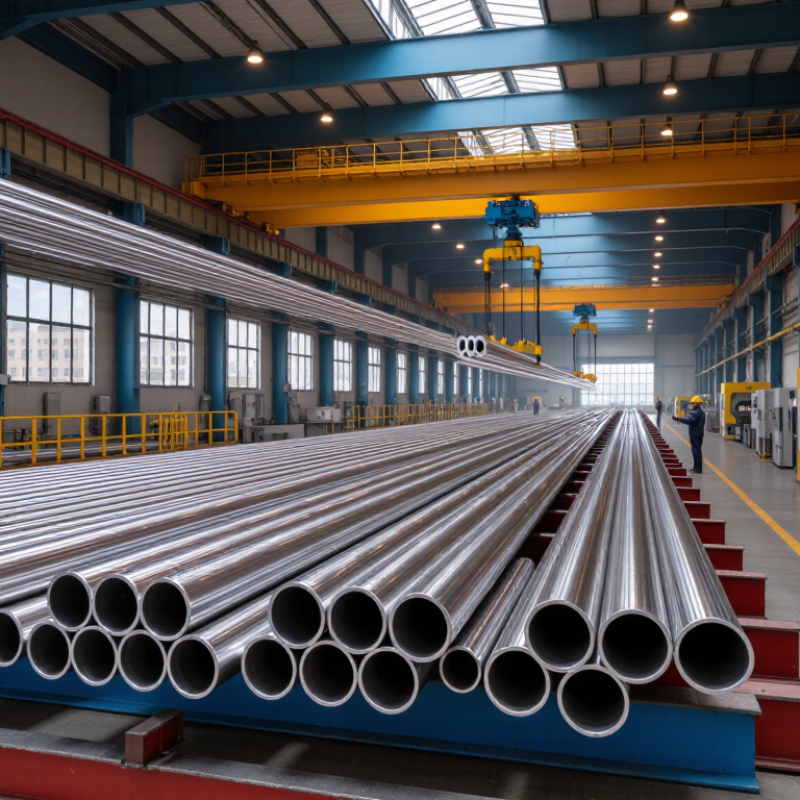
How to Choose the Right Seamless Steel Tube Supplier?

Define Tube Grades, Sizes, and Standards: ASTM A106, API 5L, or EN 10216

Choosing a seamless steel tube supplier starts with the specification, not the price.

ASTM A106 suits seamless carbon steel tubes for high-temperature service, commonly in Grades A, B, and C. API 5L covers line pipe, with PSL1 and PSL2 requirements for chemical, mechanical, and testing controls. EN 10216 targets tubes for pressure purposes, including grades such as P235GH.

These standards are not interchangeable.

Confirm outside diameter, wall thickness, length, tolerance, and end finish in writing. A serious supplier should provide heat numbers, chemical results, tensile data, hydrostatic or nondestructive testing records, and an EN 10204 3.1 certificate when required. The World Steel Association reported 1,892.2 million tonnes of crude steel production in 2023. That scale shows why traceability matters across complex supply chains.

However, steel output data does not prove tube quality. I have seen buyers overlook this difference.

Tips: Send a complete datasheet before requesting quotations. State the standard edition, grade, size, schedule, length, quantity, and service temperature. Ask whether the quoted product is genuinely seamless. Request a sample inspection report with identifying heat numbers. Check API 5L PSL2 testing carefully, especially for sour or demanding service. For ASTM A106, verify the test temperature and permitted manufacturing route. For EN 10216, confirm the exact part and material grade.

A supplier may claim compliance broadly, yet one missing suffix can change the acceptance criteria. That detail is easy to miss.

Verify Manufacturing Capacity for OD, Wall Thickness, and Annual Tonnage

A supplier’s catalog can show a wide range of seamless steel tubes, but catalog listings do not prove production capability. Ask for the actual outer diameter and wall thickness ranges produced at the mill, not just sizes available through trading channels. Request recent inspection records for dimensions close to your requirements. A tube measuring 168 millimeters in diameter with a 12-millimeter wall may need different tooling and process controls from a standard stocked size. Details matter.

Check how the supplier handles tolerances, material grades, and changes between production runs. Ask whether the requested dimensions can be made in one continuous batch, and how often they measure wall thickness along the tube. A single measurement at the end is not much evidence. You can also request a sample inspection report and compare its figures with your own specification. The paperwork may look neat; confirm that it describes the same mill and process.

Annual tonnage needs a practical check, too. Ask for the mill’s yearly output and its current committed workload, then compare those figures with your planned order schedule. High capacity does not guarantee your delivery slot. If the supplier quotes a large volume quickly, ask how many shifts, lines, or production sites support it. I have seen capacity figures presented without enough context; they are easy to misread. A clear production plan, with batch quantities and realistic lead times, is more useful than an impressive number.

Assess Quality Systems Through ISO 9001, NDT, and EN 10204 3.1 Certificates

Choosing a seamless steel tube supplier requires more than comparing prices. Quality systems reveal how consistently a supplier controls materials, production, and documentation. ISO 9001 certification indicates a structured management system, but it should not end your review. Ask about internal audits, corrective actions, and staff training. A certificate can expire or cover limited activities. Check its scope and validity.

Non-destructive testing, or NDT, provides practical evidence about tube integrity. Request the testing method, acceptance criteria, equipment records, and inspector qualifications. Ultrasonic testing can detect internal flaws, while eddy current testing may identify surface defects. The report should identify each batch clearly. Vague reports deserve questions.

Tips: Request an EN 10204 3.1 inspection certificate for every relevant heat or batch. It should state chemical composition, mechanical results, dimensions, and applicable standards. Match the certificate with markings on the tubes and shipping documents. In practice, small mismatches can expose weak traceability. This step is easy to skip. Do not skip it. Also review sample reports before ordering. A professional supplier should explain abnormal results without pressure. Perfect paperwork is not proof of perfect steel, and buyers should remain willing to verify independently.

How to Choose the Right Seamless Steel Tube Supplier? — Assess Quality Systems Through ISO 9001, NDT, and EN 10204 3.1 Certificates

Assessment Dimension What It Demonstrates Evidence to Request How to Verify It Important Qualification
ISO 9001 quality management system A certified quality management system covering defined organizational activities and locations. A current ISO 9001 certificate showing the legal entity, covered site or sites, scope, certificate number, certification body, and validity dates. Confirm the certificate with the issuing certification body or its official directory. Check that the scope and site relevant to the order are covered. ISO 9001 certification concerns the management system; it does not by itself certify a particular tube, grade, test result, or compliance with a product specification.
Nondestructive testing (NDT) Inspection for specified discontinuities without intentionally impairing the component’s intended serviceability. The purchase-order or product-specification NDT requirements, method and acceptance criteria, inspection procedure, test records, and personnel qualification records where required. Check that the method, coverage, acceptance criteria, and reporting match the governing order and applicable product standard. Confirm the tested tubes or batches are traceable to the records. NDT methods such as ultrasonic, electromagnetic, or liquid penetrant testing have different capabilities. The required method and extent depend on the product specification and order; NDT is not automatically required for every tube.
EN 10204 Type 3.1 inspection certificate Inspection results specific to the products supplied, validated by the manufacturer’s authorized inspection representative who is independent of the manufacturing department. The certificate for the actual delivery, including product description, quantity, grade or material designation, applicable specification, heat or batch identification, and the required test results. Match certificate details and heat or batch numbers to the order, tube markings, packing list, and delivery documents. Check that the reported tests and results meet the agreed requirements. Type 3.1 is not the same as independent third-party inspection. If third-party validation is required, specify the applicable EN 10204 document type and inspection arrangements in the contract.
Material and heat traceability A documented link between supplied tubes and the material heat or batch from which their test results and records originate. Tube or bundle markings, heat or batch numbers, inspection certificates, and a traceability record linking those identifiers to the delivery. Sample-check identifiers across the physical product, certificate, and shipping documents. Resolve missing, duplicated, or inconsistent identifiers before acceptance. Traceability details and marking requirements should follow the purchase specification and applicable product standard.
Product specification and test alignment Evidence that the ordered grade, dimensions, delivery condition, and required tests are addressed by the supplier’s documentation. The agreed product standard and order requirements, dimensional and visual inspection records, and applicable mechanical or other test results. Compare the certificate and inspection records with the exact order requirements, including dimensions, tolerances, test units, and acceptance criteria. Requirements vary by product standard, grade, intended service, and contract. A certificate should be assessed against the agreed specification, not in isolation.
Document consistency and control A clear, reviewable record set for the supplied material and inspection activities. Legible, controlled certificates and reports with dates, identifiers, results, and any required authorization or validation. Check for consistent product descriptions, order references, heat numbers, units, and test results across all documents. Request clarification for corrections or conflicting records. Document format alone does not establish product conformity; the underlying results must satisfy the contractual and applicable standard requirements.

Compare Delivery, Traceability, and Compliance with ASTM A450 Tolerances

How to Choose the Right Seamless Steel Tube Supplier?

A dependable supplier should prove more than production capacity. Compare promised delivery dates with actual shipping records, inspection stages, and packaging methods. Ask whether the supplier can support staged deliveries when your project schedule changes. A low price means little if tubes arrive late, damaged, or incorrectly identified.

Traceability must continue from the heat number to each bundle and test certificate. Check that the material certificate matches the tube marking, grade, dimensions, and heat treatment details. For compliance, request inspection records showing measurements against ASTM A450 requirements and the applicable tube specification. Review outside diameter, wall thickness, length, straightness, and surface condition. ASTM A450 tolerances are not a substitute for product-specific requirements. This point is often missed.

Tips: Ask for a sample certificate before ordering. Verify the measuring equipment’s calibration date. Confirm how nonconforming tubes are isolated and reported. Keep these answers in writing.

During supplier audits, I look for consistent records, not impressive promises. A clean warehouse helps, but it does not prove process control. I have seen accurate certificates paired with poor bundle labeling. That gap creates avoidable installation delays. Request recent evidence, including packing photos, dimensional reports, and dispatch documents. Some suppliers may resist detailed questions. That response deserves reflection. Reliability is demonstrated through transparent evidence, careful communication, and repeatable tolerance control.

Evaluate Total Cost Using MOQ, Lead Time, Testing, Packaging, and Warranty Terms

How to Choose the Right Seamless Steel Tube Supplier?

A low unit price can hide costs that appear later. Compare the full order, not just the quote. A high minimum order quantity may leave you storing unused tubes for months. Include warehouse space, handling, and the cash tied up in extra stock. Ask whether mixed sizes or staged deliveries are possible. Small details matter.

Lead time affects production schedules. Request a realistic dispatch date and clarify whether it includes inspection and packing. For testing, confirm which checks are included, such as dimensional inspection, tensile testing, or ultrasonic examination. Ask for traceable test reports linked to the specific tube bundle. More testing can raise the price, but skipping a needed check may cost more if a batch fails.

Packaging deserves a close look. Protective caps, moisture barriers, and clear bundle labels help prevent damage and sorting errors during transport. Check who pays if tubes arrive bent or corroded. Read warranty terms carefully: coverage period, exclusions, evidence required, and claim deadlines can differ. Put the details in writing. It feels tedious. Still, a slightly higher quote may be the better value when it reduces storage, delays, and quality risks. Compare the numbers against your actual usage; estimates are never perfect.