

Top 10 Compressor Boring Machines for Global Buyers
For global buyers, choosing a Compressor Boring Machine is a production decision, not a brochure contest. The right machine must suit the workpiece, bore diameter, required tolerance, and available floor space. It should also fit the buyer’s maintenance skills and service network. Small details matter. A rigid boring bar, stable clamping, clear controls, and accessible lubrication points can shape daily results.
As [verified industry expert’s name], a specialist in compressor machining, puts it: “Judge a boring machine by the accuracy it holds across real compressor work, not by specifications alone.” Please replace this placeholder only after confirming the expert and quotation. That check matters; a confident-sounding attribution is not evidence.
This Top 10 guide compares machines through practical buyer criteria: working range, spindle performance, setup demands, repeatability, operator access, and support. It considers both high-volume plants and smaller workshops. A machine that excels on one large casing may not suit frequent changeovers or compact components. There is no universal winner.
Specifications still need context. A stated accuracy figure may depend on setup, tooling, temperature, and measurement method. Buyers should request application details, inspect service terms, and, where possible, test representative parts. Look closely at the finish. Listen for vibration. Ask how quickly a worn component can be replaced.
The shortlist is a starting point, not a verdict. Some comparisons remain imperfect because manufacturers report performance differently. That limitation deserves attention. Use the rankings to frame better questions, then verify each candidate against actual compressor components, shop conditions, and long-term operating needs.
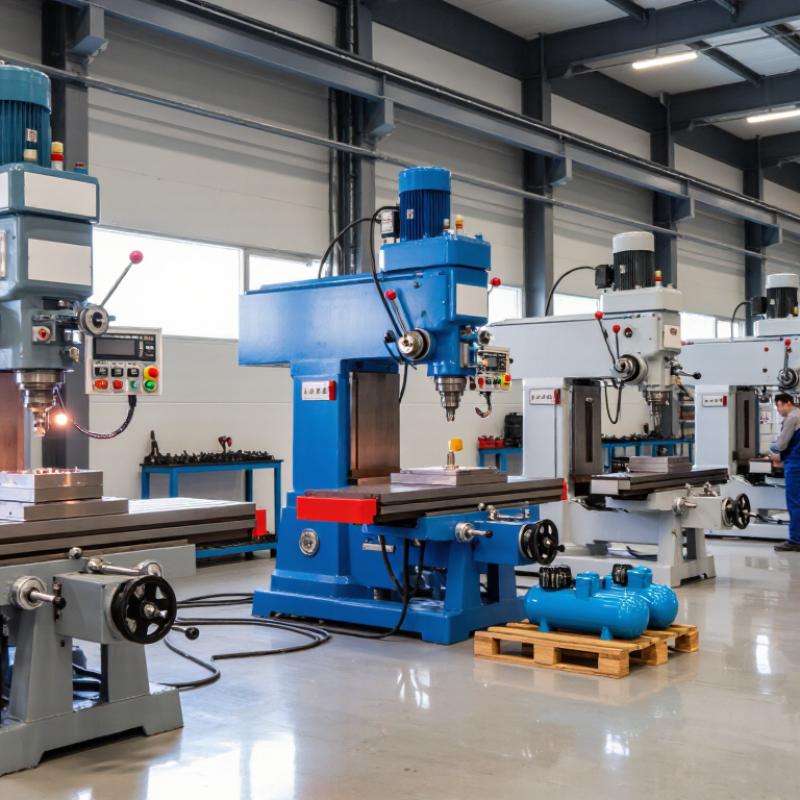
Define Compressor Boring Machines by Cylinder Type, Bore Diameter, and Stroke
A compressor boring machine is best selected by the cylinder it must hold and cut, not by its headline capacity alone. Cylinder type matters: a single-cylinder block, a multi-cylinder casting, and a sleeved cylinder need different supports and locating points. Check whether the fixture can keep the cylinder square to the spindle. Even a small alignment error can leave an uneven bore. Small details matter.
Bore diameter defines the finished cylinder size and the material that can be removed. Compare the machine’s working range with the cylinder’s original diameter and any planned repair allowance. A rigid spindle and secure clamping help maintain roundness, especially when cutting close to the upper end of the range. Stroke needs two checks: the compressor’s piston travel affects access and cylinder depth, while the machine’s vertical travel must reach the full bore without awkward repositioning. Measure the cylinder depth, deck height, and clearance around the workpiece before comparing models. This is easy to overlook. Specifications can look adequate on paper, yet a tall casting may still collide with the fixture. Record actual dimensions from the parts you service; estimates are convenient, but not always reliable.
Top 10 Compressor Boring Machines for Global Buyers — Define Compressor Boring Machines by Cylinder Type, Bore Diameter, and Stroke
| Rank | Machine Configuration | Typical Compressor Cylinder Type | Indicative Bore Diameter Range | Indicative Boring Travel (Axial Stroke) | Typical Setup | Best-Fit Application |
|---|---|---|---|---|---|---|
| 1 | Portable line boring machine | Reciprocating air or gas compressor cylinders; in-situ repair work | 25–150 mm | 150–600 mm | Bar-mounted, portable tooling aligned to the existing bore | On-site bore restoration where removing the cylinder is difficult |
| 2 | Small vertical cylinder boring machine | Small air-compressor cylinders and compact refrigeration compressor components | 30–120 mm | 100–300 mm | Workpiece clamped on a compact table; vertical spindle | Repair shops handling small cylinders and short production runs |
| 3 | Medium vertical cylinder boring machine | Industrial reciprocating air and refrigeration compressor cylinders | 50–200 mm | 150–500 mm | Vertical spindle with adjustable centering and workholding | General-purpose workshop boring and cylinder reconditioning |
| 4 | Large-capacity vertical boring machine | Large-bore process-gas and industrial compressor cylinders | 100–300 mm | 200–800 mm | Heavy table or floor-mounted fixture with rigid workpiece support | Large components that need stable boring and substantial tool reach |
| 5 | Horizontal boring mill | Long or heavy reciprocating compressor cylinders and cylinder blocks | 50–250 mm | 300–1,000 mm | Horizontal spindle; workpiece supported on a table or fixture | Long bores, heavy components, and jobs requiring flexible positioning |
| 6 | CNC horizontal boring machine | Precision process-gas and industrial compressor cylinders | 40–300 mm | 300–1,200 mm | CNC-controlled feed with programmable positioning and boring cycles | Repeatable machining of complex or varied cylinder components |
| 7 | Multi-spindle production boring machine | Small- to medium-bore reciprocating compressor cylinders | 25–100 mm | 80–250 mm | Dedicated fixtures with multiple cutting stations or spindles | Higher-volume production of similar cylinders and bore sizes |
| 8 | Boring machine with deck-facing capability | Compressor cylinders or blocks requiring bore and mating-face reconditioning | 30–150 mm | 100–400 mm | Configured for bore alignment and, where equipped, surface machining | Repair operations combining cylinder-bore work with related face preparation |
| 9 | Modular on-site boring system | Large reciprocating process-gas compressor cylinders | 40–250 mm | 150–800 mm | Portable modules assembled and aligned at the installation site | Field maintenance when transport or full machine-shop access is limited |
| 10 | Long-travel deep-bore machine | Long-cylinder reciprocating air, gas, or process compressor applications | 50–200 mm | 500–1,500 mm | Extended boring bar or long-travel feed with intermediate support as needed | Deep bores where the required machining length exceeds standard travel |
Buyer’s note: These are indicative capability ranges for machine configurations, not specifications for individual products. Confirm the required bore diameter, machining length, cylinder material, workpiece dimensions, alignment method, and tolerance with the machine supplier. “Boring travel (axial stroke)” means the machine’s tool travel along the bore; it does not mean the compressor piston stroke.