

What Is Galvanized Welded Pipe and What Is It Used For?
Galvanized Welded Pipe is a practical steel product made by forming and welding steel strip, then applying a protective zinc coating. This process creates a recognizable silver surface and improves resistance to moisture, scratches, and outdoor exposure. The welded seam remains important, however. Its quality affects pressure performance, service life, and inspection requirements.
Industry demand reflects steel’s continuing importance. The World Steel Association reported approximately 1.89 billion tonnes of crude steel production worldwide in 2023. That scale supports extensive use of coated steel in construction, infrastructure, agriculture, and manufacturing. The American Galvanizers Association also explains that zinc coatings protect steel through barrier protection and sacrificial action. In simple terms, the zinc can corrode before the underlying steel does.
Galvanized Welded Pipe commonly serves in fences, handrails, scaffolding, greenhouse frames, irrigation systems, and selected water applications. ASTM A53 and related standards help define dimensions, materials, and testing for certain pipe products. ISO 1461 provides requirements for hot-dip galvanized coatings on fabricated iron and steel articles. These standards should not be treated as interchangeable.
A useful detail is often overlooked. A bright surface does not automatically prove correct coating thickness. Buyers should review certificates, wall thickness, seam quality, zinc-coating measurements, and intended service conditions. Pipes carrying aggressive chemicals or high-temperature fluids may require another material. Market reports describe broad trends, but they cannot replace engineering judgment.
The right choice depends on pressure, temperature, water chemistry, installation environment, and maintenance access. Galvanized steel is durable. It is not universal. This guide examines what Galvanized Welded Pipe is, how it is produced, and where it performs reliably.
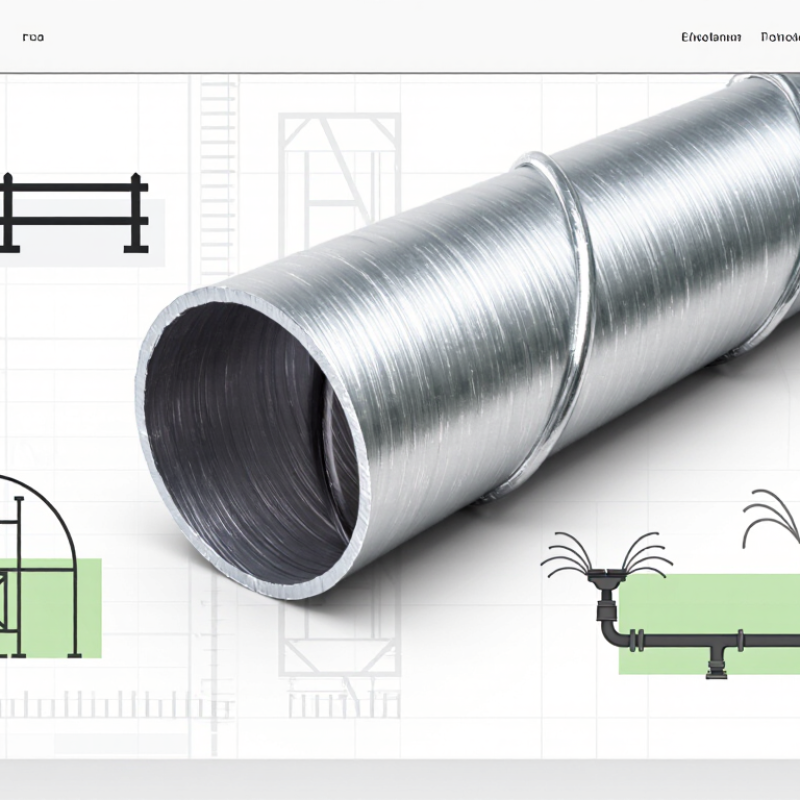
Definition and Basic Characteristics of Galvanized Welded Pipe
Galvanized welded pipe is steel pipe formed from a flat strip and joined along one seam. A zinc coating then protects the steel from moisture and oxygen. Manufacturers may apply zinc before or after welding. Hot-dip galvanizing usually creates a thicker, more durable coating.
Its basic characteristics are a visible weld line, metallic zinc surface, and moderate corrosion resistance. The coating can appear bright, dull, or slightly uneven. That difference does not always indicate poor quality.
Wall thickness, outside diameter, coating weight, and weld integrity determine performance. In practical inspection, check the ends and seam carefully. Cutting, threading, or impact can expose bare steel.
Galvanized welded pipe is commonly used for water lines, fences, greenhouse frames, handrails, and light structural supports. It is useful where installation needs affordable steel with added surface protection.
However, it is not suitable for every environment. Strong acids, high temperatures, and constantly trapped moisture can shorten its service life. Potable water applications also require suitable specifications and local approval.
A common mistake is treating galvanizing as permanent protection. It is not. Good drainage, proper storage, and repaired damaged areas still matter.
How Galvanized Welded Pipe Is Manufactured
Galvanized welded pipe begins as a flat steel strip, not a finished tube. The strip is slit to the required width and guided through forming rolls. These rolls gradually bend the steel into a circular shape. Its edges meet along one continuous seam. An electric resistance welding process then joins them with controlled heat and pressure. No filler metal is normally required. The welded tube passes through sizing rolls, which correct its diameter and roundness. It is then cut into standard lengths. Small adjustments matter here. Uneven pressure can affect wall thickness and straightness.
Galvanizing usually follows surface preparation. Oil, scale, and oxides are removed through cleaning and pickling. The pipe may then enter a molten zinc bath. Zinc bonds to the steel and forms protective alloy layers beneath a durable outer coating. Some pipe is galvanized before forming, while other pipe is coated after welding. The second approach can cover the weld area more completely. Excess zinc is drained or wiped away, and the pipe cools before inspection. Technicians check coating appearance, dimensions, seam quality, and adhesion. A bright surface can mislead. Coating thickness still needs measurement. Threading, cutting, or handling can also damage protection. Galvanized welded pipe is commonly used for water lines, fencing, structural supports, and light industrial systems where corrosion resistance and economical production are important. Its suitability depends on fluid chemistry, temperature, pressure, and local specifications.
Types and Key Properties of Galvanized Welded Pipe
Galvanized welded pipe is steel pipe joined along a longitudinal seam and protected with a zinc coating. Its main types include pre-galvanized pipe and hot-dip galvanized welded pipe. Pre-galvanized steel receives zinc before forming and welding, so the outer surface looks clean and uniform. Hot-dip galvanizing happens after fabrication, allowing zinc to cover the pipe body, weld area, and cut edges more completely. That difference matters in damp or outdoor installations.
The key properties are corrosion resistance, mechanical strength, consistent dimensions, and practical installation. Zinc acts as a sacrificial barrier. It can protect exposed steel even after minor surface damage. The coating also gives the pipe a bright, metallic finish. However, coating thickness varies by process and specification. A quick visual check is not enough. Inspectors should verify wall thickness, zinc coverage, weld quality, and applicable testing records.
Galvanized welded pipe is used for handrails, fencing, scaffolding, irrigation lines, structural frames, and selected water systems. It is easier to handle than many thicker seamless pipes, which can reduce installation effort. Still, welded pipe is not ideal for every pressure or temperature condition. Internal moisture, acidic soil, and damaged threads can accelerate corrosion. That assumption is too simple. No zinc coating lasts forever, so project designers should match the pipe type, coating class, fluid, and service environment carefully.
What Is Galvanized Welded Pipe and What Is It Used For? - Types and Key Properties of Galvanized Welded Pipe
| Data Dimension | Key Information | Typical Details | Common Applications |
|---|---|---|---|
| Definition | Galvanized welded pipe is a steel pipe made by forming flat steel strip into a tubular shape, welding the longitudinal seam, and applying a zinc coating for corrosion protection. | Carbon steel substrate with a zinc protective layer; the weld seam is part of the pipe structure. | Water distribution, construction, agriculture, fencing, and general-purpose mechanical work. |
| Manufacturing Process | Steel strip is cold-formed or hot-formed, longitudinally welded, sized, cut to length, and galvanized either before or after fabrication. | Electric resistance welding is commonly used for tubular steel products. | Efficient production of straight, uniform pipe for standardized construction and utility systems. |
| Pre-Galvanized Pipe | Steel strip is zinc-coated before it is formed and welded into pipe. | Smooth and relatively uniform coating; cut edges and the weld area may require additional protection in demanding environments. | Indoor framing, conduit, light structural work, and dry or mildly corrosive environments. |
| Post-Galvanized Pipe | The completed welded pipe is immersed in molten zinc after fabrication. | Zinc can cover the outside, inside, ends, and weld area more completely than a pre-galvanized coating. | Outdoor water lines, railings, structural supports, agricultural systems, and exposed service environments. |
| Electro-Galvanized Pipe | Zinc is deposited on the steel surface through an electrolytic process. | Usually provides a thinner and more precisely controlled coating with a smooth appearance. | Indoor components, light-duty assemblies, and applications where appearance and dimensional control are important. |
| Hot-Dip Galvanized Pipe | The fabricated steel pipe is submerged in molten zinc, creating a metallurgically bonded protective coating. | Generally offers thicker, robust corrosion protection and may have a characteristic spangled or matte surface. | Outdoor infrastructure, wet environments, utility piping, scaffolding, and structural applications. |
| Corrosion Protection | Zinc protects steel through barrier protection and sacrificial or cathodic action when the surface is scratched. | Service life depends on coating thickness, moisture, salt exposure, acidity, abrasion, and maintenance. | Suitable for many atmospheric and moderately corrosive conditions, but not automatically suitable for every chemical or marine environment. |
| Common Steel Grades | Low-carbon structural or general-purpose steel is commonly used for galvanized welded pipe. | Grade selection depends on the applicable product standard, required strength, formability, and intended service. | Mechanical tubing, structural frames, water service, and fabricated assemblies. |
| Typical Size Range | Available in many outside diameters, wall thicknesses, and nominal pipe sizes. | Common commercial sizes range from small conduit and tubing dimensions to large structural or utility diameters; exact availability varies by standard and manufacturer. | Small-diameter handrails and frames through larger water, drainage, and structural systems. |
| Wall Thickness | Wall thickness determines much of the pipe's load capacity, stiffness, weight, and pressure capability. | Light, medium, and heavy wall options are available depending on the product specification. | Load-bearing frames require different wall thicknesses from low-pressure water or protective sleeves. |
| Mechanical Strength | The steel core provides tensile strength, yield strength, stiffness, and resistance to impact and bending. | Performance depends on steel grade, diameter-to-thickness ratio, weld quality, and design loading. | Supports, posts, frames, guardrails, scaffolding, and light structural members. |
| Temperature Resistance | Galvanized coatings are intended mainly for normal service temperatures and can be affected by prolonged high heat. | High-temperature service can accelerate zinc oxidation and reduce coating performance; engineering review is required. | Better suited to ambient-temperature utility, construction, and mechanical applications than high-temperature process lines. |
| Joining Methods | Pipe can be joined with threaded fittings, mechanical couplings, flanges, grooved connections, or welding where permitted. | Welding burns away zinc locally and requires ventilation, suitable safety controls, and repair of the affected coating. | Plumbing, fire-protection-related assemblies where approved, structural fabrication, and utility installations. |
| Advantages | Combines the strength of steel with improved resistance to atmospheric corrosion and relatively low maintenance requirements. | Durable, widely available, recyclable, and generally more economical than corrosion-resistant solid alloys. | Cost-effective infrastructure, construction, agricultural, and general fabrication projects. |
| Limitations | The coating can be damaged by cutting, threading, welding, abrasion, strong acids, strong alkalis, or prolonged exposure to aggressive chemicals. | Internal corrosion may occur if the conveyed fluid is incompatible with galvanized steel; compatibility must be checked before use. | Not a universal substitute for stainless steel, plastic-lined pipe, or specially engineered corrosion-resistant systems. |
| Inspection Points | Check outside diameter, wall thickness, straightness, weld condition, zinc coating continuity, coating damage, and end preparation. | Product certification and dimensional tolerances should match the project specification and applicable standard. | Helps confirm suitability for pressure, structural loading, environmental exposure, and installation requirements. |
Common Applications Across Construction and Industry
What Is Galvanized Welded Pipe and What Is It Used For?
Galvanized welded pipe is steel pipe protected by a zinc coating against moisture and corrosion. Manufacturers form steel strip into a tube, weld the seam, and apply zinc before or after fabrication. The process creates a practical balance between strength, cost, and service life. The weld still matters.
The World Steel Association reported 1.89 billion tonnes of crude steel production in 2023. Construction remains one of the largest steel-consuming sectors, creating steady demand for protected tubular products. On building sites, galvanized welded pipe supports handrails, scaffolding, fencing, roof drainage, and light structural frames. Its silver surface also makes inspection easier. Scratches stand out.
Infrastructure projects use larger pipe for guardrails, sign supports, utility protection, and agricultural water systems. The International Energy Agency has noted that buildings and construction consume roughly half of global steel demand, showing why corrosion control affects material efficiency. In industrial facilities, pipe can carry air, water, and selected low-pressure fluids, subject to engineering specifications and local codes.
However, galvanized pipe is not universally suitable. High temperatures, aggressive chemicals, or buried conditions may require another coating or material. Cutting and welding can damage zinc protection and produce hazardous fumes, so trained workers need suitable ventilation and controls. Industry coating-life studies commonly report decades of service, but exposure, thickness, and maintenance change the result. Real projects need site-specific review.
Factors for Selecting and Using Galvanized Welded Pipe
Galvanized welded pipe is steel pipe formed by joining a flat steel sheet and coating its surface with zinc. The zinc layer helps reduce rust during storage, installation, and service. It is commonly used for water lines, fencing, greenhouse frames, scaffolding, and light structural supports.
Selection depends heavily on the working environment. Dry indoor areas may need only moderate corrosion protection, while coastal sites require thicker coatings and regular inspections. Check the pipe diameter, wall thickness, pressure rating, and applicable standards before ordering. Check the details. The intended fluid also matters. For drinking water, confirm that the pipe and coating meet local safety requirements. Galvanized steel is not automatically suitable for every water system.
Weld quality deserves close attention. Uneven seams, damaged zinc, or poor threading can create weak points. Inspectors should examine both the outer surface and the cut ends. During installation, avoid dragging pipes across concrete, which can scrape away protective zinc. Repair exposed areas with an approved zinc-rich coating when appropriate. Small gaps matter. In field work, installers sometimes choose a pipe by size alone, then discover unexpected pressure loss or premature corrosion. That mistake is avoidable, although site conditions are not always predictable. Rechecking measurements, joining methods, and drainage details can improve reliability.
What Is Galvanized Welded Pipe and What Is It Used For?
Galvanized welded pipe is steel pipe made by forming and welding steel strip or plate, then applying a zinc coating to improve resistance to atmospheric corrosion. It is commonly used for water distribution, fencing, handrails, structural supports, irrigation, and other general-purpose applications.
The chart shows standard outside diameters for selected nominal pipe sizes. When selecting galvanized welded pipe, consider nominal size, required wall thickness, operating pressure, connection method, zinc-coating condition, installation environment, and applicable standards.
Dimensions shown are standard nominal pipe outside diameters in accordance with common steel-pipe dimensional practice; the actual wall thickness depends on the selected schedule or specification.
