

Quality Mold

China Top Package Drop Tester Supplier How to Choose?

Choosing a China top Package Drop Tester supplier requires more than comparing prices and product photos. A reliable supplier should understand packaging tests, product protection, and repeatable impact conditions. Their equipment should support accurate drop heights, stable release mechanisms, and clear test records. Small details matter. A loose clamp can change the result.

Experienced buyers usually review the supplier’s manufacturing process, technical documents, calibration practices, and after-sales support. Ask how the machine is assembled and tested before shipment. Request videos showing a real carton drop test, not only polished factory images. Check whether the supplier can provide suitable specifications for your package size, product weight, and testing frequency. A professional team should explain these points clearly.

No supplier is perfect. That matters. A factory may offer strong equipment but limited communication after delivery. Another may provide fast support but weaker customization. Sample testing also cannot represent every warehouse, transport route, or handling condition. For this reason, supplier evaluation should include factory experience, customer feedback, inspection records, and practical trial results. A useful visit might reveal simple facts, such as clean wiring, reinforced frames, and operators who understand the controls. These observations build trust more effectively than promises. The best choice is not always the cheapest option. It is the supplier that can deliver dependable performance, transparent service, and equipment suited to your actual testing needs.
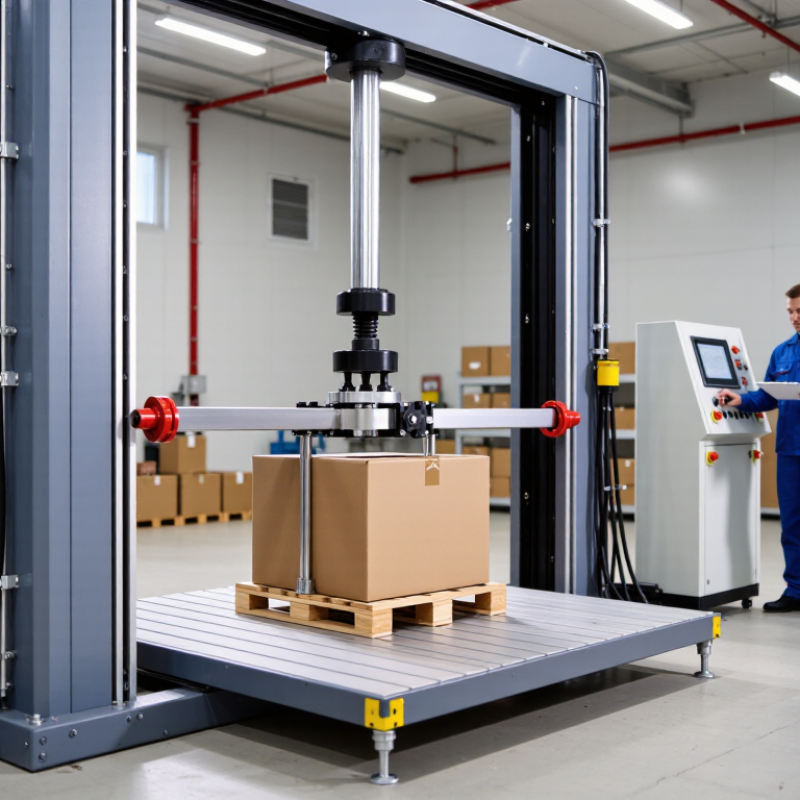
China Top Package Drop Tester Supplier How to Choose?

What Is a Package Drop Tester and Why Does It Matter?

A package drop tester is a controlled machine that releases a packed product from a selected height. It measures how well the package survives sudden impact during handling, loading, and delivery. The test may use flat drops, edge drops, or corner drops. Each position reveals a different weakness.

Small details matter. A carton corner may crush first. A loose insert may let a product strike the inner wall. By recording damage, deformation, and functional failure, engineers can improve cushioning, sealing, and material thickness. This evidence is more useful than judging strength by appearance alone. A package can look acceptable yet hide a cracked component inside.

A reliable tester needs stable height control, a rigid platform, repeatable release, and clear operating controls. Accurate sensors and regular calibration make results easier to trust. When selecting a supplier in China, ask for calibration records, factory testing procedures, technical training, and after-sales support. Experienced technicians should explain suitable drop heights and test methods without promising perfect protection. No laboratory test copies every delivery route. Operator alignment can also affect results, and that weakness deserves attention. Test records should include package size, product weight, drop orientation, height, and observed damage. Good data supports practical decisions, even when the first result is disappointing.

Key Features of a Reliable Package Drop Tester Supplier

China Top Package Drop Tester Supplier: How to Choose?

A reliable package drop tester supplier should understand real transit damage, not only sell a tall steel frame. E-commerce keeps raising the stakes.

The U.S. Census Bureau reported $1.119 trillion in U.S. retail e-commerce sales during 2023, equal to 15.4% of total retail sales.

More parcels mean more handling events, corner impacts, and hidden product failures.

Ask whether the machine supports ASTM D5276 or equivalent test procedures. Check its drop-height accuracy, load capacity, release mechanism, and repeatability. A stable platform matters. So does safe operation.

Calibration evidence separates experienced suppliers from ordinary fabricators.

Request calibration records traceable to an ISO/IEC 17025-accredited laboratory, when available. Confirm the supplier can provide uncertainty data, inspection intervals, and replacement parts.

A useful system should test faces, edges, and corners without awkward manual adjustments. It should also record height, specimen weight, and test cycles clearly.

OECD’s Global Plastics Outlook reported 353 million tonnes of plastic waste in 2019, with packaging among the largest sources.

Better drop testing can reduce avoidable packaging waste, although it cannot solve every distribution problem.

I would not trust polished marketing alone. A supplier may pass a factory demonstration yet struggle with local service or operator training. That weakness is easy to miss. Ask for installation examples, response times, and a practical trial using your own package dimensions.

How to Evaluate Testing Standards, Accuracy, and Safety

Choosing a top package drop tester supplier in China requires more than comparing prices. Evaluate the machine against recognized methods, such as ASTM D5276, ISO 2248, and relevant ISTA procedures. These standards define drop height, package orientation, conditioning, and test sequence. A reliable supplier should provide calibration records traceable to national or international standards. Load capacity and drop height must match your real shipping cases, not only laboratory samples.

Accuracy depends on repeatable release, stable impact surfaces, and precise height measurement. Ask for test data from repeated drops, such as ten cycles at the same height. Review the variation between results. Even a small release delay can change corner impact energy. The World Bank’s What a Waste 2.0 report estimates global waste may reach 3.40 billion tonnes annually by 2050. Better package testing can reduce damaged goods and unnecessary packaging waste, although testing alone cannot solve the waste problem.

Tips: Check emergency stops, door interlocks, guarding, and operator training. Request a factory acceptance test before shipment. Confirm spare parts, software records, and calibration support. ASTM and ISTA documents should be available for review, not merely mentioned in a quotation. A polished machine may still produce weak evidence. Recheck the test plan when package size, material, or transport route changes.

China Top Package Drop Tester Supplier How to Choose? - How to Evaluate Testing Standards, Accuracy, and Safety
Evaluation Dimension Relevant Standard or Reference Verified Technical Data What to Check with a Supplier Recommended Acceptance Evidence
Test Method Compatibility ISO 2248 ASTM D5276 ISTA 3A ISO 2248 and ASTM D5276 cover free-fall drop testing of packaged products or loaded containers. ISTA 3A is a general simulation test for packaged-products shipped through a parcel delivery system. Confirm that the machine can reproduce the required drop orientation, drop sequence, package support condition, and test procedure for the target standard. A written compliance matrix showing each required test step, applicable standard clause, machine function, and operator procedure.
Drop-Height Capability Applicable product specification and selected test standard Drop height is not a universal pass/fail value. It depends on package mass, package dimensions, distribution environment, and the selected test method. Compare the supplier’s height range with the highest height required by your test plan. Check whether height is set mechanically, electronically, or by a calibrated position reference. Factory measurement record, height-setting verification, and a repeatability test at several representative heights.
Height Measurement Accuracy Test-method requirement and the laboratory’s internal measurement procedure The reference height should be clearly defined, such as the distance from the intended impact surface to the lowest point of the package before release. Ask how height is measured, where the reference point is located, and whether the displayed value can be independently checked with a traceable measuring instrument. Calibration certificate or verification report identifying the instrument, measurement range, uncertainty, date, and traceability.
Release Accuracy Applicable drop-test procedure A suitable release mechanism should allow the package to fall without adding intentional horizontal force or restricting the required orientation. Check whether the release is pneumatic, electromagnetic, or mechanical; whether it supports multiple orientations; and whether the mechanism is suitable for the package’s size and mass. Video verification, repeated-release results, and an inspection record confirming that the package leaves the fixture cleanly.
Load Capacity and Platform Size Product specification matched to the test sample Rated capacity must cover the complete loaded package, including the product, cushioning materials, inner packaging, and outer container. Verify maximum load, allowable package dimensions, center-of-gravity limitations, impact-surface dimensions, and any restrictions on unusually flexible or irregular packages. A signed technical datasheet and a test demonstration using a sample with comparable mass and dimensions.
Impact Surface and Structural Stability Applicable test method and laboratory floor requirements The impact surface should be rigid, level, securely supported, and capable of withstanding repeated impact without unacceptable movement or deformation. Review impact-plate material and thickness, frame construction, anchoring requirements, leveling method, and maintenance access. Installation inspection, levelness check, anchoring record where required, and periodic structural inspection.
Repeatability and Reproducibility Laboratory quality system and selected test method Consistent results require stable height control, reliable release timing, repeatable orientation, and controlled package preparation. Request repeated drops at the same setting and ask how the supplier controls variation in height, release, impact location, and operator setup. Repeatability report containing test conditions, number of repetitions, measured values, deviations, and acceptance criteria agreed in advance.
Control and Data Recording Laboratory procedure and customer data requirements Useful records may include sample identification, package mass, dimensions, drop height, orientation, sequence, date, operator, and test result. Check whether the controller supports recipe storage, user access levels, test-step logging, data export, and protection against accidental parameter changes. Example test report, exported data file, user-access demonstration, and confirmation of backup or retention procedures.
Guarding and Interlocks Applicable machinery-safety requirements and site risk assessment Moving parts and the falling-package area should be protected against unintended access during operation. Confirm the presence of physical guards, access-door interlocks, safe restart behavior, and prevention of automatic operation when a guard is open. Safety-function test record, risk assessment, wiring or safety-circuit documentation, and an on-site acceptance test.
Emergency Stop and Safe Recovery Applicable machinery-safety requirements The emergency-stop function should bring hazardous motion to a safe state and should not automatically restart the equipment when reset. Test emergency-stop locations, reset behavior, power-loss recovery, manual recovery from an interrupted cycle, and protection against unexpected restart. Documented emergency-stop test, functional safety checklist, and operator training record.
Electrical and Pneumatic Safety Local electrical regulations and site utility requirements The machine must match the available power supply, compressed-air pressure, grounding method, and environmental conditions at the installation site. Verify voltage and frequency, rated current, air-pressure range, air-quality requirements, protection against leakage, and accessible isolation points. Electrical schematic, pneumatic diagram, nameplate information, insulation or grounding test where applicable, and installation checklist.
Calibration and Maintenance Laboratory calibration procedure and quality-management system The equipment should have defined verification intervals for height measurement, release function, levelness, safety devices, and structural components. Ask for calibration scope, recommended interval, service parts, lubrication points, preventive-maintenance tasks, and remote or local technical support. Calibration certificate, maintenance manual, spare-parts list, service response terms, and a clear re-verification procedure after repair or relocation.
Installation and Operator Training Supplier installation procedure and customer safety rules Installation quality can affect levelness, anchoring, drop height, impact behavior, and safe operation. Confirm floor requirements, lifting method, installation time, commissioning scope, language of manuals, training content, and operator competency requirements. Site-acceptance checklist, commissioning report, training attendance record, and signed handover documentation.
Supplier Selection Score Customer-defined weighting model A practical comparison should score compliance, measurement control, safety, serviceability, documentation, delivery, and total cost rather than purchase price alone. Use a weighted scorecard and require the same technical evidence from every shortlisted supplier. Exclude any machine that fails a mandatory safety or method-compatibility requirement. Completed technical questionnaire, quotation comparison, risk review, factory-acceptance report, and final site-acceptance report.

How to Compare Supplier Quality, Customization, and Service

China Top Package Drop Tester Supplier: How to Choose?

Comparing suppliers requires more than checking the lowest quotation. During factory evaluations, I inspect frame welds, lifting mechanisms, safety guards, and control-panel response. A stable tester should repeat the same drop height and release action accurately. Ask for calibration records, inspection reports, and videos showing real testing. A polished brochure is not proof. Request measurable data instead.

Customization Customization should match your package dimensions, weight range, and testing method. Confirm the drop height, platform size, fixture design, power supply, and control software before ordering. Some suppliers modify standard machines quickly, but unusual cartons may require structural changes. Ask for engineering drawings and a written acceptance standard. I have seen small details, such as corner clearance, delay installation. That mistake is easy to miss.

Service Quality Service quality becomes visible after payment. Compare response times, installation guidance, spare-part availability, and warranty terms. A reliable supplier should explain maintenance intervals and provide clear operating instructions. Remote troubleshooting is useful, but not always enough. Confirm whether technicians can support commissioning and operator training. Ask how software updates are handled. Check references from similar testing environments, not unrelated industries. One weakness remains: online reviews can be incomplete, so direct conversations with previous users deserve more weight.

How to Choose the Best Package Drop Tester Supplier in China

Choosing the Best Package Drop Tester Supplier in China

Global parcel volume reached about 161.8 billion shipments in 2022, according to the 2023 Parcel Shipping Index. Each parcel faces impacts from conveyor transfers, vehicle movement, and warehouse handling. A reliable drop tester supplier should understand these conditions, not only sell a machine. Check whether the equipment supports ASTM D5276, ISO 2248, or applicable ISTA procedures. Ask for calibration records, test-height accuracy, impact-speed data, and load-capacity evidence.

Look closely at the machine itself. A rigid steel frame, stable lifting platform, emergency stop, and clear digital controls matter during repeated testing. The supplier should explain how sensors are calibrated and how replacement parts are provided. Request a video using a package similar to yours, such as a 10-kilogram carton dropped from 800 millimeters. Better still, arrange a factory acceptance test with your own sample.

The World Bank’s What a Waste 2.0 report estimated 2.01 billion tonnes of municipal solid waste in 2016, with growth expected as consumption expands. Stronger packaging and accurate testing can reduce avoidable damage and waste. However, a higher-priced tester is not automatically better. I have seen buyers focus on maximum drop height while ignoring platform flatness and software records. That is a costly mistake. Ask for third-party calibration, service response times, installation training, and a written warranty before choosing a Chinese supplier.

How to Choose the Best Package Drop Tester Supplier in China

This practical evaluation model prioritizes test compliance and repeatability, followed by machine safety, customization, data reporting, after-sales support, and total cost. Confirm that the supplier can support applicable standards such as ISO 2248, ASTM D5276, or ISTA test procedures before making a purchase.