

How to Choose the Right Insulin Syringe
Choosing an Insulin Syringe can feel like a small decision with important details. The right option depends on your prescribed insulin, the dose you need to measure, and the syringe’s capacity and markings. A syringe that holds more insulin is not automatically the better choice. Clear, easy-to-read markings matter, especially when measuring small doses. Small details count.
Needle length and gauge can affect comfort and handling, but personal needs vary. Some people focus on the thinnest needle and overlook whether the syringe matches their insulin concentration. That mismatch can create a serious dosing risk. Check the product label and confirm compatibility with your prescription. If anything is unclear, ask your pharmacist or diabetes care professional before using it.
This guide explains what syringe capacity, unit markings, needle dimensions, and packaging details mean in everyday use. It also points out questions worth asking when comparing products, such as whether the markings are easy to see under your usual lighting. A printed scale can look obvious in a bright store and less so at home. I may be overemphasizing that detail, but it is practical. Follow the instructions from your healthcare team, and do not change your insulin dose based on syringe selection alone. A suitable syringe should support accurate measurement and fit your care plan—not replace professional guidance.
Understand Insulin Syringe Parts, Markings, and Measurement Units
How to Choose the Right Insulin Syringe
Understand Insulin Syringe Parts, Markings, and Measurement Units
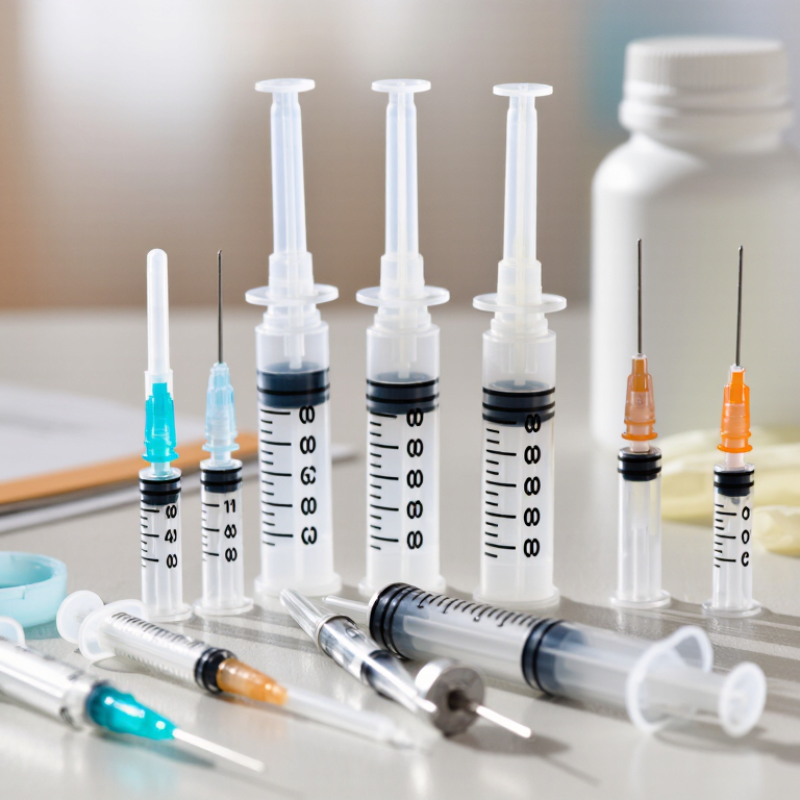
An insulin syringe has three main parts: the barrel, plunger, and needle. The barrel holds insulin, while the plunger moves to draw it in and deliver it. Small lines on the barrel show measurement units. They do not usually represent milliliters. Check the syringe packaging to confirm its scale and capacity.
The concentration matters. A U-100 syringe is calibrated for U-100 insulin, which contains 100 units per milliliter. Other concentrations require a matching syringe; the scales are not interchangeable. A mismatch can lead to a serious dosing error. It is easy to assume the numbers mean the same thing on every syringe. They do not.
Choose a barrel that can hold the prescribed amount and has markings you can read clearly. Finer graduations may help with accurate measurement, but the right syringe depends on the prescribed insulin and dose. Check the label each time. If the syringe markings, insulin concentration, or instructions seem unclear, pause and ask a pharmacist or healthcare professional. A quick question is safer than a guess.
Match Syringe Capacity to the Prescribed Insulin Dose
Choosing an insulin syringe starts with the prescribed dose, not the largest syringe on the shelf. The capacity should comfortably hold the full dose while keeping the markings easy to read. For example, a 30-unit syringe may suit a smaller dose, while a larger dose may require a higher-capacity syringe. Smaller-capacity syringes often have finer spacing between marks, which can make measuring modest doses easier. Check the scale carefully. A dose that sits between hard-to-see lines is difficult to measure consistently.
Match the syringe markings to the insulin concentration prescribed for you. Many syringes are calibrated for a specific concentration, such as U-100, and the wrong match can lead to a serious dosing error. Do not convert units or estimate from another syringe size on your own. Ask a pharmacist or prescriber to confirm the syringe capacity, concentration, and dose together. It is a small check, but an important one. I would not assume that a familiar-looking syringe is the right one; markings and capacity can differ. If the prescribed dose changes, recheck that the syringe still makes the dose clear and measurable.
Choose the Correct Syringe for the Insulin Concentration
The number on an insulin vial describes its concentration: how many insulin units are in one milliliter. For example, U-100 contains 100 units per milliliter, while U-40 contains 40. The syringe must be made for the concentration prescribed to you. That small label matters. A U-100 syringe’s markings are calibrated for U-100 insulin; using a mismatched syringe can deliver the wrong dose. Pause here. Read both the vial and syringe packaging before drawing up insulin, even if you have used them many times.
Syringe capacity is a separate detail. A 30-unit syringe holds less liquid than a 100-unit syringe, but its markings still need to match the insulin concentration. Concentrated insulin may require a specific device and instructions. Don’t estimate, convert units, or use a different syringe based on appearance. If the labels do not match, or the instructions are unclear, set the supplies aside and ask a pharmacist or prescriber before injecting. Even careful people can overlook a tiny “U” and number on a label; checking twice is sensible, not fussy.
How to Choose the Right Insulin Syringe
Match the Syringe to the Insulin Concentration
U-100 insulin contains 100 units per milliliter and must be used with a U-100 syringe. U-40 insulin contains 40 units per milliliter and must be used with a U-40 syringe. These concentrations and syringes are not interchangeable. Check the insulin label and confirm the correct syringe with a healthcare professional if you are unsure.
Consider Needle Length and Gauge for Your Injection Needs
How to Choose the Right Insulin Syringe
Consider Needle Length and Gauge for Your Injection Needs
Needle length affects how far the needle enters the skin. Insulin should reach the fatty tissue beneath the skin, not the muscle. A needle that is too long may raise the chance of an intramuscular injection, especially for someone with little fatty tissue at the injection site. Shorter needles are often suitable, but the right choice depends on your body, injection site, and technique. Small details matter. Ask your diabetes care professional which length fits your needs, and follow the instructions for your specific syringe.
Gauge describes needle thickness. The numbering can feel backward: a higher gauge number usually means a thinner needle. Thinner needles may feel more comfortable, though comfort varies from person to person. A very thin needle can also make drawing up insulin feel slower. Don’t choose by comfort alone. Check that the syringe markings match your prescribed insulin concentration, and never assume all syringes are interchangeable. If injections sting or you notice bruising, pause and review your technique with a clinician; needle choice may be only part of the issue. I used to think the smallest needle was automatically best. That isn’t always true.
How to Choose the Right Insulin Syringe - Consider Needle Length and Gauge for Your Injection Needs
Use this guide to compare common insulin syringe features. The right choice depends on your prescribed insulin, dose, injection technique, and clinician’s advice.
| Feature | Common options | What to consider | Practical check |
|---|---|---|---|
| Syringe concentration | U-100 syringes are calibrated for insulin at 100 units per mL. | The syringe concentration must match the insulin concentration. Using a mismatched syringe can cause a serious dosing error. | Check the insulin label and syringe markings before each use. Ask a pharmacist or clinician if they do not match. |
| Barrel capacity | Common U-100 capacities include 0.3 mL (30 units), 0.5 mL (50 units), and 1 mL (100 units). | A smaller barrel can make small doses easier to measure accurately; the dose must fit within the syringe’s capacity. | Choose a capacity that accommodates your prescribed dose and has clearly readable markings. |
| Needle length | Insulin syringes are available in several lengths, commonly around 6 mm, 8 mm, and 12.7 mm. | Length affects how the needle reaches the tissue. The suitable length and injection technique can vary by person and injection site. | Ask your diabetes care team which length to use and whether a skin fold or a particular injection angle is appropriate for you. |
| Needle gauge | Common insulin syringe needles are often in the 28–31 gauge range. | A higher gauge number indicates a thinner needle. Comfort and ease of use may vary; gauge alone does not determine the best syringe. | Consider comfort alongside needle length, dose accuracy, and the guidance of your care team. |
| Measurement markings | Marking intervals vary by syringe capacity and design. | Clear, suitably spaced markings can help with dose measurement, especially for small prescribed doses. | Confirm that the scale is in the units you need and that you can read the intended dose clearly. |
| Injection routine | Injection sites and technique should follow an individual care plan. | Site rotation and correct technique help support consistent insulin absorption and reduce repeated irritation in one area. | Follow your clinician’s instructions for site rotation, injection angle, and any skin-fold technique. |
| Safe disposal | Used needles and syringes are sharps. | They should not be shared or placed loose in household waste or recycling. | Dispose of used syringes promptly in an approved sharps container and follow local disposal rules. |
Important: Do not change syringe type, needle length, or dose without checking with your diabetes care team or pharmacist. Never reuse or share a syringe or needle.
Check Compatibility, Safety Features, and Disposal Requirements
Match the syringe to the insulin and dose prescribed for you. Check the concentration printed on the insulin label and the syringe scale; U-100 insulin requires a U-100 syringe. Similar-looking markings can mean different amounts. Never estimate a dose with a mismatched syringe. If the label or scale is unclear, pause and ask a pharmacist or diabetes care professional. Tiny markings are easy to misread, especially in dim light.
Consider how the syringe feels in your hand and whether its needle suits your prescribed injection method. A clear barrel, readable numbers, and a steady plunger can make measuring easier. Some syringes include a needle guard, but a safety feature does not replace careful handling. Use a new syringe for each injection, and never share one. That rule matters. I might still double-check the scale, even when I think I know it; routine can invite mistakes.
Plan disposal before using the syringe. Put used syringes directly into an approved, puncture-resistant sharps container, not loose in a bag or household bin. Keep the container away from children and pets, and follow local disposal instructions when it is full. Requirements vary by location, so ask a pharmacy or local waste service if you are unsure.
