
Essential Tips for Mastering the Plastic Injection Process?
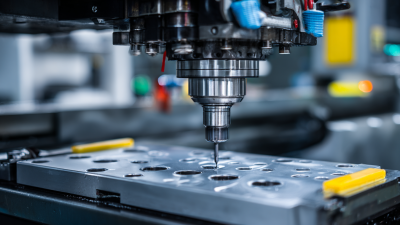
The plastic injection process is a cornerstone of modern manufacturing. It accounts for nearly 30% of all plastic production in the industry, according to recent market analysis. This method allows for the efficient creation of complex shapes, which is crucial for various applications. Industries like automotive and consumer goods heavily rely on this process.
Despite its advantages, mastering the plastic injection process presents challenges. Factors such as temperature control, material selection, and mold design are critical. A small error can lead to defects, increasing costs and waste. Reports indicate that up to 75% of production issues arise from improper setup and execution.
Understanding the nuances of this process can lead to significant improvement. For instance, the right temperature can enhance material flow, while optimal cooling times can reduce cycle times. However, many manufacturers still overlook these details. Gaining insight into best practices is essential for success in this competitive field.
Understanding the Basics of Plastic Injection Molding Technology
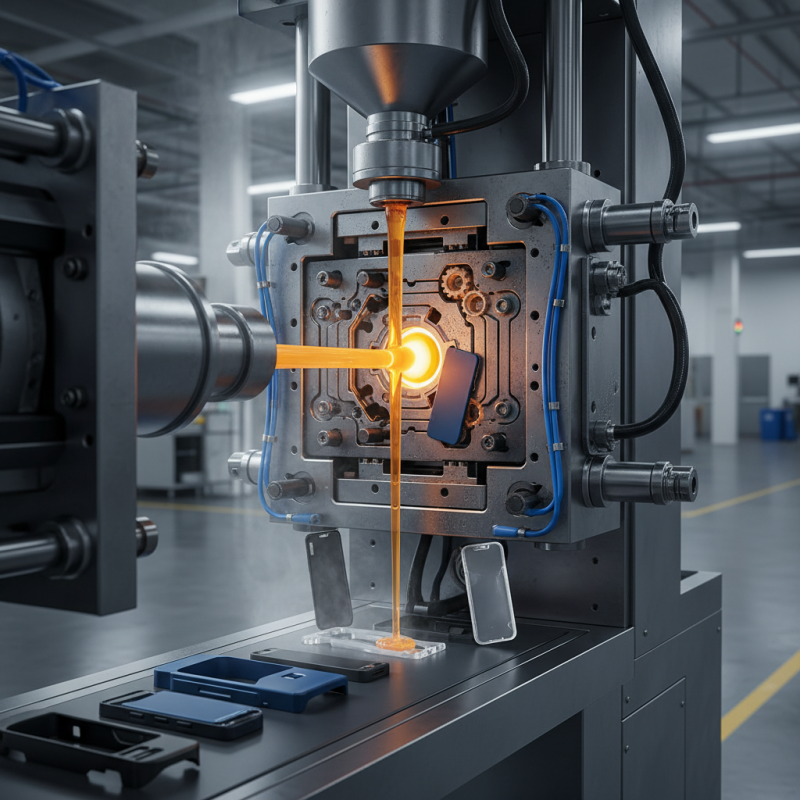
Plastic injection molding is a cornerstone of modern manufacturing, used to create a wide variety of products. The process starts with raw plastic pellets, heated until they melt. This molten plastic is then injected into a mold. According to industry reports, injection molding accounted for over 30% of the entire plastic market in 2022. This emphasizes its significance and the importance of perfecting the technique.
Understanding the intricacies of this technology can impact production efficiency. For instance, cycle time is crucial. Reports show that optimizing cycle time can increase output by up to 25%. However, many still struggle with common issues like insufficient cooling or improper material selection. These factors can lead to defects and wasted resources. A production line that runs smoothly often requires adjustments and constant monitoring.
Moreover, the environmental impact of injection molding is a growing concern. The industry must consider sustainable practices. Data indicates that nearly 90% of plastic products could be recycled, yet actual rates are far lower. This highlights the need for change. Each step in the process presents an opportunity for reflection and improvement. Implementing more sustainable methods can benefit both the economy and the environment.
Key Factors Influencing the Plastic Injection Process Efficiency
Efficiency in the plastic injection process is critical for successful production. According to a report from the Society of Plastics Engineers, optimizing cycle time can increase output by up to 30%. Factors like mold design, material choice, and machine settings play significant roles. Correct mold temperature is essential. If it's too high or too low, it can lead to defects or longer cycle times.
Machine settings are another critical factor. The injection speed and pressure must align with the material used. Inadequate settings may cause issues like short shots or inconsistent quality. Data shows that 25% of defects can be linked to improper machine calibration. It's worth assessing these settings regularly.
Environmental conditions also influence efficiency. Humidity and temperature fluctuations can affect material performance. A study from the Polymer Processing Society notes that maintaining stable conditions can reduce waste by 15%. In contrast, fluctuating environments can lead to costly production delays. Continuous monitoring is vital but often overlooked. Implementing these practices can enhance process reliability and minimize errors.
Material Selection: Impacts on Quality and Performance in Injection Molding
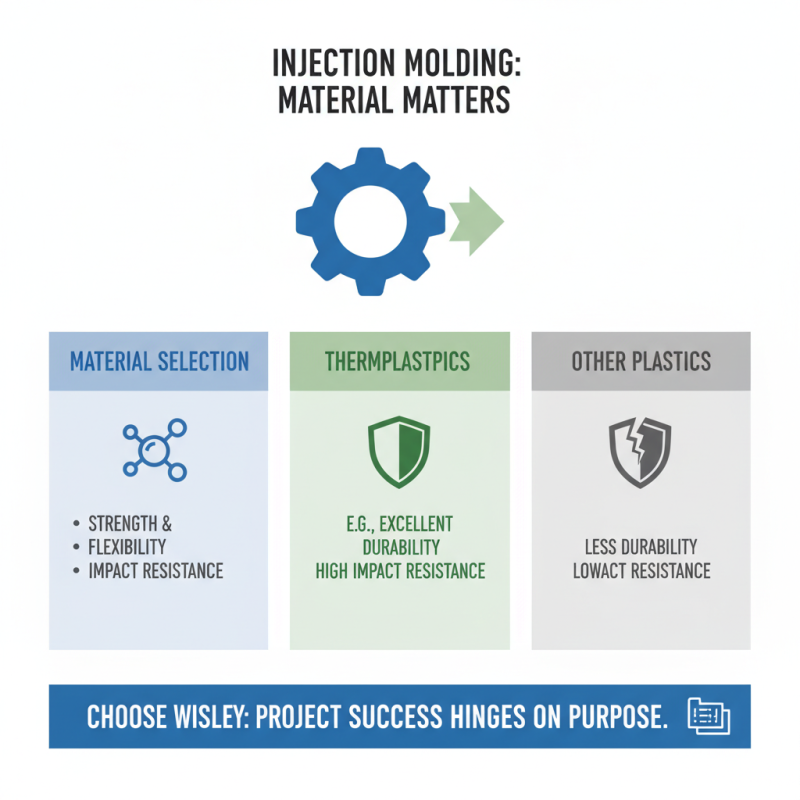
When it comes to injection molding, material selection is crucial. The type of plastic you choose affects everything from strength to flexibility. For example, thermoplastics can offer excellent impact resistance. However, other options may lack the same durability. This decision can make or break a project, so consider your product’s purpose carefully.
The processing conditions also change based on the material. Some plastics require higher temperatures, while others process better at lower settings. Misjudging these parameters can lead to defects. Valuing material performance over price is essential. Cheaper materials might seem appealing, yet they often lead to unexpected failures and costly recalls.
Consider testing different materials through prototypes. Experimentation provides valuable insights into how these materials perform during production. This phase often reveals the imperfections in choice or process. Reflecting on these outcomes can enhance future selections and improve overall quality. Engaging with experienced professionals can also provide guidance in navigating these complexities.
Optimizing Cycle Times: Strategies for Enhanced Productivity and Cost-Effectiveness
Optimizing cycle times in the plastic injection process is crucial for enhancing productivity and reducing costs. According to a study by the Society of Plastics Engineers, optimizing these times can yield a 15-30% increase in production efficiency. One effective strategy is to analyze mold cooling times. Often, cooling accounts for up to 70% of the cycle time. Using advanced cooling technologies can significantly reduce these timeframes.
Another impactful method is regular equipment maintenance. Downtime due to equipment failure can extend cycle times unpredictably. Reports show that unexpected machine issues can lead to costs exceeding $10,000 annually per machine. This emphasizes the need for a proactive maintenance schedule. Teams should also consider revising mold design for efficiency. A well-designed mold reduces defects, leading to fewer reworks and maintaining shorter cycle times.
However, adopting these strategies isn't always straightforward. Implementation can face resistance from staff accustomed to old methods. There may be initial costs associated with new technologies or training. Companies must be willing to assess not just the benefits but also the barriers. Gathering data on current cycle times before making changes can provide valuable insight. A careful approach helps ensure that efforts lead to meaningful productivity gains.
Optimizing Cycle Times: Strategies for Enhanced Productivity and Cost-Effectiveness
Quality Control Techniques in Plastic Injection Molding: Ensuring Consistency
Quality control is vital in the plastic injection molding process. It ensures that each product meets the required standards. A common technique is to conduct regular inspections. This helps identify problems early. Visual inspections for defects are crucial. They catch issues like surface imperfections or color inconsistencies. A simple checklist can guide operators during these checks.
Another method is to use statistical process control (SPC). This involves collecting data on each batch. Measurements like weight and dimensions are tracked. Operators can analyze this data. They may notice trends or variations that need attention. However, not all companies implement SPC effectively. Some may overlook small deviations, believing they are acceptable. In reality, these small issues can lead to bigger problems later.
Ultimately, training staff on these techniques is essential. A knowledgeable team can uphold quality better. When workers understand the process, they feel more responsible. They may catch mistakes that others might miss. Yet, it is easy to slip into routine tasks and ignore these practices. Reflection on current processes can lead to improvement. Quality should always be the priority in plastic injection molding.
Essential Tips for Mastering the Plastic Injection Process - Quality Control Techniques in Plastic Injection Molding: Ensuring Consistency
| Quality Control Technique | Description | Purpose | Frequency of Check |
|---|---|---|---|
| Dimension Measurement | Measuring critical dimensions of molded parts using calipers or CMM. | To ensure parts meet specifications and tolerances. | Every batch |
| Visual Inspection | Checking for surface defects such as scratches, discoloration, and flash. | To ensure aesthetic and functional quality. | Every cycle |
| Melt Temperature Monitoring | Monitoring temperatures of the melt during the injection process. | To prevent degradation of material and ensure proper flow. | Continuous |
| Cycle Time Analysis | Analyzing the time taken for each injection cycle. | To improve efficiency and reduce costs. | Daily |
| Material Batch Testing | Testing physical and chemical properties of the raw material. | To ensure material meets quality standards. | Every batch |
Related Posts
-
How to Choose the Right Injection Molding Tooling for Your Production Needs
-
Exploring the Future of Plastic Injection Process at the 138th Canton Fair 2025 in China
-

Top 10 Essential Factors to Consider for Injection Molding Mold in 2025
-
Creative Examples of Successful Injection Molding Applications Across Industries
-
Common Challenges Faced in Mold Plastic Injection Processes
-
The Future of Injection Tooling Innovations and Opportunities