

What Are Petroleum Refining Catalysts and How Do They Work?
Petroleum Refining Catalysts are the quiet workhorses inside modern refineries. They help transform crude oil into fuels, lubricants, and chemical feedstocks. Their surfaces guide reactions at practical temperatures and pressures. Without them, many refining processes would require excessive energy and produce less useful products.
The underlying idea is simple, but the chemistry is not. As Nobel Prize-winning chemist Paul Sabatier stated, “Catalysis is the acceleration of a chemical reaction by a foreign substance which remains unchanged by the reaction.” In petroleum refining, catalysts usually contain zeolites, alumina, nickel, cobalt, molybdenum, platinum, or other carefully selected materials. Fluid catalytic cracking breaks large hydrocarbon molecules into smaller ones. Hydrodesulfurization removes sulfur compounds using hydrogen. Catalytic reforming improves gasoline quality and produces valuable aromatics.
Small details matter. Feed composition, pore size, temperature, pressure, and hydrogen availability can change catalyst performance. Sulfur, metals, carbon deposits, and water may block active sites. Catalyst regeneration can restore activity, but not forever. That limitation is important.
A simplified explanation can mislead.
Real refinery operation involves competing reactions and gradual deactivation. Experienced engineers therefore monitor temperature profiles, product quality, pressure drop, and catalyst age. Laboratory testing supports these decisions, yet plant behavior may still differ. Petroleum Refining Catalysts are not magic ingredients. They are engineered surfaces, operating within narrow chemical and economic boundaries. Understanding that balance makes their role clearer, and it also exposes where further improvements remain necessary.
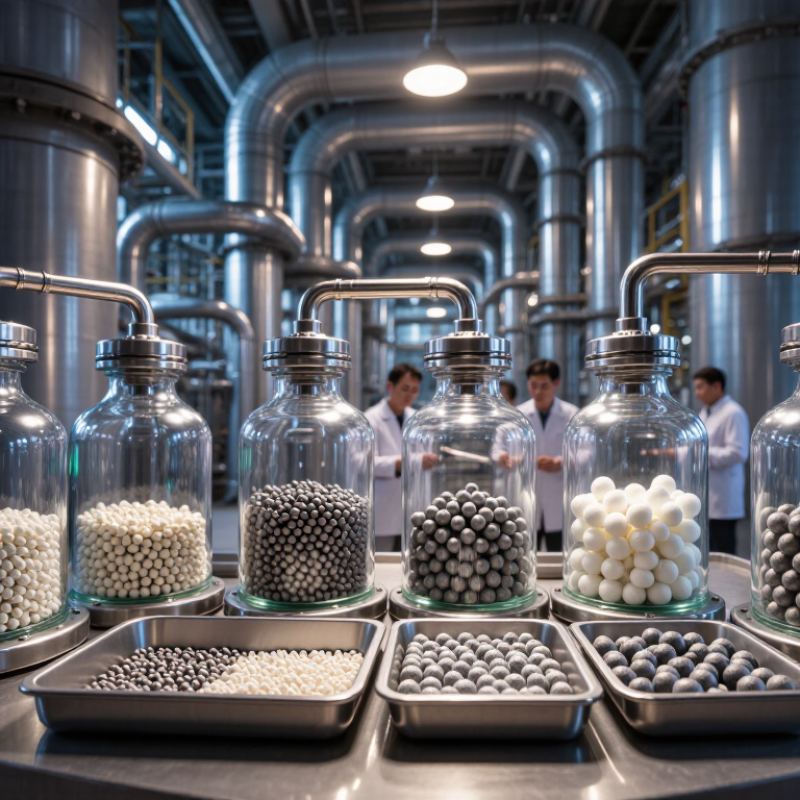
What Petroleum Refining Catalysts Are and Why They Matter
Petroleum refining catalysts are engineered materials that speed up chemical reactions inside refinery reactors. They do not become the main product. Instead, they help convert heavy, sulfur-rich feedstocks into fuels and chemical intermediates. Common systems include zeolite catalysts for fluid catalytic cracking, metal catalysts for hydroprocessing, and platinum-based catalysts for reforming.
Their importance is practical and measurable. Hydroprocessing catalysts remove sulfur and nitrogen while hydrogen passes through packed reactor beds. This produces cleaner fuel and protects downstream equipment. Catalytic cracking breaks large hydrocarbon molecules into smaller ones, such as gasoline-range compounds. According to OPEC’s World Oil Outlook 2024, global oil demand may reach about 116 million barrels per day by 2045. Refiners will still need catalysts, even as fuel quality rules become stricter.
Small details affect performance. A few traces of metals can poison catalyst surfaces. High temperatures can also accelerate deactivation. Operators monitor pressure, temperature, hydrogen flow, and product sulfur levels during each operating cycle. The International Energy Agency’s Oil 2024 report highlights continuing changes in refining capacity and product demand. That makes catalyst flexibility increasingly valuable.
Catalysts are not magic. They do not eliminate emissions by themselves. Their results depend on feedstock quality, reactor control, regeneration, and maintenance. In real plants, a catalyst may perform well for months, then lose activity unexpectedly. That uncertainty requires testing, careful sampling, and sometimes uncomfortable operational changes.
How Catalysts Accelerate Key Refining Reactions
Petroleum refining catalysts accelerate reactions by lowering the energy barrier between reactants and products. They do not disappear during normal operation. Instead, they provide active surfaces where molecules can meet, split, or rearrange more easily. In a reactor, temperature, pressure, and contact time must still remain carefully controlled. A catalyst cannot replace sound process management.
Porous catalyst particles create many reaction sites inside their structures. Acidic sites can break large hydrocarbon molecules during fluid catalytic cracking. Metal sites can help remove sulfur and nitrogen during hydrotreating. In hydrocracking, metals and acid sites work together to reshape heavy molecules into lighter fuels. The results depend on molecular size, hydrogen availability, and feed quality. Small changes in these conditions can alter product yields.
Catalyst performance changes over time. Carbon deposits may block pores, while sulfur and metal contaminants can cover active sites. Refiners monitor reactor temperatures, pressure drop, hydrogen use, and product properties to detect this decline. Regeneration can restore activity in some systems, but not perfectly. That limitation is easy to overlook. A catalyst may be highly selective in laboratory testing yet behave differently with a variable refinery feed. Experienced engineers therefore compare operating data with chemical analysis, not assumptions alone.
The Main Types of Catalysts Used in Petroleum Refining
Petroleum Refining Catalysts: The Main Types Used in Refining
Catalysts help refineries reshape crude oil into cleaner, more useful products. They speed reactions without being consumed completely. Their performance depends on temperature, pressure, feed quality, and operating time.
Fluid catalytic cracking catalysts usually contain porous aluminosilicate materials called zeolites. They break large hydrocarbon molecules into gasoline-range compounds and lighter gases. Inside the reactor, hot catalyst particles contact vaporized oil for only a few seconds. Regeneration then burns away deposited carbon. Small changes in pore structure can alter gasoline yield and product quality.
Hydroprocessing catalysts commonly use nickel-molybdenum or cobalt-molybdenum sulfide phases. They remove sulfur and nitrogen while adding hydrogen to unstable molecules. These catalysts work under high hydrogen pressure. Feed contaminants can block active sites, so pretreatment and careful temperature control matter. Heat matters.
Hydrocracking catalysts combine metal functions with acidic supports. The metal sites add hydrogen, while acid sites split and rearrange hydrocarbon chains. This process produces jet fuel, diesel, and other middle distillates from heavier feeds. Reforming catalysts, often based on platinum-containing metals, rearrange naphtha molecules and increase octane value. Their balance is delicate; excessive temperature can increase unwanted carbon deposits. Alkylation catalysts promote reactions between small olefins and isoparaffins, producing high-octane blending components. Not always.
In daily refinery practice, catalyst selection is rarely a simple performance contest. Operators must weigh activity, selectivity, pressure drop, regeneration needs, and waste handling. A catalyst can appear efficient in laboratory testing yet behave differently with variable crude oil. That limitation deserves more attention.
What Are Petroleum Refining Catalysts and How Do They Work?
Petroleum refining catalysts accelerate chemical reactions, improve product quality, and reduce the energy required for processing. The chart shows representative operating temperatures for major catalyst families used in refining.
Typical operating temperatures are approximate industrial ranges and vary with feedstock, reactor design, pressure, catalyst formulation, and process conditions. Higher temperatures generally increase reaction rates, while catalyst selectivity helps control the desired products.
How Catalysts Transform Crude Oil Into Valuable Products
Petroleum refining catalysts help convert complex crude oil into fuels, chemical feedstocks, and other useful products. Crude oil contains hydrocarbons with different sizes, structures, sulfur levels, and impurities. Catalysts guide these molecules through controlled chemical reactions without being consumed as ordinary reactants.
Consider catalytic cracking. Inside a hot reactor, large hydrocarbon molecules contact a solid catalyst containing acidic materials. The catalyst weakens carbon-carbon bonds and produces smaller molecules, including gasoline-range components and light gases. Hydrotreating works differently. Hydrogen passes over oil with a catalyst containing active metals, removing sulfur and nitrogen as separate compounds. The treated streams burn more cleanly and meet required fuel specifications.
Catalytic reforming reshapes straight-chain hydrocarbons into higher-octane molecules. It can also produce hydrogen for other refinery units. Temperature, pressure, hydrogen flow, and contact time all affect performance. Small operating changes matter. A few degrees may alter product quality or catalyst life. Refinery engineers monitor pressure drops, reactor temperatures, sulfur results, and carbon deposits during operation.
No catalyst is perfect. Over time, coke and metals from crude oil cover active sites, reducing reaction efficiency. Operators may regenerate the catalyst, adjust conditions, or replace it during planned maintenance. A simplified explanation can mislead. Real refineries balance yield, energy use, emissions control, equipment limits, and feedstock variation. That balance turns unstable crude oil chemistry into consistent commercial products.
Factors That Influence Catalyst Performance and Lifespan
Petroleum refining catalysts help convert heavy hydrocarbon molecules into more useful fuels and chemical feedstocks. They guide reactions without being consumed immediately. Their performance depends on active sites, pore structure, temperature, pressure, and contact time. Even small operating changes can alter product quality.
Feedstock composition is often the strongest influence. Sulfur, nitrogen, metals, and carbon-forming compounds can block active sites or damage catalyst structure. High temperatures may increase conversion, but excessive heat can accelerate coke formation and shorten catalyst life. Pressure also matters. In some processes, higher hydrogen pressure suppresses deposits and supports stable operation. However, more severe conditions can raise energy use and mechanical stress. The best setting is rarely obvious.
Catalyst lifespan also depends on pretreatment and daily control. Filters, separators, and careful feed blending can reduce contaminant exposure. Operators monitor temperature patterns, pressure drop, product composition, and hydrogen consumption. These signals reveal gradual deactivation before output falls sharply. Regeneration may restore activity, but it cannot always reverse permanent pore collapse or metal deposition. Real refinery data can challenge laboratory expectations. A catalyst that performs well with a clean test feed may struggle with changing crude oils. That uncertainty deserves attention. Regular sampling, documented operating history, and conservative adjustments support more reliable decisions. Small errors still happen. Ones caught early cost less.
