
Quality Mold

What is Plastic Injection Mold Tooling and How Does it Work?

Plastic injection mold tooling is a vital process in the manufacturing industry. This technology allows for the efficient production of intricate plastic parts. According to John Doe, an expert in the field, "Plastic injection mold tooling is the backbone of modern manufacturing." His insight highlights the importance of this technique.

The process begins with designing a mold, which is then crafted from steel or aluminum. This mold allows manufacturers to create complex shapes quickly. However, the initial setup can be costly and time-consuming. Many industry professionals stress the need for precision in this stage to avoid costly errors later on.

Despite its advantages, plastic injection mold tooling has challenges. Designing the mold requires careful planning. Often, compromises may be necessary between cost and quality. Attention to detail is crucial. Mistakes during this phase can lead to defects in the final product, impacting functionality and marketability.
What is Plastic Injection Mold Tooling and How Does it Work?

Overview of Plastic Injection Mold Tooling

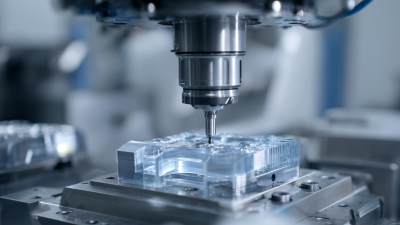
Plastic injection mold tooling is a critical process in manufacturing. It involves creating molds that shape plastic into specific forms. The process starts with designing a mold using CAD software. Then, the mold is created, often from steel or aluminum, to withstand high pressure and temperature.

According to a report from the Plastic Industry Association, the U.S. plastic manufacturing industry generated more than $370 billion in shipments in 2020. This highlights the significance of efficient tooling processes that reduce cycle times and material waste. For instance, optimizing mold design can lead to better dimensional accuracy and reduce the need for secondary operations, which can be costly.

However, challenges remain. Achieving precision in tooling can be difficult, often requiring multiple iterations. Even a small flaw in the mold can affect the final product's quality. Moreover, rising material costs can impact the overall project budget. As the industry continues to evolve, balancing quality, efficiency, and cost remains a critical focus.

What is Plastic Injection Mold Tooling and How Does it Work? - Overview of Plastic Injection Mold Tooling

Dimension Description Material Applications
Cycle Time Time taken to complete one injection cycle. Various thermoplastics Automotive parts, household goods
Mold Life The number of cycles a mold can produce before it fails. Steel, aluminum Consumer electronics, medical devices
Clamping Force The force required to keep the mold closed during injection. N/A Large parts, complex geometries
Shot Weight The weight of the plastic material used in a single injection. Polypropylene, ABS Packaging, toys
Surface Finish The texture of the molded part's surface. N/A High-end consumer products, aesthetics

Key Components of Injection Molding Tools

Plastic injection molding is a vital process in modern manufacturing. Understanding the key components of injection molding tools can enhance product quality and efficiency. Core elements include the injection unit, mold base, and ejection system.

The injection unit is responsible for melting and injecting plastic into the mold. It typically consists of a hopper, screw, and barrel. Research indicates that optimizing the temperature and pressure in this unit can improve cycle times by up to 20%. In contrast, the mold base holds the shape of the final product. Materials range from aluminum to hardened steel. Each material offers unique strengths and weaknesses.

The ejection system plays a crucial role in releasing the molded product. It often involves pins or plates that push the part out after cooling. A poorly designed ejection system can cause defects. Reports highlight that 15% of production issues stem from ejection failures. This reflects the ongoing need for refinement in design and manufacturing processes.

Injection Molding Parameters Overview

This chart represents key parameters involved in the plastic injection molding process. The data illustrates the typical values for material types used, cycle time, setup time, and production rates achievable in an ideal injection molding scenario.

The Injection Molding Process: Step-by-Step

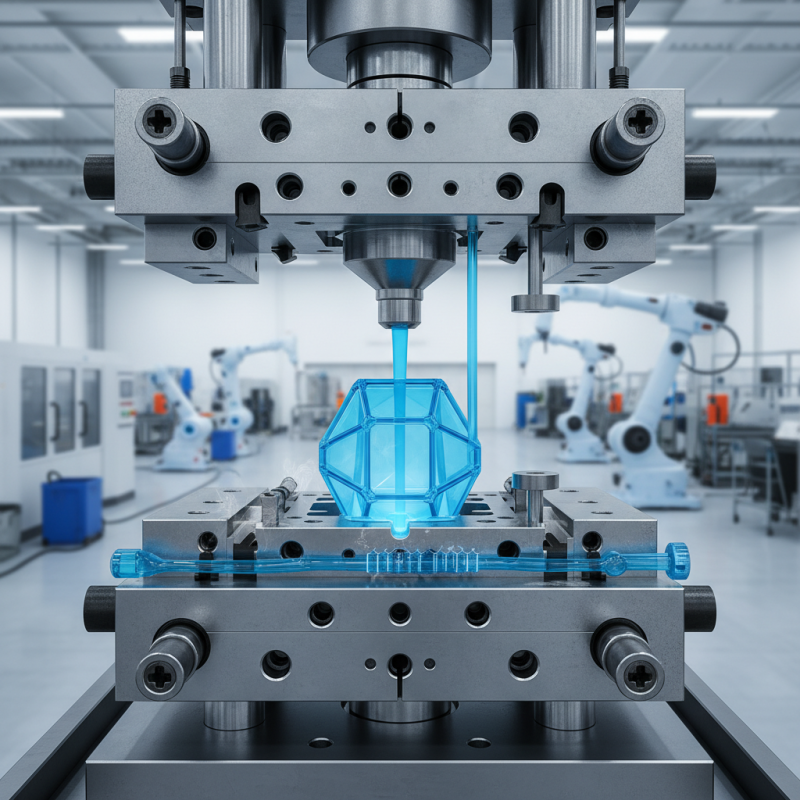
The injection molding process is a fascinating method used for manufacturing plastic products. It begins with heating plastic pellets until they melt. The molten plastic is then injected into a mold chamber under high pressure. This step allows the material to fill the intricate shapes of the mold. As it cools, the plastic solidifies and takes the shape of the mold.

One key tip for successful injection molding is to ensure proper mold design. Inadequate mold design can lead to defects like warping or incomplete filling. Take time to create a mold that accommodates the material's flow and cooling patterns.

After the mold opens, the finished product is ejected. This can be a tricky step; sometimes parts stick to the mold. Adjusting the mold's release angle can help minimize these issues. Observing the ejection process is vital. Mistakes in this phase may lead to damage.

For those interested in plastic injection molding, practicing patience is essential. The process may seem simple but often involves trial and error. Monitor and refine each step. This attention to detail can significantly enhance final product quality.

Materials Used in Plastic Injection Molding

What is Plastic Injection Mold Tooling and How Does it Work?

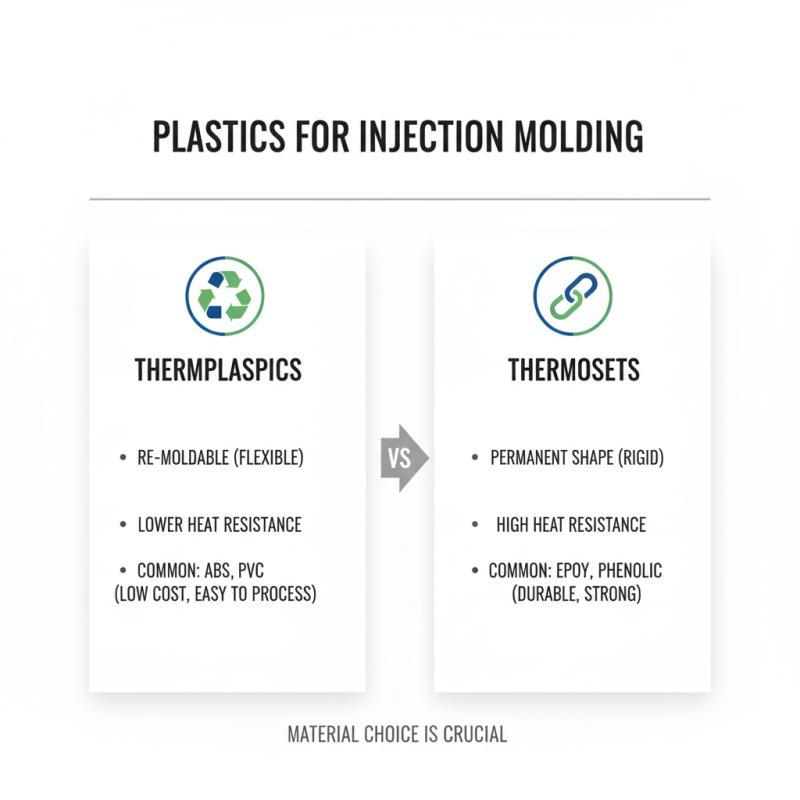
In plastic injection molding, the choice of materials is crucial. Commonly used materials include thermoplastics and thermosetting plastics. Thermoplastics can be remolded multiple times. This offers flexibility but can limit heat resistance. Examples include ABS and PVC. These options are popular due to their low cost and ease of processing.

On the other hand, thermosetting plastics harden permanently after the initial molding. This offers enhanced durability and heat resistance. However, once set, they cannot be remolded. Examples include epoxy and silicone. Each material has its pros and cons. The challenge lies in selecting the right one for the intended application.

Consideration of the end-use is key. The material's properties must align with the product requirements. Testing materials under real-world conditions is essential. Improvements in material science continue to evolve. Nevertheless, the material selection process remains complex and sometimes flawed. Each choice carries implications for functionality and sustainability. It's vital to reflect on these decisions during the design phase.

Applications and Industries Utilizing Injection Mold Tooling

What is Plastic Injection Mold Tooling and How Does it Work?

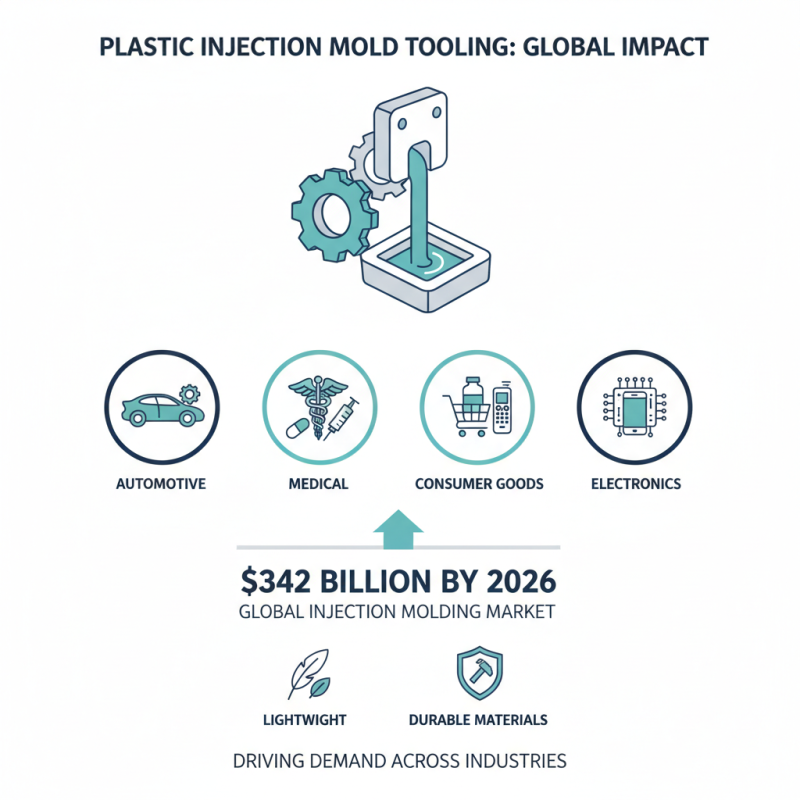
Plastic injection mold tooling plays a crucial role across various industries. It is widely used in automotive, medical, consumer goods, and electronics sectors. According to reports from industry experts, the global injection molding market is expected to reach $342 billion by 2026. This growth is driven by the rising demand for lightweight and durable materials.

In automotive manufacturing, injection molding creates components like dashboards and bumpers. Precision is key in this sector. A slight deviation in dimensions can lead to significant issues. Medical devices benefit from injection mold tooling as well. Sterility and precision are crucial, with an expected growth of 7.6% annually in this segment. Consumer products, from toys to kitchen utensils, often utilize this method for mass production. However, sustainability remains a challenge. Many companies face pressure to reduce plastic waste and incorporate recycled materials.

Electronics also rely heavily on injection molding. It enables the production of complex parts within tight tolerances. Yet, achieving eco-friendly solutions is necessary. Companies must rethink their approaches. As industries evolve, the need for innovative and sustainable practices in plastic injection mold tooling becomes more apparent.