

Quality Mold

Top Roll Bag Making Machine Manufacturers in China

China’s packaging machinery sector serves converters producing carrier bags, refuse sacks, and other flexible packaging. For buyers, a Roll Bag Making Machine is not just a production line. It must match film type, bag dimensions, sealing method, and target output. Small details matter: a stable seal, accurate perforation, and a roll that unwinds cleanly can reduce waste during routine production.

Market data gives useful context, but it needs careful interpretation. Grand View Research valued the global flexible packaging market at approximately US$268.7 billion in 2023 and forecast a 4.3% compound annual growth rate from 2024 to 2030. This figure describes packaging demand, not machine sales. That distinction matters. It cannot, by itself, establish a manufacturer’s quality or future performance.

This guide introduces leading Roll Bag Making Machine manufacturers in China and the factors buyers can verify. Compare working speed alongside material range, changeover time, control systems, and after-sales support. Ask for machine specifications, sample bags, and references from comparable installations. A polished brochure is useful, but a production trial tells more. Some published claims may be difficult to compare because testing conditions differ. That deserves scrutiny. The right supplier is not always the one with the highest stated speed; it is the one whose equipment consistently meets your actual production requirements.
Top Roll Bag Making Machine Manufacturers in China

Roll Bag Making Machines in China: Types, Functions, and Production Stages

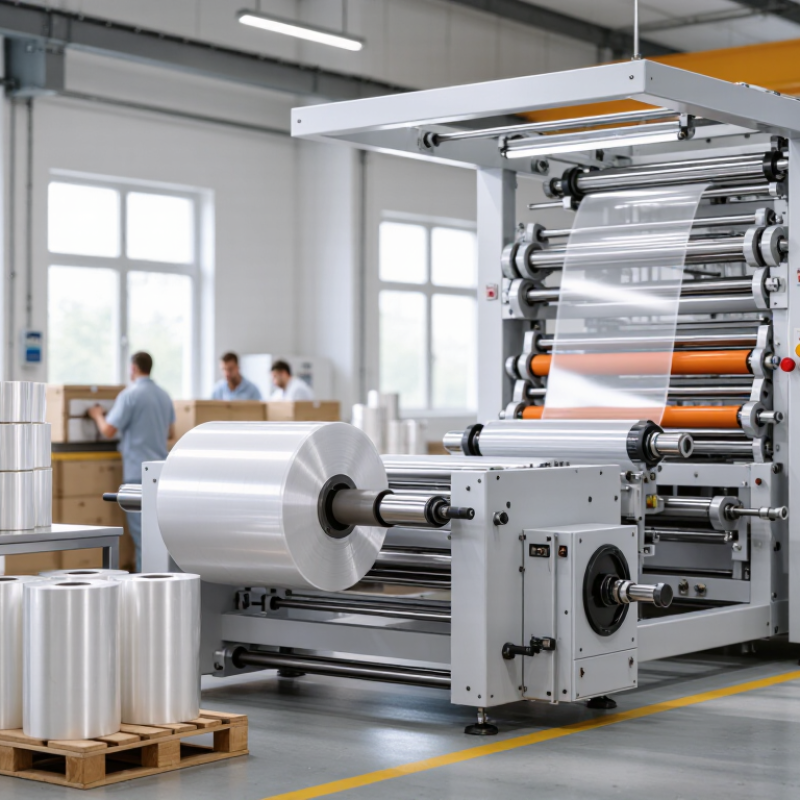
Roll bag making machines convert plastic film into perforated bags wound into compact rolls. Common configurations include bottom-seal, side-seal, and wicketed-bag lines. A roll-bag line typically feeds film from an unwind station, then controls tension and aligns printed marks. Sealing jaws form the bag seams; a cutting unit separates bags, while perforation tools create tear-off edges. The finished web winds onto a core. Small details matter.

Machine functions vary by bag design and film thickness. Servo-driven feeding can improve length consistency, while photoelectric sensors help register printed artwork. Operators also check seal strength, perforation position, and roll tightness during setup. A fast line is not automatically a better line. Poor tension settings can cause wrinkles or uneven rolls, so sample runs and adjustment time should be part of production planning.

The wider market gives useful context, not a direct forecast for machine sales. Grand View Research valued the global flexible packaging market at USD 265.6 billion in 2023 and projected a 4.8% compound annual growth rate from 2024 to 2030. In China, manufacturers may configure equipment around bag width, output targets, and film structure. Production usually moves through film loading, tension control, sealing, perforating, cutting, winding, and inspection. One often-overlooked point: changing film can require fresh temperature and pressure trials.
Report: Grand View Research, Flexible Packaging Market, 2024.

Key Specifications: Bag Width, Film Thickness, Sealing Method, and Output Rate

When comparing roll bag making machine manufacturers in China, start with usable bag width, not just the machine’s maximum web width. Ask whether the stated range includes gussets and trimming allowance. A 600 mm web may produce a narrower finished bag after folding and sealing. Measure your common bag sizes before requesting a quotation. Numbers need context.

Film thickness should match the material you actually plan to run. A machine listed for 8–50 microns may behave differently with recycled blends or uneven film. Request a trial using your own roll, then check seal strength and edge quality. Sealing method matters, too: hot-knife sealing suits many perforated roll bags, while other formats may need a different seal arrangement. Confirm the machine supports your bag design and perforation pitch. Small details count.

Treat output rate as a production estimate, not a promise. Bags per minute can change with bag length, film thickness, operator adjustments, and roll changes. Ask whether the quoted speed reflects continuous running or a short test. A neat specification sheet can be reassuring; real production is less tidy. Compare finished samples and measured output, and record the conditions behind each figure. One overlooked setting can affect the whole run.

Film Quality Checks: ASTM D882 Covers Plastic Sheeting Under 1 mm Thick

For roll bag production, film strength affects feeding, sealing, and resistance to tearing. ASTM D882 is commonly used to measure tensile properties of plastic sheeting less than 1 mm thick. It records how a specimen responds as it is pulled, including its strength and elongation. Small details matter.

A useful check begins with representative samples and consistent preparation. Measure film thickness, then cut specimens in both machine and transverse directions when relevant. Film can behave differently across the roll. During testing, aligned grips and suitable settings help reduce misleading results caused by slipping or uneven stretching. Record the test conditions alongside the data; a number without context is hard to compare.

For equipment makers and converters, these results can inform film selection and line setup. A film that stretches substantially may feed or seal differently from a stiffer grade, so trial runs still matter. ASTM D882 does not assess every feature of a finished bag, such as seal integrity or puncture resistance. It is one useful piece of evidence, not the whole picture. Even careful testing has limits: small variations in sampling can change the result, and that is worth acknowledging.

Comparing Chinese Manufacturers: Automation, Capacity, Certifications, and Service

Top Roll Bag Making Machine Manufacturers in China

Comparing Chinese Manufacturers: Automation, Capacity, Certifications, and Service

Comparing Chinese roll bag making machine manufacturers takes more than reading advertised speed. Check automation feature by feature: film loading, tension control, length registration, roll counting, and fault alarms. The International Federation of Robotics’ World Robotics 2024 report recorded 541,302 industrial robot installations worldwide in 2023, with 70% in Asia. This reflects regional automation activity, not the quality of any single machine. Ask for a live demonstration using your film and bag dimensions. Watch the seals. Inspect the scrap.

Capacity figures need context. Ask whether quoted output assumes ideal film, one bag size, and continuous operation. Request a timed acceptance run, including roll changes and a typical production shift. Compare usable rolls per hour, not just peak bags per minute. It is less tidy, but more useful.

Review quality documents by scope and validity. An ISO 9001 certificate describes a quality-management system; it does not guarantee machine performance. Check the issuing body and ask for records from comparable installations. Service matters, too. Confirm spare-parts availability, remote support hours, technician response times, and training details in writing. One comparison remains imperfect: factory tests rarely match every buyer’s floor conditions. A clear test protocol helps narrow that gap.

Supplier Verification: Test Run Results, Energy Use, Warranty, and Spare Parts

When evaluating roll bag making machine manufacturers in China, request a live test run using your film, bag dimensions, and target production speed. A polished demonstration with different material proves little. Watch the machine through startup and steady operation. Check seal consistency, roll alignment, cutting accuracy, and rejected bags. Keep the sample rolls. Small defects can hide in a short run.

Measure energy use with a meter during production, not only while the machine is idle. Record kilowatt-hours, good bags produced, and material waste over a defined period. Compare results under the same settings. Numbers can still mislead if film thickness or operator skill changes. Ask for the test conditions in writing. Then repeat the trial if practical.

Read the warranty line by line. Confirm coverage periods for electrical parts, motors, and sealing components, plus who pays freight and labor. Ask how faults are diagnosed remotely and what response time is realistic. Get a spare-parts list with prices, stock status, and dispatch estimates. Common wear parts should be easy to identify. Keep critical items nearby. One uncomfortable point: suppliers may promise fast support, but vague terms are hard to rely on. Put commitments into the purchase documents, and verify them with a reference customer when possible.

Roll Bag Machine Supplier Verification: Energy Use During a Test Run

Illustrative calculation only—not measured data from a manufacturer or market survey.

The bars show calculated energy use assuming a constant 3 kW electrical load: energy per 1,000 bags = load (kW) ÷ production rate (bags/hour) × 1,000. Actual consumption varies with bag specifications, machine settings, and idle time. During supplier verification, record power-meter readings and accepted bag output during a witnessed test run; confirm warranty coverage and spare-parts lead times in writing.