

Quality Mold

10 Tips for Choosing an Electronic Voltage Stabilizer

An Electronic Voltage Stabilizer can protect sensitive equipment from voltage fluctuations, but the right choice depends on more than its advertised capacity. A workshop compressor, a server rack, and a home refrigerator place very different demands on a stabilizer. The label matters. So does the load behind it.

Power-quality engineer Alexander Kusko’s published work supports a practical principle, paraphrased here rather than presented as a direct quotation: select equipment for the actual load and operating conditions. That means checking input-voltage range, output accuracy, load capacity, phase requirements, and response time. A stabilizer that looks adequate on paper may struggle when a motor starts or several devices run together. Small details matter.

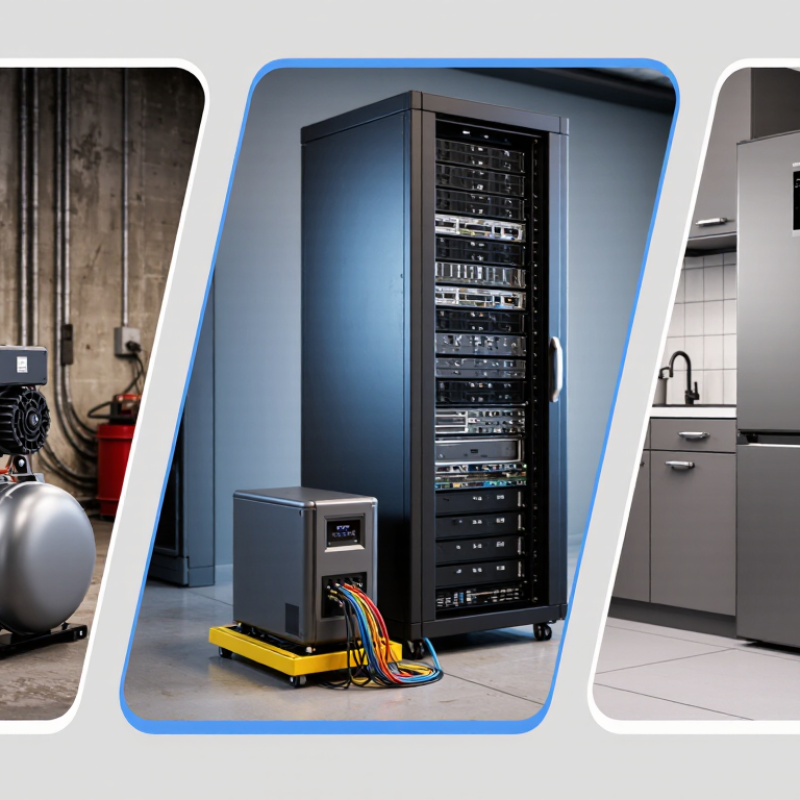
This guide’s 10 tips will help readers compare those details before buying. We’ll look at protection features, installation needs, operating environment, service support, and the manufacturer’s specifications. Picture a unit beside a dusty workshop wall, warming under continuous use; ventilation and access for maintenance are not minor concerns there. A quiet office installation has different priorities. Measure the real load. Review the site. Then compare models against both. One limitation deserves attention: product claims can be difficult to compare when testing conditions differ. Keep that in mind as you read.
10 Tips for Choosing an Electronic Voltage Stabilizer

Understanding What an Electronic Voltage Stabilizer Does

An electronic voltage stabilizer measures incoming AC voltage and adjusts its output toward a set level. Depending on its design, it may switch transformer taps or use electronic controls. The goal is practical: protect a refrigerator compressor, CNC controller, or server from sustained under- or overvoltage. It is not a battery. During an outage, power usually stops unless separate storage is connected.

Voltage disturbances vary. IEEE Std 1159-2019 defines a voltage sag as 0.1–0.9 per unit, lasting from half a cycle to one minute; a swell exceeds 1.1 per unit. Brief dips can reset sensitive controls, while persistent low voltage can make motors draw more current and run hot. An EPRI/CEIDS 2001 report estimated annual U.S. costs from power-quality disturbances at $119–188 billion. The estimate is old, but the problem remains worth attention.

Not a cure-all. A stabilizer cannot restore power, correct frequency, or repair loose wiring. Match its voltage range, load capacity, and response time to the equipment. Check startup current, too; a unit that is undersized may trip when a pump starts. That detail gets missed. If possible, measure voltage at the actual outlet over several days. One reading can hide evening dips, so treat it as a starting point, not a diagnosis.

Assessing Your Equipment and Voltage Conditions

Before choosing an electronic voltage stabilizer, make a clear list of the equipment it will serve. Note each device’s rated voltage, frequency, phase, and power demand from its nameplate. Motors, pumps, and compressors may draw much more current when starting than while running. Include that startup demand when estimating the load. Small details matter.

Measure voltage where the equipment will connect, not only at the main panel. Check at different times, especially when heavy appliances or machinery are running. Record low and high readings over several days if possible. A single reading can mislead; it is tempting to treat one unusual dip as typical. Compare your measurements with the equipment’s permitted input range and the stabilizer’s specified operating range. If readings vary sharply, or you are unsure how to measure safely, ask a qualified electrician to assess the circuit. Do not assume a stabilizer can correct wiring faults, overloads, or every type of power disturbance. Look at the actual load and conditions first.

Comparing Stabilizer Types and Regulation Features

Relay stabilizers switch between fixed voltage taps, so they are simple and often economical. Their output can still move in noticeable steps when the input crosses a switching threshold. Servo stabilizers adjust a variable transformer gradually, which can provide smoother correction, but the motor takes time to respond and needs maintenance. Static electronic models use power electronics for fast correction; check their heat limits, overload capacity, and waveform specifications, not just the headline accuracy.

CENELEC’s EN 50160 standard gives a useful grid-quality reference: on low-voltage public networks, 10-minute average supply voltage should stay within ±10% of nominal for at least 95% of a week under normal conditions. That benchmark describes the supply, not a stabilizer’s guarantee. Match the stabilizer’s input range and output tolerance to the equipment’s actual needs. A compressor may draw a sharp starting surge; a control panel may be more sensitive to brief dips. Check both. A tidy accuracy figure can hide slow response or limited surge capacity. I would compare the full load curve and protection features before choosing; the specification sheet rarely tells the whole story.

10 Tips for Choosing an Electronic Voltage Stabilizer - Comparing Stabilizer Types and Regulation Features

Tip What to Compare Relevant Information Practical Selection Guidance
1. Match the input-voltage range Permitted input range and local supply conditions Stabilizers operate only within their specified input range. A wider range can help where voltage regularly falls or rises significantly, but output regulation may be limited near the range boundaries. Check measured or utility-recorded voltage at the installation site, then choose a unit whose stated range covers those conditions with margin.
2. Choose a suitable stabilizer type Relay, servo-controlled, or static electronic design Relay models correct voltage in discrete steps. Servo-controlled models use a motor-driven variable transformer for gradual correction. Static models use power electronics and have no moving regulating mechanism. Compare regulation needs, correction speed, maintenance expectations, load characteristics, and total cost rather than choosing by type name alone.
3. Check output regulation accuracy Specified output tolerance under stated conditions Accuracy is commonly expressed as a percentage or voltage tolerance. Actual performance can depend on input voltage, load, temperature, and the design of the stabilizer. Use the tolerance required by the connected equipment and verify that the specification applies across the expected input and load range.
4. Consider correction speed Response or correction time Relay units generally correct in steps; servo units must move a mechanical assembly; static designs can respond electronically. Published response times and test conditions vary by model. For equipment sensitive to voltage changes, compare documented response data and confirm whether short-duration disturbances require a separate UPS or surge protective device.
5. Size for real load demand Rated capacity in VA or kVA Capacity should account for the connected load, power factor, and applicable derating. Motors and compressors can draw substantially more current during startup than during normal operation. Calculate the combined load and startup requirements; follow the stabilizer manufacturer’s sizing guidance and avoid operating continuously at the capacity limit.
6. Confirm phase and wiring compatibility Single-phase or three-phase supply; connection arrangement Stabilizers are designed for specific supply configurations. Three-phase equipment may require phase monitoring and protection against phase loss or imbalance. Match the supply voltage, phase count, frequency, neutral arrangement, and wiring requirements to the installation and connected equipment.
7. Review protection functions High/low-voltage cut-off, overload, short-circuit, and thermal protection Protection functions can disconnect the load when conditions exceed configured limits. Features differ, and a voltage stabilizer is not automatically a substitute for a circuit breaker or surge protector. Check which protections are built in, their operating thresholds, and whether separate protective devices are required by local electrical codes.
8. Check waveform and load compatibility Output waveform, electronic loads, and nonlinear loads Most voltage stabilizers regulate voltage; they do not necessarily provide battery backup or correct every power-quality issue. Nonlinear loads can affect current and equipment performance. Confirm compatibility with the specific load, especially variable-speed drives, sensitive electronics, and equipment with high starting or harmonic currents.
9. Compare maintenance and operating conditions Moving parts, ventilation, noise, and environment Relay and servo designs contain moving or switching components; servo mechanisms may require periodic inspection. Static designs have no motorized regulating mechanism but still need suitable cooling and installation conditions. Consider ambient temperature, dust, humidity, ventilation, acoustic requirements, and the maintenance resources available at the site.
10. Verify documentation and installation requirements Ratings, test conditions, clearances, and electrical compliance Specifications should state input and output ratings, frequency, capacity, operating limits, and installation conditions. Requirements vary by jurisdiction and application. Review the complete technical documentation and have the unit installed and grounded by a qualified electrician in accordance with applicable local codes.

Note: Performance, capacity, regulation accuracy, and protection features vary by model. Verify ratings and test conditions in the product documentation before selection.

Matching Capacity, Response Time, and Protection Needs

A stabilizer should match the load it will actually serve, not just the largest number on one appliance label. Add the volt-ampere ratings of connected equipment, then account for power factor and motor start-up current. Inrush matters. A refrigerator compressor or pump can briefly draw far more current than it uses while running. Leave operating headroom, especially if loads may be added later; the exact margin depends on the equipment and its duty cycle.

Response time matters when supply voltage changes quickly. IEEE Std 1159-2019 classifies a voltage sag as a drop to 0.1–0.9 per unit lasting from half a cycle to one minute. That range shows why a single response-time figure may not tell the whole story: check the stabilizer’s performance against the sensitivity of the connected load. A computer control system and a workshop motor may react very differently. Protection matters too. Look for clearly specified overload, over-temperature, and under- or overvoltage limits, and confirm that ratings suit the site’s supply. Read the fine print. A unit’s advertised capacity may not apply continuously at high ambient temperatures, and I would verify that point with the technical datasheet before installation.

Checking Installation, Safety Standards, and Maintenance

Installation is where an electronic voltage stabilizer either protects equipment or creates another hazard. Match its continuous and surge ratings to the actual load, including motors that draw extra current. Leave clear space around vents, and keep the unit away from damp floors, curtains, and stored cartons. A qualified electrician should confirm cable size, earthing, and breaker coordination before connection. Small details matter. Check the product documentation for applicable electrical safety and electromagnetic compatibility standards, such as relevant IEC requirements; a label alone does not prove a suitable installation.

NFPA’s Home Electrical Fires report estimated that U.S. homes experienced about 32,000 fires annually involving electrical failure or malfunction during 2015–2019. That figure covers more than stabilizers, but it shows why loose terminals and improvised wiring deserve attention.

Not optional. After installation, record the date, load, and any unusual heat or noise. Inspect the case, vents, cables, and connections periodically; isolate power before any cleaning, and leave internal repairs to a trained technician. Dust on a warm grille is easy to dismiss. It can still obstruct airflow. Maintenance intervals vary by environment and workload, so follow the manual and revise the schedule when a unit runs hot, trips repeatedly, or serves a dusty workshop. A checklist can miss things; review it after every change to the connected equipment.