

Quality Mold

Top Tips for Choosing the Right Energy Storage Connector?

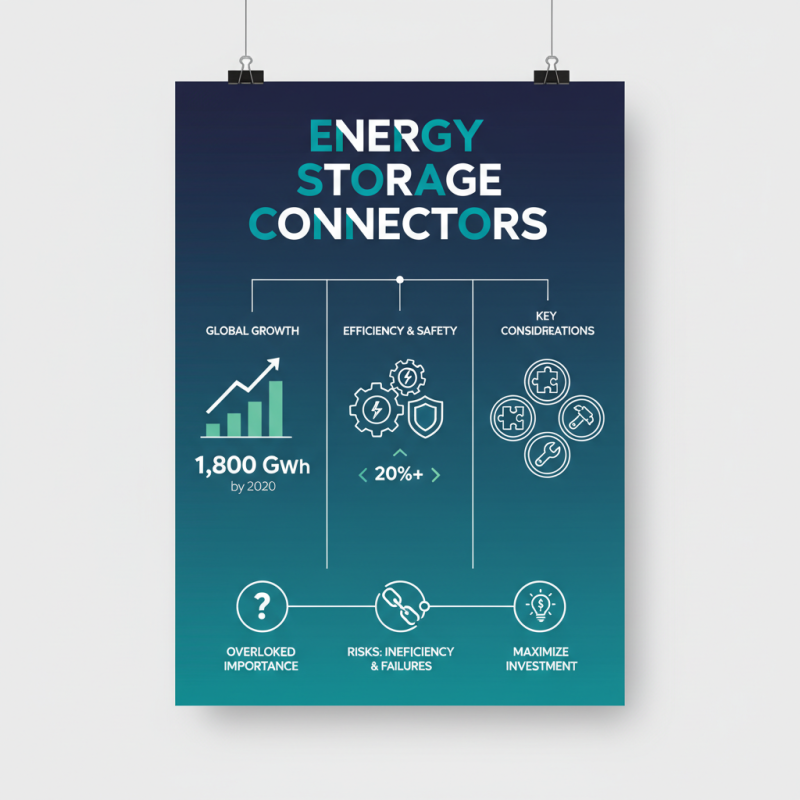
The growing demand for renewable energy has made Energy Storage Connectors essential. According to the International Energy Agency, global energy storage capacity is projected to reach 1,800 GWh by 2030. This dramatic increase highlights the importance of choosing the right connectors for efficiency and safety.

As various technological innovations emerge, selecting the appropriate Energy Storage Connector becomes crucial for system performance. High-quality connectors ensure reliable energy transfer and reduce energy losses. However, many consumers often overlook this aspect, risking system inefficiencies and potential failures. In fact, the right connector can influence energy efficiency by up to 20%, directly impacting overall performance.

With numerous options available, it can be challenging to navigate the connector market. Factors such as compatibility, durability, and ease of installation should be considered. Neglecting these factors can lead to future costs and maintenance issues. Thus, understanding what constitutes a reliable Energy Storage Connector is vital for maximizing investment in energy storage systems.
Top Tips for Choosing the Right Energy Storage Connector?

Importance of Energy Storage Connectors in Renewable Energy Systems

Energy storage connectors play a crucial role in renewable energy systems. They facilitate the smooth transfer of energy between components, ensuring efficiency and reliability. According to the International Energy Agency, energy storage capacity globally reached 250 gigawatts in 2022. This growth highlights the importance of well-designed connectors in maximizing the potential of energy storage systems.

In renewable energy applications, connectors must withstand harsh conditions. Vibration, temperature fluctuations, and moisture exposure can impact performance. A report by the National Renewable Energy Laboratory states that connectors account for up to 15% of failures in energy systems. This statistic underscores the need for proper selection and installation of connectors.

Engineers must consider various factors when choosing connectors. These include electrical load, environmental conditions, and longevity. A robust connector not only enhances performance but also reduces maintenance costs. Yet, many projects overlook the significance of connector quality in their design phase. This oversight can lead to inefficiencies and increased downtime.

Key Specifications to Consider When Selecting Energy Storage Connectors

When selecting energy storage connectors, several key specifications must be considered. The first is the voltage rating. High-capacity systems often require connectors rated for higher voltages, typically in the range of 600V to 1500V. Choosing the right voltage rating is critical for system safety and efficiency. A mismatch can lead to overheating and reduced lifespan.

Another significant factor is current rating. Connectors need to handle the peak currents during charging and discharging. For instance, connectors in electric vehicle battery systems may see current ratings as high as 500A. According to the International Electrotechnical Commission (IEC), using connectors with insufficient current ratings can increase risks and reduce performance over time.

Durability and environmental ratings also play a major role. Look for connectors that meet IP67 or IP68 standards to ensure reliable performance in harsh conditions. Recent reports indicate that connectors with higher waterproof ratings improve overall system reliability. A thorough assessment of these specifications will lead to better decision-making, especially in applications where reliability is paramount.

Common Types of Energy Storage Connectors: Pros and Cons

When selecting energy storage connectors, understanding the various types available is crucial. Each connector type has its unique attributes, influencing performance and compatibility. Common options include Anderson connectors, XT60 connectors, and heavier-duty options like M8 connectors. Anderson connectors are known for their reliability and are easy to connect and disconnect, but they can be bulky. XT60 connectors offer a compact design, suitable for smaller applications, yet can become loose over time.

M8 connectors, while robust and weatherproof, may not suit all environments. They excel in industrial settings but can be overkill for casual use. Each connector type has its pros and cons, making it essential to assess your specific needs. Evaluating the application, power requirements, and maintenance is necessary. Choosing a connector isn't just about performance; it's also a long-term commitment. Be wary of connectors that seem too convenient. They may lack the durability or safety features needed for critical applications.

Top Tips for Choosing the Right Energy Storage Connector

The chart above illustrates the storage capacity of different types of energy storage connectors. Each connector has its own advantages and disadvantages, affecting their suitability for various applications. Understanding these differences is crucial in making an informed decision.

Industry Standards and Certifications for Energy Storage Connectors

When selecting energy storage connectors, understanding industry standards and certifications is essential. These guidelines ensure safety and efficiency in energy storage systems. Different standards exist, such as IEC, UL, and ISO. Each of these plays a role in ensuring that connectors are safe for use and can withstand various environmental factors.

Certifications provide assurance that connectors meet specific performance criteria. They cover aspects like temperature range, voltage rating, and material durability. For example, connectors that are UL certified have gone through rigorous testing. However, not all manufacturers prioritize these certifications. This gap may lead to potential risks in functional efficiency or safety.

Decisions shouldn’t just be based on price or availability. Users should assess the credibility of certifications. Familiarizing yourself with standards helps ensure that connectors meet the necessary industry requirements. It’s important to critically evaluate the certifications provided. A label does not always guarantee quality; deeper research is needed.

Top Tips for Choosing the Right Energy Storage Connector

Connector Type Voltage Rating (V) Current Rating (A) Certification Standards Material
Anderson Powerpole 600 100 UL, IEC Plastic/Metal
XT60 60 60 ISO, CE Plastic
DEANS (T-Plug) 60 70 RoHS Plastic
MC4 1000 30 UL, IEC 62852 Plastic
Ring Terminal Various Varies NEC Copper/Metal

Trends and Innovations in Energy Storage Connector Technology

The landscape of energy storage connectors is evolving rapidly, driven by advancements in technology. According to a recent report by the International Energy Agency (IEA), the global energy storage market is expected to reach 500 gigawatts by 2030. This growth accelerates the need for reliable and efficient energy storage connectors.

Emerging trends include the development of standardized connectors. These aim to simplify installation and enhance compatibility across different systems. Innovations such as smart connectors are also gaining traction. They feature built-in communication capabilities to monitor performance and improve system efficiency. As more renewable energy sources integrate into the grid, these innovations are crucial for optimizing energy use.

When choosing connectors, consider reliability as a top priority. Look for connectors that can withstand extreme temperatures and environmental conditions. Evaluate the ease of installation, as complex setups can lead to errors and additional costs. Always check for compatibility with existing systems. An unsuitable connector can result in significant operational issues. These considerations are vital for ensuring that energy storage solutions function efficiently and effectively in the long run.