
Quality Mold

Top 10 Automotive Injection Molding Manufacturers Worldwide

Choosing the right automotive injection molding manufacturer requires more than comparing glossy websites. Vehicle programs demand repeatable quality, tight tolerances, stable production, and dependable delivery across many markets. This guide examines ten established manufacturers worldwide through practical industry criteria, including mold engineering, material expertise, automation, quality systems, and production capacity.

Details matter. A well-designed mold can reduce flash around a dashboard vent, improve surface consistency on a door panel, and shorten cycle times. Experienced suppliers also understand resin behavior, cooling channels, warpage control, and tool maintenance. Their value becomes clearer when a component must survive heat, vibration, chemicals, and thousands of operating cycles. Certification can support confidence, but it does not replace factory capability or transparent communication.

No ranking remains perfect.

Supplier strength changes by region, vehicle platform, and project scale. A company may excel at large structural parts but offer limited support for precision connectors. Another may provide excellent prototyping yet lack high-volume capacity. This comparison therefore avoids treating size as the only measure of authority. It considers documented experience, engineering resources, customer support, and evidence of consistent performance. Readers should still verify current certifications, plant locations, lead times, tooling ownership, and sample approvals before making a decision. These checks can expose hidden costs and prevent avoidable production delays. The following manufacturers represent important options for companies seeking reliable automotive injection molding partners, while recognizing that the best choice depends on each program’s technical and commercial realities.
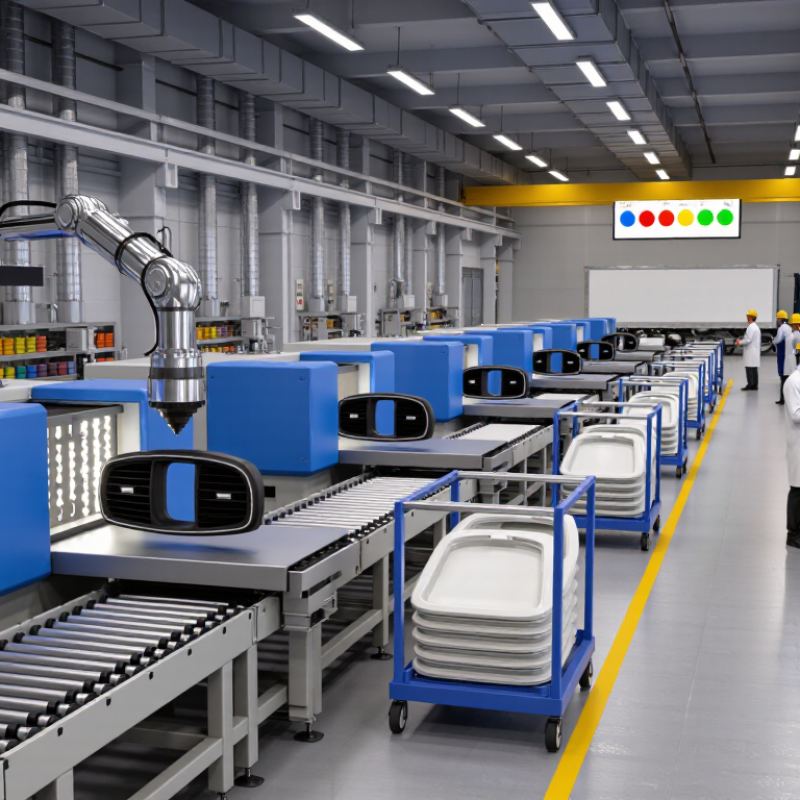
Top 10 Automotive Injection Molding Manufacturers Worldwide

Global Automotive Injection Molding Scope: 93.5 Million Vehicles in 2023 (OICA)

Top 10 Automotive Injection Molding Manufacturers Worldwide

Global Automotive Injection Molding Scope: 93.5 Million Vehicles in 2023 (OICA)

The automotive molding market has a vast production base. OICA reported 93,546,599 motor vehicles manufactured worldwide in 2023. Each vehicle requires numerous molded components, including instrument panels, door modules, lighting housings, clips, and battery-related parts. This volume creates steady demand for high-speed, repeatable injection molding. However, vehicle output is not equal to molding opportunity. Electric vehicles often need fewer powertrain parts, but they add complex thermal, electrical, and enclosure applications.

The IEA reported more than 14 million electric cars sold globally in 2023. This shift is changing material selection and mold design. Manufacturers now evaluate lightweight polymers, flame resistance, dimensional stability, and recycled content. Automotive suppliers also face tighter traceability expectations. A mold may produce thousands of parts daily, yet one small cooling imbalance can create visible warpage. That reality makes process validation more important than impressive machine size. Public rankings can look precise, but supplier data remains uneven across regions.

Tips: Compare manufacturers through cycle-time records, mold-life evidence, quality certifications, and material expertise. Ask for documented capability in glass-filled polymers and high-temperature resins. Review energy use per molded part, not only equipment capacity. Plant audits still matter. Photos are not proof.

Ranking the Top 10: Press Tonnage, IATF 16949, Plants, and OEM Reach

Top 10 Automotive Injection Molding Manufacturers Worldwide

A credible ranking must examine more than annual revenue or a polished website. Press tonnage shows production capability. The top ten typically operate machines from 450 to over 4,500 metric tons. Smaller presses support instrument panels, brackets, and console parts. Larger systems handle bumpers, battery housings, and structural modules.

IATF 16949 certification is another essential measure. It indicates disciplined quality planning, traceability, process audits, and corrective action. However, certification alone proves little without stable production records. Strong manufacturers connect molding data with tool maintenance, resin control, and dimensional inspection. Plant networks also matter. Facilities across several regions can shorten delivery routes and support local OEM programs. They may also reduce disruption when one site faces capacity pressure.

OEM reach separates capable suppliers from global partners. The highest-ranked companies usually manage development samples, pilot runs, and high-volume production for multiple vehicle platforms. Their engineers understand gate placement, warpage, cycle time, and recycled-content requirements. That experience appears on the factory floor, not only in presentations.

Press size can mislead.

A 3,000-ton machine does not guarantee better results. It may indicate unused capacity, inefficient tooling, or limited automation. Some rankings also rely on incomplete public information, especially for private manufacturers. That weakness deserves attention. A more reliable review should verify plant locations, current certifications, equipment lists, and customer program evidence before assigning each position.

Top 10 Manufacturer Profiles: Materials, Processes, and Vehicle Applications

The top 10 automotive injection molding manufacturers differ in materials, process control, and vehicle applications. Their profiles show how engineering choices affect safety, weight, finish, and production cost. Polypropylene serves door panels, consoles, and battery covers because it is light and chemically resistant. Polyamide supports brackets, cooling components, and under-hood parts where heat exposure is higher. Polycarbonate blends provide impact strength for transparent or semi-transparent interior components. Recycled polymers are also appearing, although consistency remains difficult.

Process capability separates experienced manufacturers from basic production suppliers. Several leading profiles use computer-assisted mold-flow analysis before cutting steel. This helps reduce weld lines, sink marks, and uneven filling. Insert molding combines metal fasteners with plastic structures. Overmolding adds soft-touch surfaces to handles and control modules. Gas-assisted molding can reduce wall thickness and material use. Precision tooling matters.

Very precise.

Vehicle applications range from instrument panels to electric-drive housings. Manufacturers serving electric vehicles often manage flame-retardant materials, thermal demands, and dimensional stability. They also inspect critical parts with vision systems and coordinate measuring equipment. However, a ranking can still mislead. Capacity does not always equal technical depth. Published material claims may require independent verification. Even a strong supplier can struggle with late design changes, complex molds, or unstable recycled feedstock. Practical buyers should review sample parts, process records, defect data, and validation experience before choosing a manufacturing partner.

Top 10 Automotive Injection Molding Manufacturers Worldwide - Top 10 Manufacturer Profiles: Materials, Processes, and Vehicle Applications
Profile Primary Manufacturing Focus Common Materials Injection Molding Processes Typical Vehicle Applications Representative Components Key Technical Strengths Typical Global Coverage
01 Large-scale automotive plastics supplier PP, ABS, PC/ABS, PA, PBT, TPE High-volume injection molding, gas-assisted molding, insert molding, overmolding Passenger cars, sport utility vehicles, light commercial vehicles Instrument-panel substrates, door panels, consoles, pillars, air-duct parts Large-part molding, appearance surfaces, integrated assemblies, automated production Multi-region production in Europe, Asia and North America
02 Precision interior and exterior component manufacturer ABS, PC, PC/ABS, PMMA, PP, reinforced PA Two-shot molding, in-mold decoration, thin-wall molding, insert molding Passenger vehicles, premium vehicles and electric vehicles Grilles, lighting bezels, trim parts, switch panels, decorative interior parts Tight cosmetic tolerances, Class-A surfaces, optical and decorative components Manufacturing and engineering sites across Europe, Asia and the Americas
03 Structural and under-hood polymer component specialist Glass-filled PA, PPA, PBT, PPS, PP, high-temperature engineering polymers High-temperature molding, insert molding, compression-assisted injection, overmolding Internal-combustion, hybrid and battery-electric vehicles Air-intake modules, covers, brackets, fluid-management parts, thermal-management housings Dimensional stability, chemical resistance, heat resistance and lightweighting Global programs supported through plants in major automotive regions
04 Exterior systems and aerodynamic plastics manufacturer PP, TPO, ABS, ASA, PC/ABS, impact-modified polymers Large-part injection molding, gas-assisted molding, foam injection, paint-ready molding Passenger vehicles, crossovers, pickups and commercial vehicles Bumper assemblies, spoilers, wheel-arch liners, rocker panels, underbody shields Impact performance, low mass, weatherability and large visible surfaces Strong presence near vehicle assembly clusters in North America, Europe and Asia
05 Automotive lighting and optical plastics specialist Optical PC, PMMA, PBT, high-temperature PC, silicone-compatible materials Micro-injection molding, two-shot molding, insert molding, optical molding Passenger vehicles, motorcycles, electric vehicles and commercial vehicles Light guides, lenses, reflectors, bezels, sensor covers and illuminated trim Optical clarity, surface finish, light distribution and contamination control Specialized facilities distributed across Europe, Asia and North America
06 Electrical and electronic housing manufacturer PBT, PA, PC, PC/ABS, PPS, flame-retardant engineering polymers Insert molding, overmolding, precision injection molding, clean-room molding All vehicle categories, including hybrid and battery-electric platforms Connectors, sensor housings, fuse-box parts, electronic control-unit covers, cable guides Electrical insulation, flame resistance, sealing interfaces and high repeatability Engineering and production networks serving global vehicle and component programs
07 Sealing, soft-touch and elastomer component manufacturer TPE, TPV, TPU, EPDM-compatible compounds, PP and PA Two-material molding, overmolding, insert molding, elastomer injection molding Passenger vehicles, commercial vehicles and off-road vehicles Seals, grommets, soft-touch surfaces, anti-rattle parts, protective boots and dampers Noise reduction, vibration control, sealing performance and tactile surfaces Regional production close to vehicle and tier-one assembly operations
08 Battery and power-electronics plastics specialist Flame-retardant PA, PBT, PPS, PC, thermally conductive compounds High-precision injection molding, insert molding, overmolding, multi-component molding Hybrid vehicles, battery-electric vehicles and charging systems Battery-module parts, busbar carriers, charging connectors, inverter housings and cable interfaces Electrical safety, thermal management, dimensional control and high-voltage insulation Growing production footprint in Asia, Europe and North America
09 Interior comfort and functional module manufacturer PP, ABS, PC/ABS, POM, PA, TPE and recycled-content polymers Injection molding, overmolding, in-mold labeling, insert molding and assembly integration Passenger cars, sport utility vehicles and premium interiors Air vents, cup holders, armrests, storage modules, seat components and control bezels Low noise, tactile quality, functional integration and recycled-material adoption Production sites located near major vehicle manufacturing regions worldwide
10 Specialty low-volume and complex-part manufacturer Engineering thermoplastics, elastomers, reinforced polymers, recycled PP and bio-based blends Multi-material molding, insert molding, prototype-to-production molding, precision molding Special vehicles, commercial vehicles, premium vehicles and emerging mobility platforms Complex brackets, sensor mounts, customized ducts, covers, housings and functional prototypes Design flexibility, rapid tooling, complex geometries and small-to-medium production volumes Engineering-led operations with selected facilities in Europe, Asia or the Americas

Capability Comparison: 100–4,000-Ton Presses, Cycle Times, and Part Scale

Top 10 Automotive Injection Molding Manufacturers Worldwide

Press size reveals manufacturing depth, but not complete capability. A 100-ton machine suits small clips, sensor housings, and interior controls. At the opposite end, 4,000-ton presses handle large instrument panels, battery covers, and structural modules. The Society of Plastics Engineers notes that projected part area, resin pressure, and safety margin determine required clamping force. A practical estimate often falls between two and five tons per square inch.

Cycle time separates impressive equipment from dependable production. Industry processing data commonly places thin-wall automotive parts near 10–30 seconds per cycle. Thicker housings may require 45–120 seconds. Large exterior panels can exceed 180 seconds, especially when cooling remains uneven. Grand View Research’s 2024 automotive plastics analysis also highlights lightweighting and recycled-content demand, both of which complicate temperature control and quality consistency.

Part scale needs equal attention. A supplier may list a 4,000-ton press yet lack suitable mold storage, cranes, or automated trimming. That is a real limitation. Facility audits should check platen dimensions, injection volume, mold-change time, and dimensional inspection records. Plastics Technology’s industry coverage repeatedly shows that cycle-time claims depend heavily on material grade, wall thickness, and cooling layout. Some published figures look optimistic. Buyer validation should use identical molds and measured full-cycle data, not brochure estimates.

Quality and Sustainability: PPAP, ISO 14001, and Recycled-Content Metrics

For automotive injection molding manufacturers, quality is no longer measured only by dimensional accuracy. PPAP provides a disciplined record of process capability, material control, inspection results, and production readiness. A complete submission should connect mold trials to real production evidence. Small gaps matter. An unchecked cavity variation can become a costly field issue.

Environmental credibility requires measurable systems, not attractive claims. ISO 14001 certification shows that a facility manages energy, waste, emissions, and continual improvement through a structured framework. The ISO Survey 2023 recorded more than 500,000 ISO 14001 certificates worldwide, reflecting broad adoption of environmental management systems. However, certification alone does not prove lower impact. Buyers should examine electricity use per molded part, scrap rates, water consumption, and verified waste destinations.

Recycled-content reporting needs equal precision. The OECD Global Plastics Outlook found that only 9% of global plastic waste was recycled in 2019. For automotive components, manufacturers should report post-consumer and post-industrial content separately, using mass-balance calculations and supplier documentation. They should also disclose performance limits, such as color variation, moisture sensitivity, or reduced impact strength. This is where rankings can become imperfect. A supplier with higher recycled content may require more process adjustments, while another may deliver stronger traceability with less recycled material. Transparent trade-offs are more reliable than impressive percentages.