

Quality Mold

What Are the Top 10 Cleanroom Swing Doors for Global Buyers?

Choosing the right Cleanroom Swing Doors can influence contamination control, workflow safety, and long-term operating costs. Global buyers often compare more than appearance. They examine sealing performance, surface durability, opening force, vision panels, hinges, and maintenance access.

Dr. Tim Sandle, a pharmaceutical microbiologist and cleanroom specialist, has written, “Cleanrooms are designed to control airborne particulate contamination.” This principle remains practical when evaluating swing doors. A well-designed door should close consistently, resist corrosion, and avoid unnecessary ledges where dust can collect. Its frame must also fit the wall system accurately. Small gaps matter.

This guide introduces ten Cleanroom Swing Doors suitable for different environments, including pharmaceutical rooms, laboratories, hospitals, food facilities, and electronics production areas. Each option deserves attention for a different reason. Some prioritize hermetic sealing. Others offer stronger impact resistance or easier cleaning. A few provide better visibility through wide observation windows.

The ranking is not absolute. It depends on room classification, traffic frequency, pressure differences, and local installation conditions. That is worth admitting. A premium door can still perform poorly when fitted incorrectly or maintained irregularly.

We will compare materials, hardware, safety features, customization choices, and supplier reliability. Buyers should also review technical documentation and test evidence before ordering. Product photographs can mislead. Real performance appears at the threshold, hinge line, and bottom seal. That is where careful evaluation begins.
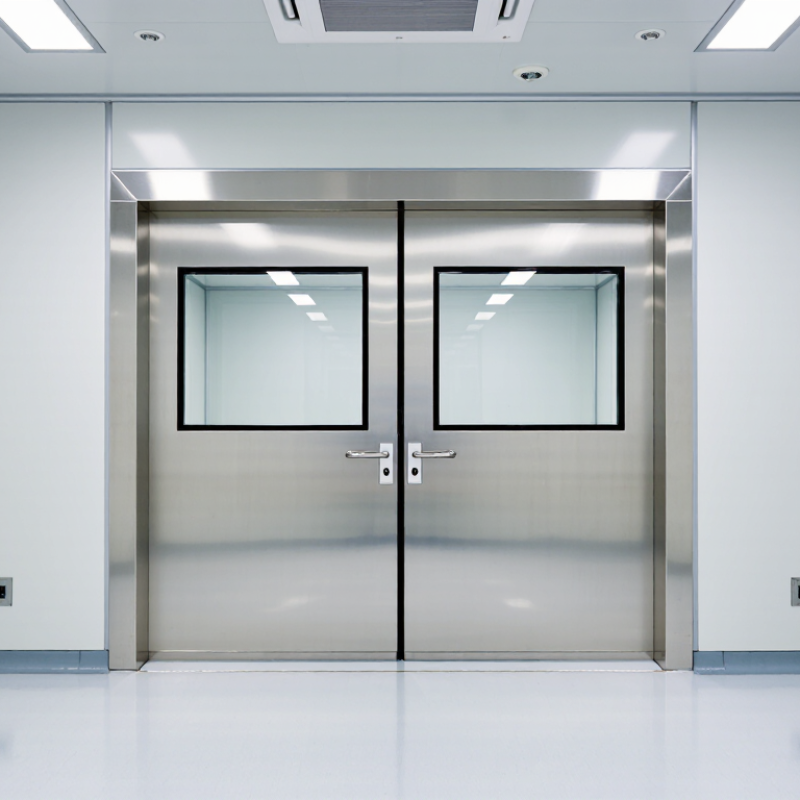
What Are the Top 10 Cleanroom Swing Doors for Global Buyers?

Cleanroom Swing Door Categories: Single, Double, Hermetic, and Fire-Rated Models

Global buyers often compare the top 10 cleanroom swing doors by category, not appearance alone.

Single-leaf doors suit narrow personnel openings and controlled traffic. They usually need less wall space and simplify daily cleaning.

Double-leaf doors support carts, equipment, and wider material movement. Their meeting stile must close evenly, or pressure control may suffer.

Hermetic swing doors create a tighter seal for operating rooms, laboratories, and high-grade production zones. Compression gaskets, adjustable hinges, and accurate frames matter here.

Fire-rated models add protection where building codes demand tested resistance. They may include heavier cores, certified hardware, and automatic closing systems.

A fire-rated door is not automatically suitable for every cleanroom. That assumption needs checking.

Tips: Confirm the required ISO classification, pressure difference, opening size, cycle frequency, and cleaning chemicals before purchase. Ask for test reports, installation tolerances, gasket details, and maintenance instructions. Stainless steel surfaces are practical, but poor welding can trap residue. Watch the threshold. It often causes trolley vibration and cleaning problems. In my experience, buyers sometimes choose the strongest door, then discover its closer is uncomfortable for frequent staff use. A better decision balances sealing, fire performance, hygiene, traffic flow, and long-term service access. Local approval requirements should also be reviewed before final specification.

Compliance Framework: ISO 14644-1 Classes 5–8 and EU GMP Grades A–D

What Are the Top 10 Cleanroom Swing Doors for Global Buyers?

Compliance Framework: ISO 14644-1 Classes 5–8 and EU GMP Grades A–D

Selecting a cleanroom swing door begins with the room classification, not appearance. ISO 14644-1 Classes 5–8 control airborne particle concentration under defined conditions. EU GMP Grades A–D address pharmaceutical manufacturing risks and operational control. These systems are related, but they are not identical. Grade A typically protects critical operations, while Grade D supports lower-risk activities.

The ten strongest door choices usually include single-leaf, double-leaf, vision-panel, emergency-exit, pass-through, pressure-rated, automatic-closing, gasketed, stainless-steel, and flush-hardware designs. Each option needs a clear purpose. In an ISO Class 5 or Grade A area, smooth surfaces, tight seals, minimal ledges, and reliable closing matter greatly. Doors for Grade C or D zones may allow broader specifications, but cleanability remains essential. Avoid exposed hinges where possible.

A qualified supplier should provide material data, leakage information, installation records, and maintenance guidance. Check pressure differentials after installation. Inspect the bottom seal with a flashlight. Small gaps can disturb airflow and increase cleaning effort. Interlocks may support personnel and material control, but they cannot replace validated procedures. One common mistake is treating a door as independently compliant. It is not. The room envelope, air system, cleaning method, and door must perform together. Even experienced teams should review classification during commissioning and after repeated door impacts. Perfect assumptions rarely survive daily production.

Technical Selection Data: 5–15 Pa Pressure, 304/316L Steel, and H14 Filters

For global buyers comparing the top 10 cleanroom swing doors, pressure control should guide the shortlist. WHO Technical Report Series No. 961, Annex 6, generally recommends 10–15 Pa between rooms of different grades. A 5 Pa setting may suit a lower-risk transition zone, but it can be unstable near door openings. Door seals, automatic closers, and frame alignment matter more than the pressure gauge alone. Small leakage becomes obvious when lightweight wipes move at the threshold.

Material selection should match cleaning chemistry and humidity. 304 stainless steel is suitable for many general pharmaceutical and laboratory areas. 316L offers stronger resistance to chlorides and repeated disinfectant exposure. The difference is practical, not decorative. Check weld quality, surface finish, hinge protection, and the absence of dirt-trapping ledges. A polished surface may look impressive, yet poor installation can still create contamination risks.

For filtered swing-door assemblies, EN 1822-1 classifies H14 filters at a minimum 99.995% efficiency at the most penetrating particle size. ISO 14644-1:2015 sets the ISO Class 5 limit at 3,520 particles per cubic metre for particles ≥0.5 micrometres. These figures support disciplined selection, but they do not prove complete room performance. Verify airflow direction, recovery time, gasket compression, and filter integrity after installation. A door can meet its specification on paper and still fail during busy shifts. That uncomfortable gap deserves attention.

Top 10 Cleanroom Swing Doors Ranked by Hygiene, Durability, and Certification

Cleanroom swing doors should be ranked by hygiene, durability, and certification, not appearance. This ranking favors ten practical configurations: flush stainless-steel doors, hermetic gasketed doors, single-leaf doors, double-leaf doors, vision-panel doors, insulated-core doors, automatic-closing doors, interlocked doors, fire-rated cleanroom doors, and high-cycle doors. Flush stainless-steel doors rank highest because welded corners, concealed hinges, and smooth skins reduce soil traps. Hermetic gasketed models follow closely, especially where pressure control matters. Automatic-closing and interlocked designs improve discipline between classified areas.

Evidence supports this focus. The WHO Global Report on Infection Prevention and Control (2022) estimates that seven in every 100 patients in high-income hospitals acquire healthcare-associated infections. Door hardware cannot solve that problem alone. However, cleanable surfaces and reliable closure reduce avoidable contamination routes. ISO 14644-1 defines airborne cleanliness classes, while ISO 14644-3 provides test methods for room performance. Neither standard certifies a door by itself. Buyers should request verified leakage, particle, pressure, and cycle-test records.

Durability separates good products from expensive disappointments. A door may look sterile yet fail after repeated cart impacts. Specify stainless-steel grades, impact resistance, hinge-cycle testing, gasket replacement intervals, and corrosion results. Fire-rated units also need applicable fire-test documentation. Certification claims deserve scrutiny. Some suppliers present factory inspection as certification, which is not equivalent. That distinction matters. In practice, the best choice depends on traffic, cleaning chemicals, pressure differentials, and maintenance skill. My ranking is useful, but not universal; actual site data should challenge it.

What Are the Top 10 Cleanroom Swing Doors for Global Buyers? - Top 10 Cleanroom Swing Doors Ranked by Hygiene, Durability, and Certification

Rank Cleanroom Swing Door Configuration Hygiene
Score / 10
Durability
Score / 10
Certification
Readiness / 10
Overall
Score / 100
Typical Construction Key Hygienic Features Typical Performance Data Relevant Standards or Validation Routes
1 Hermetic Automatic Single Swing Door 9.8 9.2 9.6 94 304 or 316L stainless-steel skin; insulated mineral or honeycomb core; perimeter compression seal. Flush faces, radiused edges, concealed hardware, low-particle seals, and hands-free activation. Typical clear width: 800–1,200 mm; up to 500,000 operating cycles; suitable for pressure differentials commonly up to 50 Pa when engineered and tested. ISO 14644-4 design principles; EN 16005 for powered pedestrian-door safety; EN 12207 air-permeability testing where specified; site qualification and particle-recovery testing.
2 316L Stainless-Steel Flush Single Door 9.7 9.5 9.3 93 316L stainless-steel door leaf and frame; insulated core; adjustable stainless-steel hinges. Welded or continuously sealed joints, smooth No. 4 or finer finish, minimal ledges, and replaceable compression gaskets. Typical thickness: 45–60 mm; clear height: 2,000–2,400 mm; commonly designed for intensive daily cleaning and 250,000+ cycles. ISO 14644-4; EN 12207 where air-leakage performance is required; material certificates for 316L stainless steel; cleanability and seal-integrity validation.
3 Double-Leaf Stainless-Steel Cleanroom Swing Door 9.3 9.1 9.0 90 Two insulated stainless-steel leaves with a rebated center meeting stile and stainless-steel frame. Flush center seal, radiused corners, sealed vision panels where required, and heavy-duty hinges or floor closers. Typical clear width: 1,400–2,400 mm; suitable for material carts and mobile equipment; commonly engineered for 150,000–250,000 cycles. ISO 14644-4; EN 12207 or equivalent air-permeability testing; EN 1634-1 only when a fire-rated assembly is specifically tested; installation qualification.
4 Radiused-Frame Hygienic Swing Door with Vision Panel 9.2 8.9 8.9 89 Powder-coated or stainless-steel leaf; insulated core; radius-profile frame and flush double-glazed window. Sealed glazing, coved frame transitions, smooth non-shedding finish, and limited exposed fasteners. Typical vision-panel size: 300 × 600 mm or 400 × 800 mm; door thickness: 50–60 mm; suitable for routine disinfectant cleaning. ISO 14644-4; glazing safety assessment; EN 12207 when specified; cleanability, condensation, and surface-finish verification.
5 Impact-Resistant Cleanroom Swing Door 8.8 9.6 8.5 88 Stainless-steel or coated steel leaf with reinforced internal structure and impact plates or bump rails. Non-porous impact surfaces, sealed lower edges, replaceable bump protection, and corrosion-resistant hardware. Typical impact protection height: 300–1,000 mm; suitable for trolley traffic; commonly designed for 200,000+ cycles. ISO 14644-4; mechanical-cycle and impact testing; EN 12207 where required; material and corrosion-resistance documentation.
6 GMP-Style Steel Swing Door with Flush Hardware 9.0 8.7 8.8 87 Smooth coated steel or stainless-steel leaf; insulated core; concealed or semi-concealed hinges and closer. Flush pull handles, sealed perimeter, coved frame options, and surfaces compatible with validated cleaning agents. Typical thickness: 45–55 mm; available in single or double leaf; designed for frequent washdown and controlled environments. ISO 14644-4; GMP facility design documentation; cleaning-agent compatibility testing; commissioning and hygienic-design review.
7 Fire-Rated Cleanroom Swing Door Assembly 8.2 9.3 9.5 86 Tested steel door leaf, fire-resistant core, certified frame, intumescent seals, and compatible cleanroom finish. Sealed joints, smooth washable faces, protected hardware, and limited ledges while preserving fire performance. Typical fire-resistance classifications: 30–120 minutes, depending on the tested assembly; cycle rating depends on hardware selection. EN 1634-1 or the applicable local fire-test standard; EN 13501-2 classification where relevant; ISO 14644-4 for cleanroom integration.
8 Lead-Lined Radiation-Shielded Cleanroom Swing Door 7.8 8.9 8.7 84 Steel or stainless-steel outer skins with lead sheet or equivalent shielding core; reinforced hinges and frame. Fully enclosed shielding, smooth outer skin, sealed perimeter, and cleanable protective trims. Typical lead equivalence: 1–4 mm Pb, project-specific; heavier leaves require engineered hinges, frames, and door closers. Radiation-shielding calculation and survey by a qualified specialist; ISO 14644-4 for cleanroom integration; local radiation-safety regulations.
9 Antistatic Cleanroom Swing Door 8.6 8.1 8.6 82 Conductive or dissipative coated steel, stainless steel, or laminate-faced leaf with grounding provisions. Smooth sealed faces, conductive hardware, low-particle gasket materials, and grounding continuity across the assembly. Typical surface resistance target: 106–109 ohms, depending on the ESD program; electrical continuity must be verified after installation. IEC 61340-5-1 for ESD-controlled areas; IEC 61340-2-3 measurement methods; ISO 14644-4 for cleanroom design and commissioning.
10 PVC-Faced Lightweight Cleanroom Swing Door 8.3 7.8 8.0 79 Compact insulated core with welded PVC, HPL, or coated metal facing and corrosion-resistant frame. Non-porous smooth skin, sealed perimeter, rounded edge profiles, and low-maintenance replaceable seals. Typical thickness: 40–50 mm; lower leaf weight reduces hardware load; best suited to moderate traffic and controlled cleaning regimes. ISO 14644-4; surface-cleanability and chemical-compatibility testing; EN 12207 where required; project-specific particle and pressure testing.
Evaluation basis: Overall scores use a weighted assessment of hygiene and cleanability (40%), durability and operating life (35%), and certification or validation readiness (25%). Performance figures are representative project ranges for generic cleanroom door configurations, not guarantees for a specific product. Final compliance depends on the complete door assembly, installation, testing, and local regulatory requirements.

Global Purchasing Criteria: CE, UL, EN 12207 Air Leakage, and Life-Cycle Cost

What Are the Top 10 Cleanroom Swing Doors for Global Buyers?

Global buyers should judge cleanroom swing doors by evidence, not showroom appearance. A practical comparison begins with ten shortlisted models and one shared evaluation sheet. Check applicable CE conformity documentation for European markets. For North American projects, verify whether UL certification or recognized components are required. Requirements vary by facility and installation location.

EN 12207 air leakage performance deserves careful attention. Ask for the tested class, pressure difference, test method, and complete report. A tight door can reduce particle migration and unnecessary HVAC demand. However, test results may not represent your exact wall, threshold, or frame installation. This is where many purchasing decisions become too optimistic.

Life-cycle cost includes more than the purchase price. Review seals, hinges, closers, vision panels, cleaning resistance, spare parts, and service access. My early cost estimates sometimes ignored production downtime during repairs. That mistake changed the final ranking. A cheaper door may become expensive after repeated gasket replacement or alignment problems.

Tips: Request samples, drawings, certificates, and maintenance instructions before approval. Test the door with your pressure regime and cleaning process. Record opening cycles during a site trial. Ask suppliers to explain exclusions clearly. Cheap is not always efficient.

This buyer-screening model prioritizes the criteria most commonly used in global cleanroom swing-door procurement. CE and UL/CSA documentation support market access and electrical safety, while EN 12207 air-leakage classification helps compare enclosure performance. Life-cycle cost includes purchase, installation, maintenance, energy impact, and replacement.