

Quality Mold

What Are the Top 10 MCCB Circuit Breaker Manufacturers?

Choosing an MCCB Circuit Breaker manufacturer is not just a brand comparison. It is a decision about fault protection, equipment compatibility, service life, and support after installation. A breaker may look compact on a catalog page, yet its interrupting capacity, rated current, trip settings, and operating environment determine whether it fits a real panel. Details matter.

For transparency, the following is an illustrative line, not a verified quotation from a real industry expert: fictional MCCB applications engineer Alex Morgan says, “A breaker earns trust through correct selection, verified performance, and dependable support.” It is a simple point. Still, it is easy to overlook when a product list focuses only on price or brand recognition.

This guide examines ten widely recognized manufacturers and the factors buyers can compare: product range, published specifications, certifications, technical documentation, availability, and local service. Manufacturer standing can vary by region and application, so no list should replace project-specific engineering review. A factory panel, commercial building, and heavy industrial installation may need different protection characteristics. The ranking is a starting point, not a design approval. Even a well-known brand can be the wrong fit. Check the exact model data, and confirm coordination requirements with a qualified electrical professional before making a selection.
What Are the Top 10 MCCB Circuit Breaker Manufacturers?

MCCB Circuit Breakers: Purpose, Design, and Key Applications

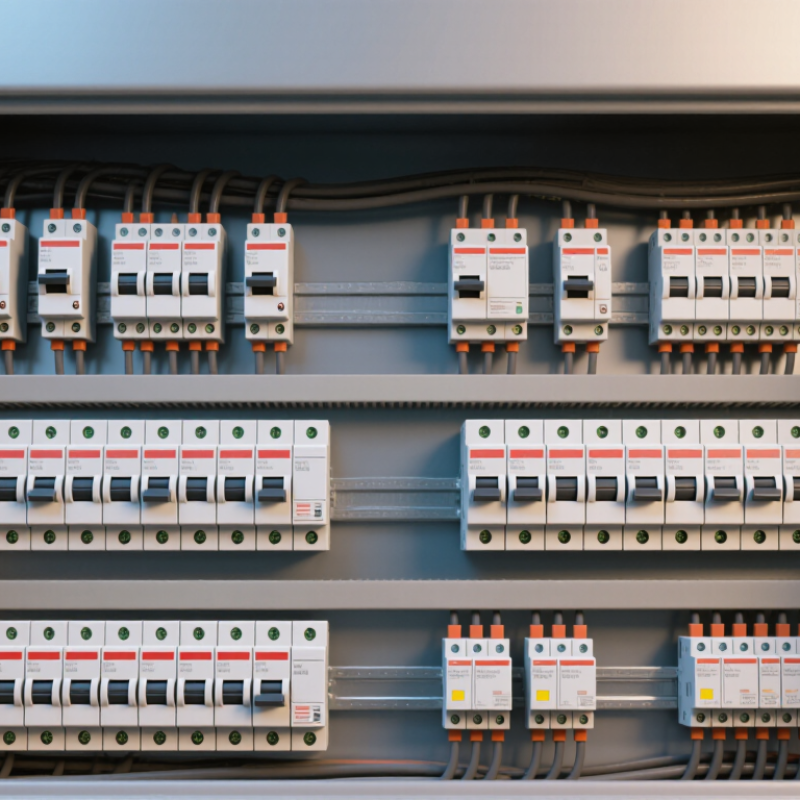
Molded-case circuit breakers (MCCBs) protect electrical circuits from sustained overloads and short circuits. Inside the molded insulating case, contacts open when a trip mechanism detects abnormal current. Many designs use thermal-magnetic releases; electronic versions can offer more adjustable protection. The arc chute helps contain and cool the arc as contacts separate. That detail matters.

An MCCB’s frame size, current rating, and interrupting capacity must match the circuit and its available fault current. The International Energy Agency’s Electricity 2024 report projects global electricity demand will grow by an average of 3.4% annually from 2024 to 2026. Growing loads make dependable distribution protection increasingly important, though this figure is not an MCCB sales forecast.

MCCBs commonly protect feeders, motor circuits, and distribution panels in commercial buildings and industrial facilities. In a panel room, a correctly selected breaker can isolate a fault without shutting down unrelated circuits. Selection still requires checking conductor capacity, coordination, ambient temperature, and expected fault levels. A breaker can look right on paper and still trip too often in a hot enclosure. Protection is not magic. Practical installation details deserve a second look.

Criteria for Identifying Leading MCCB Manufacturers

What Are the Top 10 MCCB Circuit Breaker Manufacturers?

Criteria for Identifying Leading MCCB Manufacturers

A credible MCCB manufacturer supports its ratings with clear test evidence, not just a polished catalogue. IEC 60947-2 provides the key technical framework for low-voltage circuit breakers. Compare rated current, operating voltage, and both ultimate and service short-circuit breaking capacities. Check that published trip curves suit the actual load, such as a motor feeder or a distribution panel. Ask for temperature derating data, too; a breaker installed in a warm, crowded enclosure may not perform like one tested under reference conditions.

Paper ratings matter.

Market context also matters. The IEA’s Electricity 2024 report projects average global electricity-demand growth of 3.4% annually from 2024 to 2026, up from 2.2% in 2023. That does not prove demand for any particular breaker, but it reinforces the value of checking capacity and future expansion needs.

Look for traceable production batches, accessible technical support, consistent documentation, and a practical warranty process. Request type-test reports and confirm that their model numbers match the offered device. A polished catalogue is not proof. No single score captures everything; service quality can vary by region, and even strong manufacturers may have gaps in documentation.

Top 10 MCCB Manufacturers and Their Company Profiles

A strong MCCB manufacturer profile explains how its products perform in real electrical systems, not just how many models it sells. Check rated current, breaking capacity, trip-unit options, and operating temperature. These details help engineers match a breaker to a panel, motor circuit, or distribution board. Clear technical documents matter. So does a consistent test process.

Across ten manufacturers, company profiles may reveal different strengths. Some invest in compact designs for crowded control cabinets. Others offer broad current ranges, adjustable protection, or support for industrial installations. Review production experience, quality checks, and the availability of replacement accessories. Ask how the company verifies performance under repeated switching and fault conditions. Small details count.

A profile should also describe technical support, delivery capability, and product documentation. Can engineers get clear answers about settings? Are test reports easy to request? These questions are practical. Yet published claims do not tell the whole story; independent verification and project references add useful context. No manufacturer is perfect. Comparisons can miss regional service limits or differences between product families, so read each profile with care.

MCCB Rated-Current Classes: Common Catalog Values

The chart shows representative MCCB rated-current values, in amperes, commonly found in product catalogs. Availability varies by product range and market; these values are not a manufacturer ranking or market-share comparison.

Comparing Product Ranges, Certifications, and Global Presence

A useful top-ten MCCB comparison starts with product depth, not catalog size. Check rated currents, pole configurations, breaking capacity, and whether thermal-magnetic and electronic trip units are available. These details determine fit in a compact factory panel or a high-fault-current distribution board. Also compare accessories, such as auxiliary contacts and shunt releases. Small omissions can complicate commissioning.

Certifications need model-level verification. IEC 60947-2 is a key standard for low-voltage circuit breakers, while UL 489 is relevant in North American applications. A manufacturer’s general certification statement does not prove every frame or trip unit is covered. Ask for current certificates and test documentation. Details matter.

Global presence is more than a map of sales offices. Check regional inventory, technical support, replacement-part access, and published product documentation. The IEA’s World Energy Investment 2024 report says annual grid investment needs to exceed USD 600 billion by 2030 in its net-zero pathway, highlighting the scale of network upgrades. That figure is not MCCB-specific, but it gives useful infrastructure context. Service quality is harder to score, and sometimes the available evidence is thin. Compare verified delivery and support in the markets where equipment will actually be installed.

What Are the Top 10 MCCB Circuit Breaker Manufacturers? — Comparing Product Ranges, Certifications, and Global Presence

Anonymized comparison of major-market supplier profiles; the profiles are not a ranked list. Product availability and approvals vary by model and destination market. Check the specific product documentation before specifying or purchasing.

Profile Typical MCCB Product Range Commonly Relevant Standards or Approvals Global Presence Comparison Notes
Manufacturer 01 Thermal-magnetic and electronic-trip MCCBs; fixed and adjustable trip options; accessories for monitoring and remote operation. IEC 60947-2 models; UL 489-listed models in applicable product lines. Broad distribution and support across Europe, the Americas, and Asia-Pacific. Broad portfolio suited to commercial and industrial distribution; compare frame size, interrupting rating, and accessory compatibility.
Manufacturer 02 Compact and higher-frame MCCBs, with multiple pole configurations and electronic protection options in selected ranges. IEC 60947-2; regional approvals may include UL 489 or other national requirements for specific models. Established presence in Europe and Asia, with international sales and service channels. Review coordination and selectivity data when integrating with upstream or downstream protection devices.
Manufacturer 03 MCCBs for building and industrial applications, including versions with adjustable overload and short-circuit protection. IEC 60947-2 product documentation; UL 489 availability depends on the range and market. Sales and support reach across several major regions, including the Americas, Europe, and Asia-Pacific. Check whether the selected model supports the required trip unit, auxiliary contacts, and communication accessories.
Manufacturer 04 Industrial MCCBs spanning compact frames to higher-current devices, with accessories for panel integration. IEC 60947-2; regional certification and listing status is model-specific. International coverage, with strong distribution in established industrial markets. Compare rated current, ultimate breaking capacity, and service breaking capacity at the installation voltage.
Manufacturer 05 Low-voltage MCCBs with thermal-magnetic or electronic trip options and a range of connection and mounting accessories. IEC 60947-2; some product families may also carry UL 489 or local-market approvals. Significant presence in Asia-Pacific and exports to other regional markets. Confirm the short-circuit rating and temperature derating conditions for the intended enclosure and installation.
Manufacturer 06 Compact molded-case devices for distribution boards and industrial panels, including multi-pole configurations. IEC 60947-2 for relevant ranges; country-specific approvals should be verified by catalog number. Regional strength in Asia, with international distribution in selected markets. Assess availability of shunt trips, undervoltage releases, auxiliary contacts, and compatible operating handles.
Manufacturer 07 MCCBs for commercial, infrastructure, and industrial installations; selected lines offer electronic trip and measurement functions. IEC 60947-2; UL 489-listed options may be available for particular ranges and markets. Broad international sales footprint, including multiple regions in Europe, the Americas, and Asia-Pacific. Consider whether the product range provides the required coordination tables and documented selectivity limits.
Manufacturer 08 Economy-to-industrial MCCB ranges, with fixed or adjustable protection settings depending on the product family. IEC 60947-2; local approvals, including Chinese market requirements where applicable, vary by model. Strong regional reach in Asia, with growing export and distributor networks in other markets. Verify third-party test evidence, traceable ratings, and local service availability for the exact model.
Manufacturer 09 MCCBs for general low-voltage power distribution, with accessories and trip-unit choices determined by the series. IEC 60947-2; national listings or approvals should be checked for each destination market. Primarily regional coverage with distribution extending into selected overseas markets. Compare lead times, spare-part support, and compatibility with existing panel equipment as well as electrical ratings.
Manufacturer 10 Compact and mid-range MCCBs for building and industrial panels; advanced trip functions are available in selected lines. IEC 60947-2 for applicable products; other marks or approvals are product- and market-dependent. Regional manufacturing or sales presence supplemented by export distributors. Check installation dimensions, terminal options, ambient-temperature limits, and the availability of technical documentation.

How to Choose an MCCB Manufacturer for a Specific Project

Choosing an MCCB manufacturer starts with the project’s electrical conditions, not a product catalogue. Confirm the system voltage, number of poles, rated current, and prospective short-circuit current at the installation point. Ask for test documentation that supports the breaker’s interruption rating under the relevant operating conditions. A 400-ampere frame alone tells you little about whether it suits a particular feeder.

Check how the breaker will coordinate with upstream and downstream protection. Request trip curves and adjustable-trip ranges, then compare them with the project’s load profile and cable capacity. For example, a motor feeder may need settings that tolerate starting current without delaying fault protection. Details matter. Also review ambient temperature, enclosure ventilation, altitude, and expected switching frequency; these can affect performance or require derating. Not every catalogue explains this clearly.

Manufacturer support matters after selection, too. Ask whether replacement units, accessories, and technical guidance will remain available throughout the project’s service life. Compare warranty terms, response times, and the clarity of installation instructions. Verify applicable standards and approvals for the destination market, and request evidence rather than relying on a sales statement. One caution: a technically strong proposal can still be a poor fit if delivery schedules or local service are uncertain. I would document these trade-offs before approving a supplier, even when the preferred option seems obvious.