

Quality Mold

Top 10 Automotive Electronics Manufacturers for Global Buyers

For global vehicle programs, choosing an electronics supplier affects more than component cost. It can shape reliability, integration timelines, and long-term service. A capable manufacturer may provide control units, sensors, power electronics, infotainment, or driver-assistance technologies. Its products must work together under demanding conditions, from summer heat to constant vibration on rough roads. An Automotive Electronic System may combine many of these technologies, so compatibility and careful validation matter. Details matter. Yet no shortlist can capture every buyer’s needs. A supplier suited to a high-volume passenger car may not fit a commercial fleet or a specialized electric vehicle program.

This guide introduces ten established manufacturers for global buyers to consider. It offers a practical starting point, not a universal ranking or endorsement. The companies differ in product focus, regional reach, manufacturing capacity, and engineering support. Buyers can compare those strengths against their vehicle platform, target markets, production schedule, and service requirements. They should also ask how suppliers manage software updates, component traceability, quality testing, and communication across regions. A polished presentation is not proof of a smooth launch. Request technical documentation, review relevant performance records, and discuss realistic delivery expectations. Even strong suppliers may have gaps in particular markets or product categories. Use the list to frame better questions, then verify each manufacturer’s fit for your program.
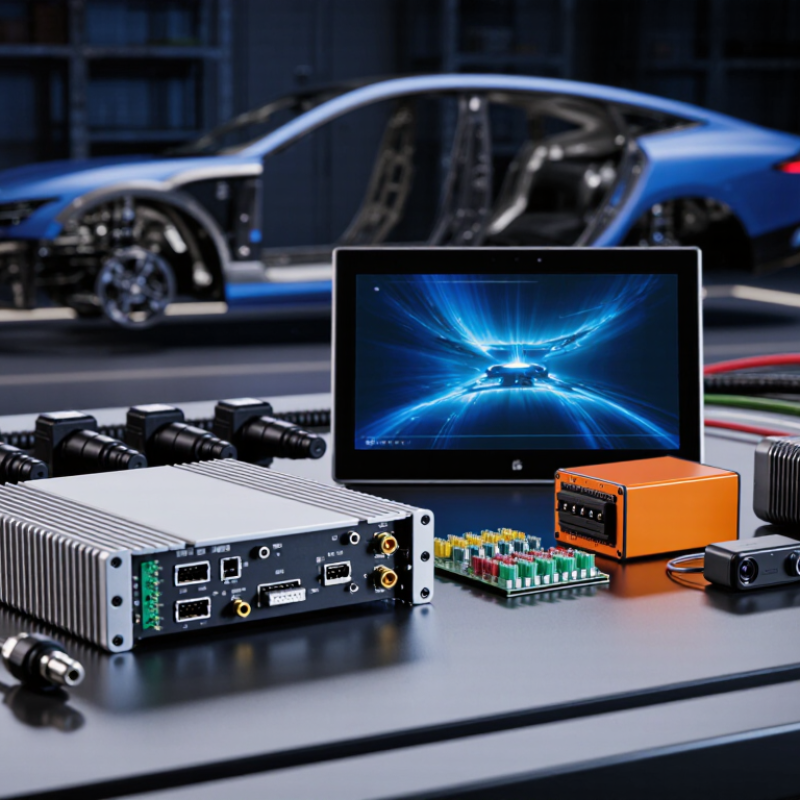
Top 10 Automotive Electronics Manufacturers for Global Buyers

What Automotive Electronics Manufacturers Produce

Automotive electronics manufacturers produce the control systems and connected components that help vehicles operate. A typical portfolio may include electronic control units, sensors, wiring assemblies, power-management modules, and dashboard displays. These parts monitor functions such as cabin temperature, battery condition, braking, and engine performance. Some manufacturers also make driver-assistance hardware, including cameras and radar modules. Not every supplier covers every category.

Production often starts with circuit-board design and component selection. Teams assemble boards, fit them into protective housings, and test how they perform under heat, vibration, moisture, and electrical noise. A test bench might cycle a module through changing temperatures while checking its signals. Software calibration can matter as much as the hardware. Specifications vary, though, and a polished product sheet does not prove that a component fits a buyer’s exact vehicle platform. That gap is easy to overlook.

Tips: Ask for operating ranges, interface details, test reports, and production traceability. Confirm who handles calibration and software updates. Request samples for integration checks before setting production volumes. Small connector or timing mismatches can cause real delays. Don’t assume compatibility.

Criteria for Comparing Manufacturers as a Global Buyer

When comparing automotive electronics manufacturers, look beyond catalog breadth. Check whether their experience matches your product: control modules, sensors, displays, or power electronics. Ask for documented test conditions, not only a pass certificate. A useful report names the temperature range, vibration profile, sample size, and revision level. Small details matter. Request evidence of design-change control and traceability from components to finished units. These records help assess consistency across plants and production runs.

For global sourcing, examine engineering support, production capacity, and communication across time zones. Ask how quickly teams investigate a failed sample and who owns corrective actions. Review lead-time assumptions, minimum order quantities, and plans for component shortages. Confirm that quality systems and product validation fit the markets you serve; requirements can vary by destination and application. A factory visit or live process audit may reveal gaps that presentations miss. Still, no audit predicts every production issue.

Tips: Send the same technical questionnaire to each candidate. Compare responses in a scorecard, while leaving space for supporting evidence. Request sample parts with clear lot identification, then test them under your own operating conditions. If a supplier struggles to explain a limitation, take note. No manufacturer is flawless, so weigh documented risks alongside strengths.

Profiles of Ten Major Automotive Electronics Manufacturers

A control-unit manufacturer develops electronic modules that coordinate braking, body functions, or powertrain signals. Buyers should examine its testing process and compatibility with vehicle architectures. A sensor-focused manufacturer supplies devices that measure pressure, temperature, position, or motion. Accuracy matters, but stable readings across heat and vibration matter just as much.

A semiconductor supplier provides chips for power conversion, data processing, and vehicle communication. Its profile depends on component availability and documented operating limits. An infotainment manufacturer combines displays, audio, and cabin controls; a useful evaluation includes screen response and operation in bright daylight. An advanced-assistance supplier develops cameras, radar, or processing units. Real-world performance needs careful validation, not just attractive demonstrations. These distinctions blur in practice.

A power-electronics manufacturer supports battery charging and energy conversion, while a connectivity supplier handles in-vehicle data links and external communication. A lighting specialist designs electronic control for headlamps and signals, with attention to heat and long service life. A thermal-management supplier monitors temperatures in batteries and electronic assemblies. An integration-focused manufacturer coordinates multiple systems and production stages. That can simplify sourcing, though it may limit flexibility. Public profiles rarely show every trade-off. Compare technical documentation, sample test results, and production support before making a decision.

Top 10 Automotive Electronics Manufacturers for Global Buyers — Profiles of Ten Major Automotive Electronics Manufacturers

Profile Headquarters Country Typical Automotive Electronics Portfolio Key Capability Areas Potential Buyer Fit Evaluation Priorities
Profile 01 Germany Vehicle control units, sensors, driver-assistance systems, powertrain electronics, and vehicle software. Broad systems integration across vehicle domains; experience with both conventional and electrified vehicles. Buyers seeking a large, multi-domain supplier for complex vehicle programs. Confirm product-level specifications, software support period, regional production capacity, and validation plan.
Profile 02 Japan Powertrain control, electrification components, thermal-management electronics, sensors, and driver-assistance systems. Automotive-grade electronics and integration across propulsion, sensing, and thermal systems. Buyers developing hybrid, electric, or efficiency-focused vehicle platforms. Review operating-temperature range, functional-safety evidence, supply continuity, and vehicle integration requirements.
Profile 03 Germany Advanced driver-assistance systems, vehicle safety electronics, cockpit displays, connectivity, and control systems. Combination of sensing, safety, display, and connected-vehicle technologies. Buyers consolidating safety, cockpit, and connectivity requirements with a major systems supplier. Assess sensor performance, software-update process, cybersecurity documentation, and platform lifecycle support.
Profile 04 Germany Chassis-control electronics, transmission systems, driver-assistance technologies, and vehicle control solutions. Integration of electronic controls with chassis, braking, and drivetrain systems. Buyers seeking coordinated electronic and mechanical systems for vehicle motion and safety functions. Check system interfaces, safety case documentation, test coverage, and compatibility with the target vehicle architecture.
Profile 05 France Driver-assistance systems, automotive lighting electronics, thermal systems, and electrification technologies. Electronics integrated into visibility, sensing, thermal management, and vehicle-efficiency applications. Buyers prioritizing lighting, sensing, thermal performance, or electrification applications. Verify environmental durability, optical or sensing performance, regional homologation needs, and serviceability.
Profile 06 Ireland Vehicle electrical architecture, active-safety electronics, connectivity, and software-enabled vehicle systems. Electrical and electronic architecture integration, data connectivity, and advanced safety systems. Buyers planning centralized computing, connected features, or next-generation electrical architectures. Review architecture compatibility, cybersecurity processes, software interfaces, and long-term update arrangements.
Profile 07 South Korea Vehicle modules, infotainment, driver-assistance systems, electrification components, and electronic control systems. Combination of module supply and electronics for safety, cabin, and electrified-vehicle applications. Buyers looking for integrated modules and electronics for passenger-vehicle programs. Assess engineering support, localization options, integration responsibility, and component availability by region.
Profile 08 Canada Driver-assistance and vehicle electronics alongside broader mechatronic and vehicle-system solutions. Cross-domain engineering and manufacturing capabilities for vehicle systems and components. Buyers seeking electronics integrated with wider vehicle-system or manufacturing programs. Clarify the electronics scope, make-or-buy boundaries, manufacturing locations, and program change-control process.
Profile 09 Netherlands Automotive semiconductors for in-vehicle networking, processing, power management, and secure connectivity. Semiconductor-level components used in vehicle computing, communications, and electronic control units. Buyers and design teams sourcing chips for vehicle networks, computing, and secure electronic systems. Check qualification status, product longevity, supply-chain traceability, security features, and second-source strategy.
Profile 10 Germany Automotive microcontrollers, power semiconductors, sensors, and components for electrified vehicle systems. Semiconductor technologies supporting vehicle control, power conversion, sensing, and electrification. Buyers sourcing core electronic components for electric powertrains and vehicle control units. Review automotive qualification, electrical and thermal limits, production lifecycle, and availability forecasts.

Key Technologies Shaping the Automotive Electronics Industry

Automotive electronics is shifting from isolated control units toward software-defined architectures. McKinsey’s 2023 analysis projected the automotive software and electronics market could grow from about $238 billion in 2020 to nearly $470 billion by 2030. That shift depends on centralized computing, faster in-vehicle networks, and software that can be updated after delivery. The gap is real. Integrating new features without disrupting proven vehicle systems remains difficult.

Electrification is also reshaping component priorities. The International Energy Agency reported nearly 14 million electric cars sold worldwide in 2023, about 18% of total car sales. This growth raises demand for power semiconductors, battery-management systems, and precise thermal monitoring. Engineers must manage heat inside compact spaces, where a small sensor or connector fault can affect charging performance. More electronics do not automatically mean better reliability.

Driver-assistance systems add another layer: cameras, radar, and computing units must interpret changing road conditions in milliseconds. Redundant sensing can improve resilience, but it adds cost, weight, and integration work. Cybersecurity and functional-safety design therefore belong early in development, not as late-stage checks. Even mature systems can behave unpredictably in rain, glare, or poorly marked lanes. That limitation deserves attention. For global buyers, supplier evaluations should examine test evidence, software-update support, component traceability, and long-term repairability—not just headline specifications.

How to Match a Manufacturer to Your Sourcing Requirements

Matching an automotive electronics manufacturer starts with the component, not the sales pitch. Define operating temperature, vibration exposure, service life, annual volume, and required engineering support. Then ask for test records, change-control procedures, traceability samples, and realistic lead-time ranges. A neat product sheet is not proof of production readiness.

Market shifts make this screening more important. The IEA’s Global EV Outlook 2024 reports nearly 14 million electric cars sold in 2023, about 18% of global car sales, and projects 17 million for 2024. WSTS’s Spring 2024 forecast puts worldwide semiconductor sales at $611.2 billion for 2024, up 16% year over year; that is a broad chip-market figure, not an automotive-only measure. Use these signals to test suppliers’ capacity plans and component continuity, rather than assuming they guarantee availability. Ask how they manage redesigns when a part becomes constrained. No checklist catches every mismatch. A factory audit can also reveal practical details: labeled reels, clean storage, and clear escalation paths. One uncomfortable question remains: does the manufacturer support your product after launch, or only until shipment?