

China Top Calcium Carbonate Stone Suppliers
Choosing China’s top Calcium Carbonate Stone suppliers takes more than comparing prices or polished product photos. Buyers should identify whether they need limestone, marble, or another calcium-carbonate material, then match the stone’s composition, appearance, and intended use. A pale slab may look uniform online, yet veining, shade, and surface texture can vary between batches. Details matter.
A dependable supplier should provide clear product specifications, recent photographs, sample options, and information about processing capabilities. Ask about slab or block dimensions, finish, packaging, and inspection procedures. For technical projects, request relevant test reports and confirm what each report actually measures. Do not assume that every supplier offers the same documentation or production control.
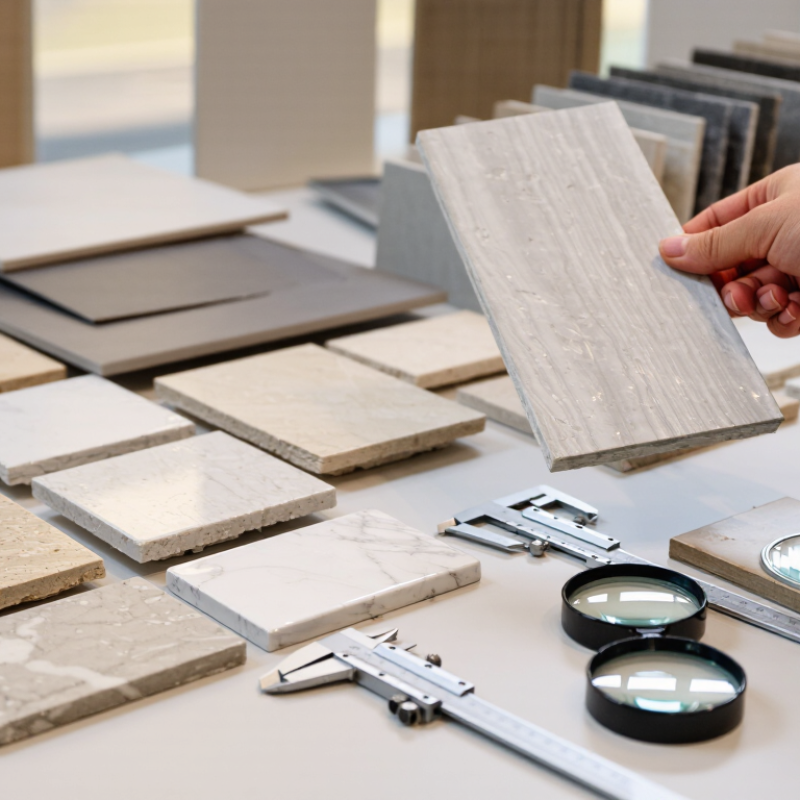
This guide explores how to evaluate Chinese suppliers, compare their product ranges, and ask practical questions before requesting a quotation. A small sample can reveal details that a catalogue misses. Check edges, pores, color consistency, and finish under natural light. Also clarify lead times and how replacements or defects are handled. These conversations may feel tedious. They can prevent costly misunderstandings.
Supplier listings and capabilities can change, so treat any shortlist as a starting point, not an endorsement. Verify business details directly, compare written specifications, and keep expectations realistic. Stone is a natural material; perfect uniformity is rarely guaranteed. The best choice balances verified quality, clear communication, and suitability for the project.
What Calcium Carbonate Stone Is and How It Is Used
Calcium carbonate stone is a broad term for natural materials made largely of calcium carbonate, especially limestone and marble. Limestone forms from accumulated shells, minerals, and sediment; marble develops when heat and pressure alter limestone. Their appearance ranges from pale cream with visible fossils to polished surfaces crossed by fine veins. No two pieces are exactly alike.
These stones are used for floor tiles, wall panels, fireplace surrounds, steps, and some kitchen counters. Their weight and natural variation make substrate strength and slab thickness important during installation. Calcium carbonate reacts with acidic liquids. Lemon juice or vinegar can dull a polished surface, while open pores may absorb spills. Sealing helps, but it does not make stone stain-proof. That detail is easy to overlook.
Tips: Ask for the stone type and finish, then inspect a sample under the room’s lighting. Wipe spills promptly with a soft cloth and pH-neutral cleaner. Avoid abrasive pads. For flooring, a honed finish may reduce glare, but it can still mark. Test a spare piece first; care needs vary by stone and finish.
China Top Calcium Carbonate Stone Suppliers - What Calcium Carbonate Stone Is and How It Is Used
Calcium carbonate stone is a broad description for natural rocks composed mainly of calcium carbonate (CaCO₃), including limestone, marble, chalk, and travertine. The table below compares common material types and practical checks for sourcing them; it does not rank or identify individual suppliers.
| Stone Type | What It Is | Typical Characteristics | Common Uses | Useful Supplier and Quality Checks |
|---|---|---|---|---|
| Limestone | A sedimentary rock composed mainly of calcite, with possible amounts of dolomite, clay, quartz, and other minerals. | Appearance and strength vary by deposit, grain size, mineral content, and degree of cementation. It can be supplied as blocks, slabs, cut stone, or crushed material. | Building stone, paving, cladding, aggregate, and feedstock for cement or lime production. Selected limestone is also processed for industrial calcium carbonate uses. | Confirm the intended grade and application. Request relevant test results, such as chemical composition, water absorption, density, strength, and dimensional tolerances. |
| Marble | A carbonate rock recrystallized by heat and pressure, usually made mainly of calcite and/or dolomite. | Often has a crystalline texture and visible veining. Color, veining, fissures, and performance can vary between blocks and even within a single block. | Interior flooring, wall cladding, countertops, architectural features, and sculpture. | Check slab or tile dimensions, thickness, finish, visible cracks, color consistency, water absorption, and strength. Approve samples or slab selections where appearance is important. |
| Travertine | A type of limestone formed by calcium carbonate precipitation, commonly around mineral springs. | Often features natural pores, bands, and layered patterns. Pores may be left open or filled during processing, affecting appearance and maintenance. | Flooring, wall cladding, paving, and decorative architectural applications. | Specify whether the surface is filled or unfilled, and confirm finish, thickness, pore treatment, edge details, and suitability for the intended indoor or outdoor use. |
| Chalk | A soft, fine-grained, porous limestone composed predominantly of microscopic calcite particles. | Usually softer and more friable than dense building limestone. It is generally considered a mineral or industrial raw material rather than a dimension-stone product. | After processing, suitable deposits may be used in products such as cement, lime, and calcium carbonate powders, subject to required specifications. | For processed material, verify chemical analysis, particle-size distribution, moisture, brightness or whiteness where relevant, and any application-specific limits. |
| Calcite-rich limestone | Limestone selected for a comparatively high calcite content; actual composition depends on the source and must be confirmed by testing. | May be quarried as rock or crushed and ground for further processing. Natural impurities and quality can vary from deposit to deposit. | Potential feedstock for lime, cement, and processed calcium carbonate products, depending on its chemistry and the buyer’s requirements. | Request a recent chemical assay and confirm limits for impurities. For powders, specify particle size and other product requirements; for stone, specify grade, size, and delivery condition. |
| Processed calcium carbonate | Calcium carbonate made from suitable mineral material by crushing, grinding, classification, or other processing. It is a processed product, not a distinct natural stone type. | May be supplied in different particle sizes and grades. Properties depend on the source stone and processing method. | Depending on grade, used in applications such as paper, plastics, coatings, construction materials, and other industrial products. | Define the application first, then agree on composition, particle-size distribution, moisture, brightness, packaging, and test methods. Do not assume that stone specifications also apply to powder. |
Note: Natural-stone properties are deposit- and batch-dependent. Request representative samples and appropriate test reports before ordering; the relevant tests and acceptance limits depend on the intended use.