

Quality Mold

China Top Copper Brazing Furnace Manufacturers?

Choosing a Copper Brazing Furnace supplier in China takes more than comparing prices or brochure photos. The right equipment must match the parts, production volume, and brazing materials used in your process. A small batch of copper fittings may need different temperature control and loading access than a continuous line producing heat exchangers. Details matter. So does repeatability.

This guide looks at how to assess manufacturers, from furnace design and temperature uniformity to atmosphere control, service support, and commissioning. Ask for clear technical specifications, references for comparable applications, and practical information about installation and maintenance. If possible, review sample work or arrange a factory discussion with the engineering team. A polished showroom is not proof of dependable production. Neither is a low quote. Some details can only be judged after real operating hours, which is worth acknowledging.

China has a broad manufacturing base, but supplier capability varies. The aim here is not to declare one company best for every buyer. Instead, the following sections offer a grounded way to compare shortlisted manufacturers and identify questions that reveal their strengths and limits. Use the guidance alongside your own process data and qualified technical review. A careful choice can reduce avoidable downtime and support consistent brazed joints. It cannot remove every risk.
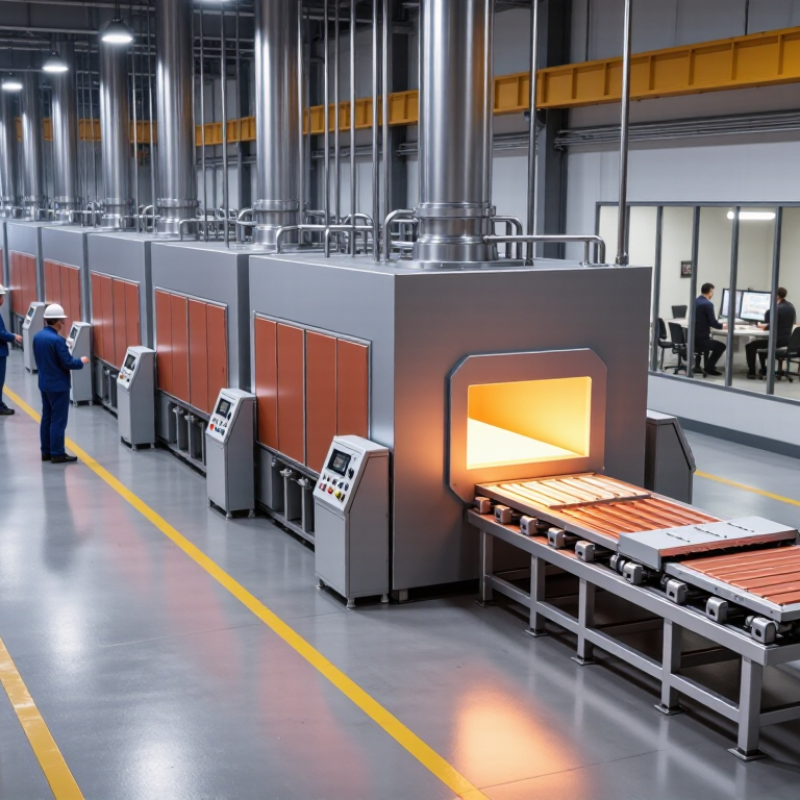
China Top Copper Brazing Furnace Manufacturers?

Copper Brazing Furnaces: Definition and Role in Chinese Industry

A copper brazing furnace heats fitted copper parts and a filler metal until the filler melts and flows into the joint. The base components remain solid. This creates a sealed connection without the concentrated heat of conventional welding. Atmosphere-controlled furnaces can limit oxidation, while suitable process conditions may reduce the need for flux. The exact temperature depends on the filler alloy, component design, and production requirements.

In China’s manufacturing sector, these furnaces support production of heat exchangers, refrigeration tubing, electrical components, and other copper assemblies. A typical line may handle rows of small fittings or larger, more complex parts. Consistent heating matters: uneven temperatures can leave weak joints, excess filler, or visible discoloration. Clean surfaces and close-fitting joints matter just as much as furnace settings. Not glamorous work.

Manufacturers may choose continuous furnaces for steady, high-volume output or batch systems for varied components. The right choice depends on part geometry, output targets, available floor space, and energy use. Still, furnace capacity alone tells an incomplete story. Operators need to monitor temperature profiles and inspect sample joints during production. There is a trade-off: pushing for faster throughput can make process control less forgiving. A practical production plan leaves room for adjustment when materials or part designs change.

Copper Brazing Furnaces: Typical Filler-Metal Temperature Ranges

Brazing furnaces heat copper assemblies to the temperature required by the selected filler metal, while providing controlled, consistent heating for production.

Ranges are approximate reference values in °C, not fixed furnace setpoints. The appropriate cycle depends on the specific filler alloy, base materials, joint design, and process atmosphere.

Key Technologies Used in Copper Brazing Furnace Design

China Top Copper Brazing Furnace Manufacturers?

Key Technologies Used in Copper Brazing Furnace Design

Copper transfers heat quickly, so furnace temperature control needs close attention. A small difference across the heating zone can affect joint strength and appearance. Well-placed thermocouples and regular temperature mapping help reveal uneven areas before production problems grow.

Small changes matter.

Atmosphere control is just as important. Oxygen and moisture can encourage oxide formation on copper surfaces, while a suitable protective or reducing atmosphere supports clean, fluxless joints. Sensors can track oxygen levels and dew point, but readings only help when operators check and maintain them.

Not always.

For continuous production, conveyor speed must match the part’s size, joint design, and heating profile. A test run with thermocouples attached to representative components can show whether the actual workpiece reaches the intended brazing temperature. Cooling also deserves attention: uneven cooling may stress joints or distort thin sections. Even a carefully designed furnace can drift as seals wear or loading patterns change, so process records and periodic checks are practical safeguards. A bright-looking joint alone is not proof of consistent quality.

How to Evaluate Copper Brazing Furnace Manufacturers in China

When evaluating copper brazing furnace manufacturers in China, start with the process, not the catalogue. Ask how the furnace controls temperature uniformity, belt speed, atmosphere, and cooling. Request a recent temperature survey and sample-run records for parts similar to yours. Check whether the data comes from calibrated instruments, and ask how often calibration is repeated. Ask for proof.

The market outlook makes process reliability important. The International Energy Agency’s Global Critical Minerals Outlook 2024 projects total copper demand to rise from about 26 million tonnes in 2023 to 31 million tonnes by 2035 under its Stated Policies Scenario. That projection is not a furnace-quality measure, but it signals sustained pressure on copper processing capacity. During supplier audits, inspect a running line and look for practical details: sensor placement, atmosphere alarms, maintenance access, and traceable production records. Ask who handles installation, operator training, and spare parts after delivery. A polished brochure is not evidence. Even a careful factory visit can miss weak after-sales support, so verify service response times with existing customers. Some buyers focus too heavily on purchase price; that can be a costly blind spot.

Notable Chinese Manufacturers and Their Product Capabilities

Chinese copper brazing furnace manufacturers serve HVAC, automotive, and electrical-component producers. Many offer continuous mesh-belt furnaces for high-volume work, alongside batch systems for varied part sizes. Typical configurations include controlled heating zones, protective-atmosphere delivery, and cooling sections. These features help reduce oxidation and support consistent joint formation.

Capabilities differ by factory. Some suppliers focus on custom furnace layouts, while others provide standard models with options for temperature monitoring and production-line integration. Buyers should request operating-temperature ranges, atmosphere-control details, and documented uniformity test results. Ask how the supplier handles commissioning and spare parts, too. Small details matter.

A useful assessment goes beyond catalogue specifications. Review a sample process using the actual copper alloy, joint design, and filler material. Check weld appearance and repeatability across several runs. Factory audits can reveal assembly quality, calibration practices, and whether testing records are complete. Not every supplier publishes comparable data, and that gap deserves attention. A polished brochure is not proof of stable production. Verify claims with a technical trial before choosing a furnace.

China Top Copper Brazing Furnace Manufacturers? – Notable Chinese Manufacturers and Their Product Capabilities
Furnace Category Typical Configuration Atmosphere Options Suitable Production Key Capabilities to Compare Selection Considerations
Continuous mesh-belt furnace Multi-zone heating and cooling; parts travel continuously on a metal mesh belt. Commonly nitrogen or nitrogen-hydrogen mixtures; atmosphere depends on the process and safety system. High-volume, relatively small components, including selected electrical and automotive parts. Usable belt width, belt-speed range, temperature uniformity, zone control, atmosphere monitoring, and cooling capacity. Confirm that the parts can be supported and conveyed reliably, and that the line can maintain the required production rate.
Continuous pusher furnace Parts or fixtures move through heating zones in batches pushed along a refractory hearth. Controlled atmospheres such as nitrogen-based mixtures may be available, depending on furnace design. Repeated production of compact assemblies and components that can be loaded into fixtures. Load capacity, pusher cycle, fixture design, temperature profile, atmosphere sealing, and loading arrangements. Assess fixture mass and geometry, since they affect heating time, throughput, and temperature consistency.
Continuous roller-hearth furnace Workpieces or fixtures are conveyed through the furnace on driven rollers. Controlled-atmosphere versions are available; the suitable gas depends on the materials and brazing process. Parts suited to stable support on rollers, including some larger or plate-shaped assemblies. Roller material and spacing, conveyor speed, effective width, temperature uniformity, and cooling arrangement. Check part stability and contact points to reduce the risk of movement or marking during transport.
Batch atmosphere furnace Stationary chamber with batch loading; heating and cooling follow a programmed cycle. Depending on the model, options can include nitrogen-based atmospheres or other controlled gases. Low-to-medium volume, varied part sizes, and production requiring flexible batch scheduling. Chamber dimensions, usable load, gas-flow distribution, temperature uniformity, recipe control, and cycle time. Request temperature-uniformity data for the intended load and confirm that the chamber accommodates the fixtures.
Vacuum brazing furnace Sealed chamber evacuated during processing; heating method and chamber layout vary by model. Vacuum processing; some systems also support partial-pressure or gas-backfill steps. Assemblies for which vacuum processing is suitable, including applications that require controlled surface conditions. Hot-zone size, maximum load, vacuum performance, temperature uniformity, cooling rate, and available process controls. Review base-material and filler-metal compatibility, cleanliness requirements, and the complete cycle time.
Induction brazing system Induction coil heats a selected region; systems may be manual, semi-automatic, or integrated into a production line. Often processed in air with suitable flux, or with shielding arrangements where the application requires them. Localized brazing, repeatable joints, and components suited to coil-based heating. Power and frequency range, coil design, part-positioning repeatability, cycle control, and automation options. Validate the coil and heating recipe using representative parts, joint geometry, and filler metal.
This is a product-capability overview, not a ranking or a list of verified individual manufacturers. Furnace availability and specifications vary by supplier and model; confirm temperature range, uniformity, atmosphere controls, safety provisions, and throughput directly with the manufacturer.

Applications and Factors for Choosing a Furnace Manufacturer

Copper brazing furnaces serve heat exchangers, refrigeration coils, electrical components, and pipe assemblies. They heat joined parts while filler metal flows into narrow gaps. Copper moves heat quickly, so uneven loading can affect joint quality. Small changes matter.

The right furnace depends on part size, production volume, joint design, and filler alloy. Continuous furnaces suit steady, high-volume lines; batch systems offer more flexibility for varied components. Ask how the manufacturer verifies temperature uniformity across the working zone. Request sample process records, control-system details, and a trial using parts similar to yours. A shiny surface alone proves little.

Atmosphere control also deserves careful review. Depending on the application, a manufacturer may offer a controlled-atmosphere or vacuum system. Check how the equipment manages gas flow, temperature monitoring, alarms, and routine maintenance. Look for clear installation guidance and access to trained service technicians. Not just speed. Ask about spare parts, operator training, and documented commissioning. Some sales claims sound precise, yet omit real production conditions. That should prompt a closer look. Compare total operating costs, not only purchase price, and confirm the furnace can handle future product changes.