

Why Choose a Quartz Reactor for Chemical Processing?
Quartz Reactor: Why Material Choice Matters in Chemical Processing
Chemical processing demands more than heat resistance. It requires stable surfaces, predictable contamination control, and reliable performance under repeated thermal stress. A Quartz Reactor addresses these needs through high-purity fused quartz, strong chemical resistance, and excellent visibility during operation.
It remains transparent.
That detail matters. Operators can observe color changes, precipitation, bubbles, or uneven mixing without opening the vessel. Quartz also tolerates many acids, solvents, and high-temperature reactions better than ordinary glass or metal. This helps protect product purity and reduces unwanted catalytic reactions from vessel walls.
Glass scientist Dr. Joachim Deubener has described glass as “not simply a frozen liquid.” His observation supports a practical point: quartz performance depends on composition, thermal history, surface condition, and manufacturing quality. A reactor may look identical to another unit, yet behave differently during temperature cycling.
The right Quartz Reactor can support laboratory synthesis, semiconductor processing, nanomaterial production, and controlled chemical research. Its low expansion coefficient helps reduce cracking during rapid heating and cooling. Its smooth interior also simplifies cleaning and limits residue retention.
Still, quartz is not perfect. It can suffer from mechanical shock, surface damage, and failure under unsuitable pressure conditions. Engineers must match wall thickness, joint design, heating rate, and chemical exposure carefully. I have seen specifications focus heavily on purity while overlooking handling risks. That is a mistake worth reconsidering.
A reliable selection process connects material data with real operating conditions. This approach improves safety, repeatability, and long-term process confidence.
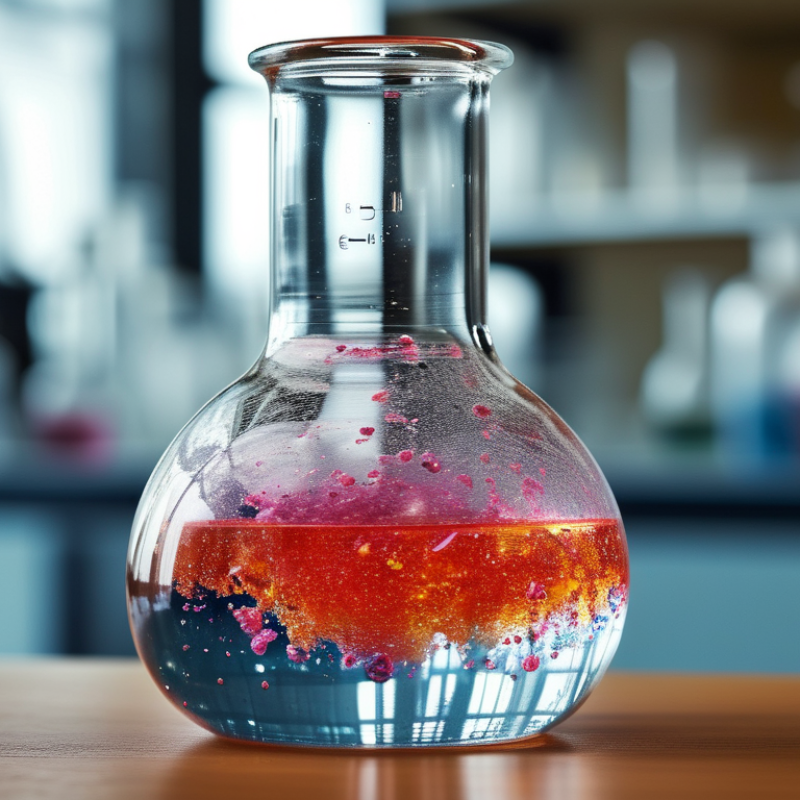
Quartz Purity Above 99.99%: Minimizing Chemical Contamination
Why Choose a Quartz Reactor for Chemical Processing?
Quartz Purity Above 99.99%: Minimizing Chemical Contamination
In chemical processing, quartz purity above 99.99% helps reduce unwanted ions, metals, and particles entering the reaction. This matters when working with sensitive solutions or high-temperature processes. A clean reactor supports more reliable results.
From practical handling, contamination often begins at small contact points. Residue can remain around joints, covers, or drainage areas. High-purity quartz cannot correct poor cleaning habits. Operators should inspect the inner wall under strong light and record cleaning conditions between batches.
Quartz also withstands many corrosive chemicals and repeated heating cycles. Its smooth surface makes deposits easier to observe. However, thermal shock remains a concern. Rapid cooling may create stress, even when the vessel looks undamaged. This is easy to overlook.
Tips: Request a material certificate and impurity analysis for each production lot. Check wall clarity, joint condition, and surface scratches before use. Use controlled heating and cooling rates. Keep cleaning records.
No reactor is perfect.
A careful process still needs review. If test results drift, examine handling, water quality, cleaning agents, and storage conditions—not only the quartz itself.
Why Choose a Quartz Reactor for Chemical Processing? — Quartz Purity Above 99.99%: Minimizing Chemical Contamination
Technical comparison of high-purity fused quartz with commonly used reactor materials. Values are typical reference ranges and may vary with grade, fabrication method, temperature, and chemical environment.
| Performance Dimension | High-Purity Fused Quartz | Common Alternative Materials | Chemical-Processing Impact |
|---|---|---|---|
| Material purity | Typically above 99.99% SiO₂ for high-purity grades, with controlled trace-metal content. | Borosilicate glass contains multiple oxide components; metals and other constituents depend on formulation. | Reduces the risk of introducing unwanted ions or particles into high-purity chemical batches. |
| Chemical resistance | Excellent resistance to many acids, water, and oxidizing environments; hydrofluoric acid and hot concentrated alkalis attack quartz. | Resistance varies widely. Some glasses and ceramics are more vulnerable to specific acids, alkalis, or thermal conditions. | Supports cleaner contact surfaces, but the reagent compatibility chart must be checked before use. |
| Maximum service temperature | Softening point is approximately 1,680°C; practical continuous-use limits are lower and depend on load, geometry, and atmosphere. | Borosilicate glass typically has a lower softening range; metals may require alloy-specific temperature limits. | Provides a broad operating window for high-temperature synthesis, calcination, and thermal treatment. |
| Thermal expansion | Very low coefficient of thermal expansion, approximately 0.5 × 10⁻⁶ K⁻¹ near room temperature. | Borosilicate glass is typically around 3.3 × 10⁻⁶ K⁻¹; many metals expand substantially more. | Improves resistance to thermal shock during controlled heating and cooling cycles. |
| Thermal shock resistance | High, when the component is properly designed and free from scratches, chips, and excessive mechanical stress. | Materials with higher thermal expansion generally experience greater thermal stress during rapid temperature changes. | Helps reduce cracking and particulate generation during process transitions. |
| Metal-ion contamination | Low contribution from the reactor wall when high-purity quartz is correctly cleaned and handled. | Metal reactors can release alloying elements through corrosion, wear, or surface damage; coatings may introduce additional failure modes. | Useful for trace-sensitive applications such as semiconductor, photovoltaic, analytical, and specialty chemical processing. |
| Surface behavior | Smooth, nonporous surface that can be cleaned using validated procedures; surface condition depends on fabrication and use. | Porous ceramics may retain residues, while rough or damaged metal surfaces can increase nucleation and particle retention. | Supports repeatable cleaning and reduces carryover between batches when appropriate protocols are followed. |
| Transparency and observation | High optical transmission from the ultraviolet into the visible and near-infrared regions, depending on grade and thickness. | Metals are opaque; other glasses may absorb more strongly in selected ultraviolet wavelengths. | Allows visual monitoring and can support photochemical or UV-assisted processes. |
| Electrical insulation | Excellent electrical insulation over a wide temperature range, subject to atmosphere and temperature conditions. | Metals are electrically conductive; ceramic insulation performance varies by composition and temperature. | Suitable for electrically isolated vessels, heating assemblies, probes, and process fixtures. |
| Key limitations | Brittle; susceptible to impact and surface damage; attacked by hydrofluoric acid and hot concentrated alkaline solutions. | Metals may corrode or contaminate; ceramics may be porous or brittle; glass may have lower thermal-shock resistance. | Material selection should consider mechanical loading, chemical compatibility, cleaning method, pressure, and thermal cycling. |