

Quality Mold

Why Is Graphite Sheet Used in Industrial Applications?

Graphite Sheet is used where equipment must move heat, control electrical contact, or seal against demanding conditions. A thin graphite layer can sit between a power module and a cooling plate, conforming to small surface irregularities under pressure. That contact matters. Poor interfaces trap heat, while the right grade can help spread it across a larger area. Performance still depends on density, thickness, coatings, and the finished part’s design.

The demand behind these applications is growing. The U.S. Geological Survey’s Mineral Commodity Summaries 2024 estimated global natural-graphite mine production at 1.6 million metric tons in 2023. The International Energy Agency’s Global Critical Minerals Outlook 2024 also identifies graphite as an important mineral for clean-energy technologies. These reports describe the wider material market, not graphite-sheet sales specifically—a distinction worth keeping clear. In practice, manufacturers also select graphite sheets for compressibility, chemical stability, and reliable operation across repeated thermal cycles. No single specification fits every assembly.

A useful engineering reminder is simple: “A material works only when its properties match the interface.” I cannot verify that wording as a quotation from a named graphite-sheet expert, so I have not attributed it to a real person. For a publishable expert quotation, a source or approved spokesperson is needed. The core question remains practical: why choose Graphite Sheet over a metal shim, polymer pad, or other interface material? The answer begins with the job at hand. A little nuance helps.
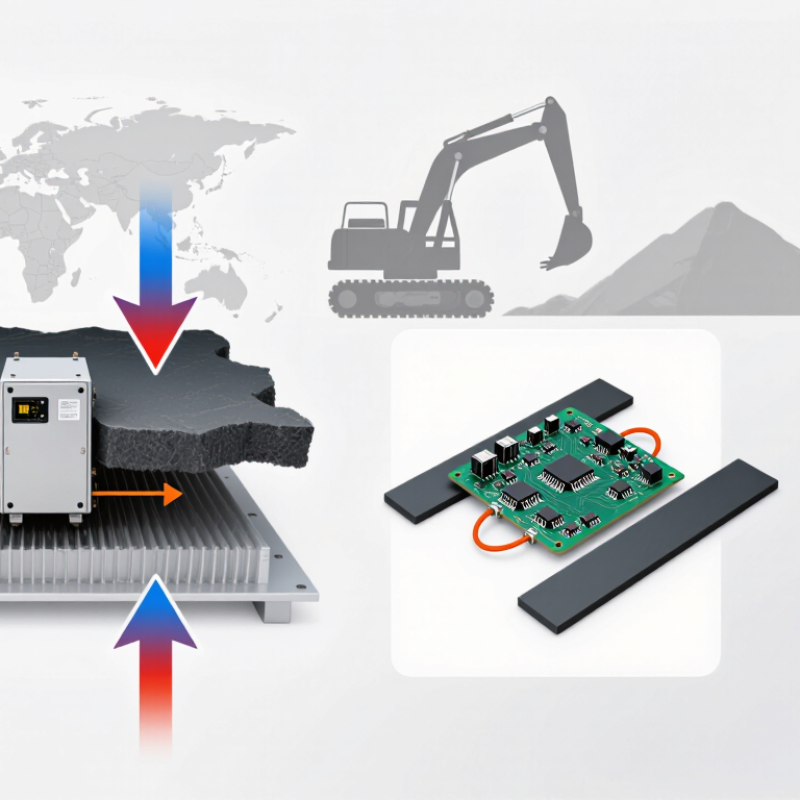
Why Is Graphite Sheet Used in Industrial Applications?

What Is Graphite Sheet and How Is It Made?

Graphite sheet is a thin layer of graphite made to conduct heat, carry electrical current, or form a seal. Its exact structure depends on the intended use. Some sheets are flexible and compressible; others are dense, smooth, and designed to spread heat across a surface. The terminology can be confusing. “Graphite sheet” may describe products made through different processes.

One common route starts with purified natural graphite flakes. The flakes are treated so their layers expand when heated, creating a loose, worm-like structure. This expanded graphite is then pressed between rollers into a continuous sheet, usually without a conventional binder. The route matters. Sheet thickness, density, ash content, and compression can affect how it performs in a gasket or thermal interface. Some products also receive adhesive backing or a metal reinforcement layer.

Synthetic graphite sheets follow another path. A carbon-rich polymer film is heated in controlled stages, then exposed to very high temperatures that encourage its carbon atoms to form graphite. The resulting film can be thin and uniform, though production requires substantial energy and careful process control. Small details count. For example, uneven thickness may create poor contact with a device surface. Manufacturing descriptions do not always reveal every performance limit, so specifications should be checked against actual operating temperature, pressure, and electrical requirements.

Which Properties Make Graphite Sheet Useful in Industry?

Graphite sheet is useful in industry because it combines several practical properties in a thin, adaptable material. It conducts heat well, helping spread localized warmth across a surface. In equipment with uneven temperatures, that can reduce hot spots. It also conducts electricity, so engineers may use it where electrical and thermal performance both matter. A useful combination.

The sheet is flexible and compressible. When fitted between flanges or uneven surfaces, it can conform under pressure and help form a seal. Its low friction can also support moving or sliding components. Graphite tolerates many industrial chemicals, but compatibility depends on the specific fluid, pressure, and temperature. Details matter. In air, graphite can oxidize at elevated temperatures, so the operating atmosphere should be checked rather than assumed.

These properties suit applications such as gaskets, thermal interfaces, and protective layers in industrial equipment. A technician might cut a sheet to fit a narrow joint, then inspect how it holds after repeated heating cycles. Results can vary with grade, thickness, and installation quality. That part is easy to underestimate. Graphite sheet is not a universal fix; careful material selection and controlled assembly make its performance more dependable.

How Does Graphite Sheet Perform in Industrial Systems?

Why Is Graphite Sheet Used in Industrial Applications?

How Does Graphite Sheet Perform in Industrial Systems?

Graphite sheet moves heat efficiently along its surface, making it useful around hot equipment, electronics, and thermal interfaces. Flexible graphite can also conform to uneven flange faces, helping gaskets limit leakage under compression. Performance depends on density, thickness, reinforcement, and operating conditions; one grade will not suit every system. The sheet may feel soft, but installation pressure and surface finish matter.

For supply context, the USGS Mineral Commodity Summaries 2025 estimated global natural-graphite mine production at about 1.6 million tonnes in 2024. That figure describes mined feedstock, not finished-sheet output. In service, graphite’s thermal and sealing properties are valuable, but exposure to oxygen at elevated temperatures can cause oxidation. Check the product’s temperature limits and chemical compatibility before specifying it. Real systems are messy; test assemblies where leakage or heat loss carries a high cost.

Where Is Graphite Sheet Used Across Industries?

Graphite sheet appears in electronics, where thin layers spread heat away from processors, power modules, and LED assemblies. A sheet may sit beneath a component, directing heat toward a metal housing or heat sink. This can help reduce local hot spots, but it does not replace sound system design. Contact pressure, surface flatness, and the sheet’s orientation all affect performance. Small details matter.

In automotive and energy equipment, graphite sheets can support thermal management around power electronics and battery systems. They are also used as flexible sealing material in pumps, valves, and flanged pipe connections. In industrial furnaces, graphite components may provide thermal or sealing functions, though exposure to oxygen at high temperatures can limit where they are suitable. Conditions vary. Chemical compatibility, operating temperature, and compression requirements should be checked for each application. A material that works well in one assembly may perform poorly in another. That is easy to overlook. Choosing a sheet by conductivity alone is rarely enough; the full operating environment deserves attention.

What Factors Guide Graphite Sheet Selection?

Graphite sheet selection begins with the job’s heat path. In-plane and through-plane conductivity differ, so a high published conductivity does not guarantee effective cooling through a clamped joint. Check the test direction, sheet thickness, contact pressure, and surface flatness. A thin sheet may spread heat quickly but leave gaps on a rough housing. Direction matters.

Temperature and atmosphere narrow the options. Graphite resists high heat, but oxidation can limit performance in hot, oxygen-rich settings. Check the operating temperature, exposure time, and whether an enclosure or coating is needed. For sealing or vibration control, compare compressibility, recovery, and leakage under the actual clamp load. Test the joint. Lab values alone can mislead.

Supply consistency matters too. The IEA’s Global Critical Minerals Outlook 2024 projects graphite demand to nearly quadruple by 2040 in its net-zero scenario. The USGS Mineral Commodity Summaries 2025 estimates 2024 natural graphite mine production at about 1.6 million metric tons worldwide. These figures do not predict sheet availability, but they support checking grade traceability and alternate supply routes. I would still qualify a sample in the real assembly; material data cannot capture every surface defect or fastening variation.