
Quality Mold

What Is PP Injection Molding and How Does It Work?

What Is PP Injection Molding and How Does It Work?

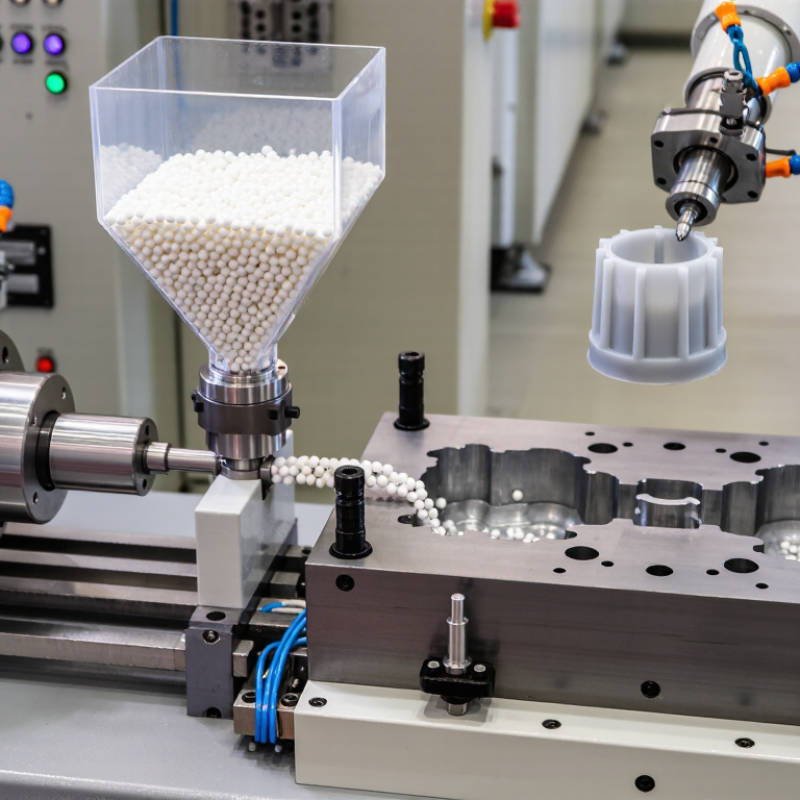
PP injection molding is a practical manufacturing method for producing strong, lightweight plastic parts. It uses polypropylene pellets, heat, pressure, and a shaped mold. The process begins when dry or prepared PP pellets enter a heated barrel. A rotating screw melts the material into a controlled, thick flow. Then, the screw pushes the melt into a closed mold cavity. Cooling follows. Finally, the mold opens and ejects the finished part.

Small details matter.

John Bozzelli, a respected injection-molding consultant, is often associated with the practical reminder, “The process makes the part, not the machine.” This principle explains why machine size alone cannot guarantee quality. Operators must balance melt temperature, injection speed, holding pressure, cooling time, and mold design. Poor balance may cause warping, sink marks, short shots, or visible flow lines. A part can look acceptable but still fail dimensional checks. That possibility deserves attention.

This guide will examine PP material behavior, machine components, mold structure, processing stages, and common defects. It will also consider cycle time, production efficiency, and design choices that reduce waste. PP offers useful chemical resistance and fatigue performance, yet it is not perfect for every application. Its shrinkage can complicate tight tolerances. Its surface appearance may also disappoint without careful tooling. These limitations are easy to overlook. Real production often requires several trials, measurements, and adjustments before the process becomes stable. That is where practical experience becomes valuable.
What Is PP Injection Molding and How Does It Work?

PP Injection Molding: Definition, Properties, and Common Uses

What Is PP Injection Molding and How Does It Work?

PP injection molding shapes polypropylene pellets into precise plastic parts. The process begins when heated pellets melt inside a metal barrel. A screw then pushes the material into a closed mold under controlled pressure. After cooling, the mold opens and ejector pins release the finished component.

Small details matter.

Polypropylene offers low density, good chemical resistance, and useful fatigue strength. It can bend repeatedly without breaking, which suits living hinges, storage lids, caps, and household containers. The material also resists moisture and many cleaning agents. However, heat exposure can cause warping, especially when wall thickness changes suddenly. Careful mold design remains essential.

In production, technicians adjust melt temperature, injection speed, holding pressure, and cooling time.

These settings influence surface quality, shrinkage, and dimensional accuracy. A thin rib may fill quickly, while a thick section can retain heat and sink inward. The first trial rarely performs perfectly. Engineers may need to modify gates, vents, or cooling channels after inspecting sample parts. PP also has a relatively low surface energy, so printing or bonding may require surface treatment. Its recyclability sounds simple, but actual recovery depends on local sorting and processing systems.

PP Material Selection and Preparation Before Molding

What Is PP Injection Molding and How Does It Work?

PP material selection determines much of the final part’s strength, appearance, and dimensional stability. Polypropylene homopolymer suits rigid containers and structural parts. Copolymer grades offer better impact resistance, especially at lower temperatures. Fillers can improve stiffness, but they may increase warpage or reduce surface quality. Melt flow rate also matters. A higher value usually fills thin sections more easily, while a lower value can support stronger, thicker parts. It sounds simple. It is not.

Before molding, technicians should check the resin’s grade, lot information, and storage condition. PP absorbs little moisture, but wet, dusty, or mixed material can still create defects. Sealed storage helps protect consistency. Drying is not always necessary, yet damp or contaminated pellets may need controlled drying based on supplier data. Recycled content requires extra attention because its flow and color can vary. A small sample test is safer than trusting appearance alone.

Preparation also includes accurate blending of resin, colorant, and additives. Poor mixing can produce streaks, weak zones, or uneven color. Operators should set barrel temperatures within the grade’s recommended range, often around 180–230°C. Excessive heat may cause degradation, while insufficient heat can leave unmelted pellets. Mold temperature, injection speed, and cooling time should be adjusted during trials. The first setting is rarely perfect. Inspect short shots, sink marks, flash, and warpage, then record each change for repeatable production.

What Is PP Injection Molding and How Does It Work? - PP Material Selection and Preparation Before Molding

Data Dimension Typical PP Selection or Preparation Data Why It Matters in Injection Molding
Base Polymer Polypropylene, a semi-crystalline thermoplastic with a melting range commonly around 160–170°C (320–338°F). Its low density, chemical resistance, fatigue resistance, and relatively low processing temperature make it suitable for high-volume molded parts.
Material Grade by Flow Select a low-, medium-, or high-flow grade according to part thickness, flow length, gate design, and filling requirements. Melt flow rate is commonly specified in g/10 min. Higher-flow grades fill thin or complex sections more easily, while lower-flow grades may provide better melt strength and mechanical performance.
Melt Flow Rate Test Basis PP melt flow rate is commonly measured at 230°C under a 2.16 kg load, although the exact test condition should be confirmed on the material data sheet. Melt flow values are only comparable when the test temperature and applied load are the same.
Reinforcement and Fillers Unfilled PP is used for light, ductile parts. Mineral-filled or glass-fiber-reinforced PP can improve stiffness, dimensional stability, or strength. Fillers may increase warpage risk, alter shrinkage, reduce impact resistance, and require different processing settings.
Impact Modification Impact-modified PP grades may be selected when the molded part must withstand drops, low temperatures, or sudden loads. Improved toughness can involve a trade-off with stiffness, surface appearance, or flow behavior.
Color and Additives Color concentrates, UV stabilizers, nucleating agents, flame retardants, antistatic additives, or processing aids may be used when required by the application. Additives can affect flow, cycle time, surface finish, weld-line strength, shrinkage, and long-term performance.
Moisture Condition PP normally has low moisture absorption and often does not require routine pre-drying. Drying may still be needed after exposure to high humidity or when additives, contamination, or condensation are present. Although PP is not strongly hygroscopic, surface moisture can cause splay, bubbles, streaks, or inconsistent appearance.
Optional Drying Guidance When drying is required, a common starting point is approximately 80°C for 2–4 hours, followed by verification against the supplier’s technical data sheet. Excessive heat or prolonged drying can increase oxidation, discoloration, or material degradation.
Pellet Inspection Check pellets for dust, foreign particles, moisture, mixed colors, agglomerates, and signs of oxidation or contamination. Clean and consistent feedstock helps prevent black specks, blocked filters, surface defects, and unstable molding conditions.
Storage Before Molding Keep sealed material in a clean, dry area at a stable temperature. Allow cold bags to reach room temperature before opening to reduce condensation. Proper storage protects material quality and reduces moisture-related visual defects.
Typical Melt Temperature A common initial processing range is approximately 190–230°C (374–446°F), adjusted according to grade, flow length, residence time, and part requirements. Too low a temperature may cause short shots or weld lines, while excessive temperature can increase degradation, flash, or odor.
Mold Temperature A typical starting range is approximately 20–60°C (68–140°F), with higher temperatures often used when surface appearance, weld-line quality, or dimensional control is important. Mold temperature affects crystallization, cycle time, gloss, shrinkage, and the final balance of stiffness and toughness.
Expected Molding Shrinkage Unfilled PP commonly shows approximately 1.0–2.5% linear molding shrinkage; filled grades can show lower or direction-dependent shrinkage. Shrinkage must be considered in mold design, tolerancing, rib layout, cooling, and flow orientation.
Regrind Use Clean, identified PP regrind may be blended with virgin material when product specifications permit. A controlled and validated blend ratio should be established for each application. Repeated thermal history can change color, flow, odor, impact performance, and consistency.
Material Traceability Record the polymer type, grade, lot, color, additive package, drying history, regrind ratio, and processing conditions. Traceability supports defect investigation, process repeatability, and quality control.

Note: Processing ranges are general starting points. Final material preparation and molding settings should be confirmed with the applicable technical data sheet and validated through trial molding.

The Step-by-Step Process of PP Injection Molding

What Is PP Injection Molding and How Does It Work?

The Step-by-Step Process of PP Injection Molding

PP injection molding converts polypropylene pellets into precise plastic parts. The operator loads clean pellets into the hopper. A rotating screw then carries them through a heated barrel. Heat and friction soften the material into a uniform melt. Meanwhile, the clamping unit closes the mold with controlled force. Mold temperature, melt temperature, and screw speed must match the selected PP grade.

The screw moves forward and injects the molten PP into the cavity. Pressure fills narrow ribs, corners, and other detailed areas. A holding stage follows injection. It adds pressure while the material shrinks during early cooling. The part then remains inside the mold until it becomes stable enough for ejection. Ejector pins release it carefully. The machine resets for the next cycle.

Small details affect the final result. Poor venting can create burn marks or incomplete filling. Excessive pressure may leave flash along the parting line. Cooling too quickly can increase warpage, especially around thick sections. In practice, the first trial is rarely perfect. A technician may adjust packing time, cooling duration, or mold temperature after measuring real parts. Inspectors check dimensions, surface appearance, weight, and functional fit. PP usually handles moisture well, but dirty pellets or an unstable process still cause defects. Consistent records make troubleshooting more reliable.

Key Machine Components and Their Functions

What Is PP Injection Molding and How Does It Work?

PP injection molding converts polypropylene pellets into precise plastic parts through controlled heat and pressure. The process starts at the hopper, which stores dry, clean material above the injection unit. A feed throat guides pellets into the heated barrel. Moisture is usually less troublesome with PP than with some engineering plastics, but poor storage can still create defects.

Inside the barrel, a rotating screw performs three jobs: conveying, melting, and mixing the polymer. Its flights push material forward while heater bands raise the temperature. A check ring helps prevent melted PP from flowing backward during injection. The nozzle then directs the melt into the mold. Small temperature changes matter. Excessive heat may damage the material, while insufficient heat can leave short shots or visible weld lines.

The mold has two main sides, supported by the clamping unit. One side remains fixed, while the moving platen opens and closes the mold. Clamping force keeps the mold shut during injection. Cooling channels remove heat and control shrinkage before ejection pins release the part. Sensors monitor pressure, temperature, position, and cycle time. These readings help technicians adjust the machine instead of guessing. A balanced cycle is the goal, though real production is rarely perfect. Warpage may still appear when cooling is uneven or the mold design needs revision. The machine is only one part of the result. Material handling, tooling accuracy, and operator judgment matter just as much.

Quality Factors, Benefits, and Limitations of PP Molding

PP injection molding starts with pellets being heated, mixed, and pushed into a closed mold. The polymer cools, hardens, and releases as a finished part. Polypropylene is widely selected because it is light, chemically resistant, and suitable for living hinges. A 2024 Grand View Research report valued the global polypropylene market at approximately 126 billion US dollars in 2023. That scale reflects strong demand, but it does not guarantee part quality.

Quality depends on melt temperature, mold temperature, injection speed, packing pressure, and cooling balance. Poor control can create sink marks, weld lines, flash, or warpage. PP also shrinks noticeably, so mold designers must allow for dimensional change. In production trials, one setting rarely works across every cavity. I would measure weight, dimensions, appearance, and hinge performance after conditioning. A 2024 PlasticsEurope report estimated global plastics production at about 414 million tonnes in 2023, increasing pressure for efficient material use. Still, PP has limitations. It can suffer from ultraviolet exposure, creep under constant load, and reduced impact strength in cold conditions. Bonding and painting are also difficult without surface treatment.

Tips: Keep resin clean and dry, although PP normally needs less drying than moisture-sensitive polymers. Use balanced cooling channels and inspect the first-off parts carefully. Do not judge quality by appearance alone. A glossy surface may hide internal stress. Cost savings can also become false savings when unstable molding creates scrap, rework, or early failure.

What Is PP Injection Molding and How Does It Work?

Typical processing temperatures are important quality factors in polypropylene (PP) injection molding. Keeping the melt, nozzle, and mold within suitable ranges helps reduce short shots, warpage, weld lines, and dimensional variation.

The ranges shown are generalized engineering values for common PP injection-molding grades. Actual settings vary with material grade, part thickness, mold design, machine performance, and required surface quality. PP is valued for its low density, chemical resistance, fatigue resistance, and relatively low cost, but it can also show shrinkage, warpage, and sensitivity to processing conditions.