

2026 Top Injection Molding Mold Types for Global Buyers
Injection molding remains a central process for producing consistent plastic parts at scale, from appliance housings to small medical-device components. The mold, however, is not a generic accessory. Its design affects cycle time, part quality, maintenance needs, and the cost of every production run. For global buyers, choosing the right injection molding mold means matching its construction and layout to the part, material, expected volume, and available press.
Grand View Research estimated the global injection molded plastics market at USD 369.4 billion in 2023, with a projected 4.9% compound annual growth rate from 2024 to 2030. That estimate describes molded plastics, not mold-tool sales. The distinction matters. Still, it signals the scale of demand—and the value of making sound tooling decisions. A market forecast cannot tell a buyer whether a two-plate mold, three-plate mold, hot-runner system, or family mold fits a specific project.
This guide compares common mold types through practical buying considerations: part geometry, expected output, material behavior, tooling complexity, and service access. A thin-walled enclosure and a thick connector do not ask the same things of a mold. Nor do they share the same tolerance for downtime. Small details matter. Some estimates also hide uncertainty; early design assumptions can change after sampling. Buyers should verify specifications with qualified mold makers and review trial results before committing to production.
Core Components and Operating Principles of Injection Molding Molds
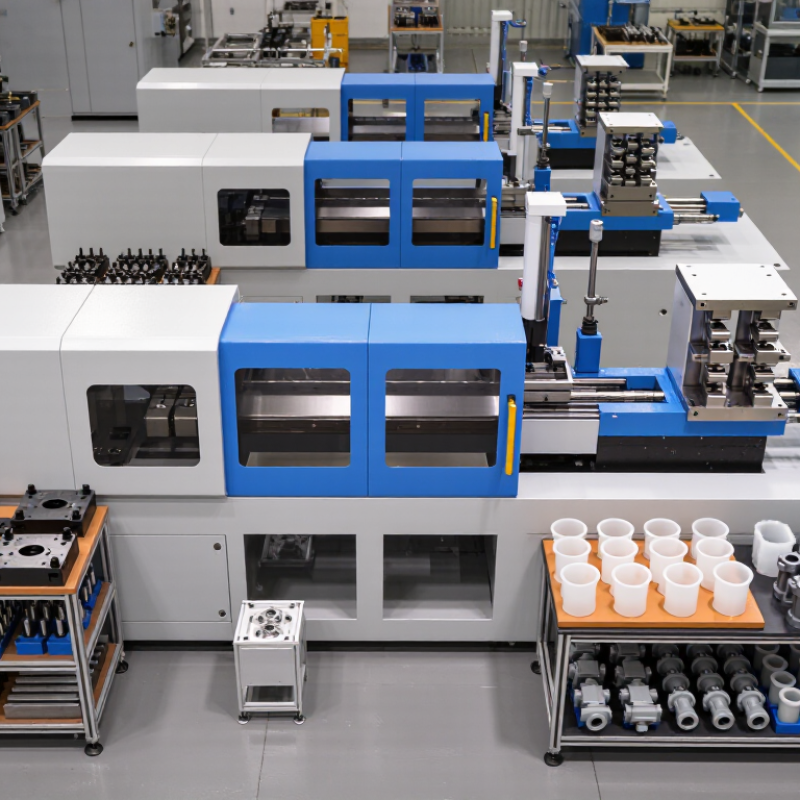
Injection molding molds are precision systems, not simple metal boxes. Grand View Research valued the global injection molded plastics market at about USD 198.2 billion in 2023, with growth expected through 2030. This scale increases pressure on mold accuracy, cooling efficiency, and service life.
The mold base supports two main sections: the core and cavity. Together, they form the product shape. Guide pins align both halves during closing. Runners carry molten polymer from the sprue to each gate. Cooling channels remove heat through controlled water flow. Ejector pins then push the solidified part from the core. Small vents release trapped air near the filling front. Without them, burn marks or short shots may appear.
Two-plate molds suit many standard parts, while three-plate designs offer more flexible gate placement. Hot-runner molds reduce material waste by keeping polymer molten inside heated channels. Insert molds combine different materials or components, but alignment becomes more demanding. Stack molds can increase output within one machine cycle, although maintenance access may suffer. A 2024 industry analysis by MarketsandMarkets projected continued growth in injection molding equipment, driven by automotive, medical, and consumer applications. Still, reports cannot replace trial data. A mold may pass simulation yet show uneven cooling beside a thick rib. That is where practical inspection matters. Sometimes, a simpler gate works better.
2026 Top Injection Molding Mold Types for Global Buyers
Core Components and Operating Principles of Injection Molding Molds
Common Mold Types by Cavity Count and Plate Configuration
For 2026 global buyers, cavity count remains a practical starting point for mold selection. Grand View Research valued the global injection-molded plastics market at approximately USD 262.5 billion in 2023. Demand is growing, but higher output does not automatically justify more cavities. Single-cavity molds suit prototypes, medical validation, and short production runs. They offer simpler filling control and lower initial tooling risk. Multi-cavity molds improve output, yet they require balanced runners, stronger cooling, and tighter process control. More cavities mean more responsibility.
Two-plate molds remain widely used because their construction is relatively simple and maintenance is accessible. They work well for many parts with conventional side ejection. Three-plate molds create a separate runner plane. This can improve gate placement and reduce visible gate marks, but the mold becomes more complex. Stack molds multiply production surfaces without doubling press capacity. They can be valuable when floor space and cycle time matter. However, stack height, mold balance, and machine daylight must be checked carefully.
Family molds produce different components together. They may reduce tooling investment, but uneven part weights can create filling problems. PlasticsEurope reported global plastics production of about 413.8 million tonnes in 2023, showing the scale behind continued tooling demand. Still, industry averages cannot replace part-specific trials. A smaller two-plate mold may outperform a larger multi-cavity design when quality variation is costly. That choice is not always obvious. Engineers should compare annual volume, resin behavior, press capacity, cooling time, and future design changes before approving the cavity layout.
2026 Top Injection Molding Mold Types for Global Buyers - Common Mold Types by Cavity Count and Plate Configuration
| Mold Type | Typical Cavity Count | Plate Configuration | Runner and Part Removal | Typical Advantages | Common Applications | Key Selection Consideration |
|---|---|---|---|---|---|---|
| Single-cavity, two-plate mold | 1 cavity | Two main mold halves; one primary parting line | Can use a cold runner or a hot runner; the part and runner are generally removed at the parting line. | Relatively simple tooling layout; suitable for large parts, lower production volumes, or products requiring independent process control. | Large housings, covers, appliance components, and development or pilot production parts. | Cycle time and machine capacity should be assessed against the required output and part size. |
| Multi-cavity, two-plate mold | Common layouts include 2, 4, 8, or more cavities, subject to part and machine constraints. | Two main mold halves; one primary parting line | Cold-runner or hot-runner systems are both used; ejection is typically arranged at the parting line. | Produces multiple copies of the same part in one molding cycle; can improve output per cycle. | Closures, small containers, fittings, clips, and other repeatable parts with consistent geometry. | Confirm cavity balance, filling consistency, cooling, clamp force, and the available platen area. |
| Family mold | Usually multiple cavities for two or more different part components | Often two-plate; plate arrangement depends on the parting and ejection design. | Runner layout must account for different part shapes and filling requirements; hot or cold runners may be used. | Can mold related components in the same cycle, potentially reducing the number of separate tools. | Matched component sets, such as related housing pieces or parts used together in one assembly. | Different component sizes or flow paths can make balanced filling and equal production quantities difficult. |
| Three-plate mold | Single-cavity or multi-cavity layouts | Three principal plate sections create an additional parting plane. | Often used with a cold runner that separates from the molded parts during mold opening; automatic separation depends on the design. | Can provide point gating and separate runner removal without requiring the runner to remain attached to the part. | Small precision parts and multi-cavity products where gate location or runner separation is important. | Additional plates and opening sequence increase design and maintenance complexity compared with a basic two-plate mold. |
| Hot-runner mold | Single-cavity or multi-cavity layouts | Commonly built as a two-plate or three-plate mold, with a heated runner manifold and nozzles. | Runner material is kept molten in the heated system, so a conventional solid runner is generally not ejected with each shot. | Can reduce runner scrap and may support shorter cycles, depending on the part and process. | High-volume production of caps, closures, housings, and other parts where runner reduction is valuable. | Requires suitable temperature control and maintenance; material sensitivity, color changes, and resin behavior matter. |
| Stack mold | Multiple parting levels; matched cavity layouts are arranged across the stack. | Two or more mold parting levels stacked along the opening direction. | May use cold or hot runner arrangements; mold opening and ejection are more complex than in a conventional single-level mold. | Can produce parts on more than one parting level per cycle, increasing output without simply multiplying the mold’s projected area. | High-volume, relatively flat parts such as packaging components, lids, and panels. | Requires a compatible machine and careful evaluation of mold height, opening stroke, clamp force, balance, and service access. |
| Unscrewing or threaded-part mold | Single-cavity or multi-cavity layouts | Often based on a two-plate layout, with mechanisms adapted to release internal or external threads. | Threaded features are released by rotating cores, collapsible cores, or other suitable mechanisms before ejection. | Can mold functional threads directly into the part and avoid secondary thread-forming operations in suitable designs. | Threaded caps, closures, fittings, and components with molded screw features. | Thread geometry, resin shrinkage, cycle time, and mechanism maintenance should be considered during tool design. |
Cavity count and plate configuration are separate design choices: a mold can be single-cavity or multi-cavity and may use different plate, runner, and ejection arrangements. The appropriate configuration depends on part geometry, resin, production volume, machine capacity, and quality requirements.
Specialized Molds for Complex Parts and Production Needs
Complex molded parts need more than a standard cavity. The mold must suit the part’s geometry, material, and expected production volume. For a housing with two colors or soft-touch sections, a two-shot mold can form both materials in one coordinated cycle. Insert molds capture metal components, such as threaded bushings, inside the plastic part. Placement must be consistent. Small details matter.
Undercuts may call for slides, lifters, or collapsible cores. These mechanisms release features that would otherwise trap the part, but they add moving components and maintenance needs. Unscrewing molds can form threaded openings directly, while stack molds increase output per machine cycle for suitable parts. More cavities are not automatically better. Cooling balance, part size, and cycle stability still matter.
The right choice should come from part drawings, resin data, and realistic production targets. Mold-flow analysis can help identify filling or cooling concerns before steel is cut, though its results depend on sound inputs. A prototype or molding trial can expose issues that look minor on screen, like a sink mark near a thick boss. Teams sometimes overlook maintenance access when chasing a compact tool layout. That deserves a second look. The best mold is not always the most elaborate; it is the one that makes the required part reliably, at a sustainable cycle time.
Mold Materials, Cooling Systems, and Runner Designs
For 2026 sourcing, match mold material to volume, resin, and maintenance capacity. Grand View Research estimated the global injection-molded plastics market at USD 330.98 billion in 2023, with projected 4.8% annual growth through 2030. That expansion makes tool life and repeatable quality practical buying concerns. Pre-hardened P20 steel suits many medium-volume tools and is easier to machine. Hardened steel can better withstand abrasive resins and long production runs. Aluminum tools can shorten machining time, but may wear faster. The right choice still depends on the part.
Cooling layout can matter as much as steel grade. Conformal channels follow the part’s shape more closely than straight-drilled channels, helping reduce hot spots around thick ribs and bosses. But they can raise tooling cost and complicate repair. For a flat housing, well-placed straight channels may be enough.
Runner design also affects consistency: cold runners are simpler to inspect, while hot runners reduce runner scrap but need careful temperature control. I would check a mold-flow study against actual trial data; simulation alone can miss shop-floor variation.
Tips: Ask for cooling-channel drawings and a documented cycle-time trial. Confirm runner balance using the intended resin. Small details matter.
How Global Buyers Compare Mold Types for Specific Applications
Global buyers should compare mold types against part geometry, production volume, material, and maintenance capacity. A two-plate mold often suits straightforward parts with simple parting lines. A three-plate design can help separate the runner from the finished part, but adds complexity. Small details matter.
Cold-runner molds are practical for varied jobs and lower initial tooling costs, though runners create additional material to handle. Hot-runner systems reduce runner waste and can support high-volume production, but require careful temperature control and more involved maintenance. For example, a thin-walled housing may benefit from balanced filling, while a simple bracket may not justify the added system cost. Family molds can produce related parts in one cycle, yet mismatched cavity sizes may cause uneven filling. Efficient on paper, not always.
Insert and overmolding molds suit parts that combine metal inserts or multiple materials. Buyers should check insert placement, bonding needs, and how operators will load components. Stack molds can increase output within a press footprint, but their balance and service requirements deserve close review. Ask for a mold-flow review, sample parts, and cycle-time assumptions tied to the actual material. A quote alone rarely reveals the trade-offs.
Related Posts
-
Top 10 Essential Factors to Consider for Injection Molding Mold in 2025
-
Top 5 Benefits of Using Plastic Injection Tooling for Efficient Manufacturing Processes
-
Exploring the Advantages of PP Injection Molding for Sustainable Product Design
-
Creative Examples of Successful Injection Molding Applications Across Industries
-
2026 Top Plastic Injection Process Types for Global Buyers
-
How to Choose the Best Injection Tooling for Your Projects?