
Quality Mold

China Top Automotive Plastic Injection Molding Companies?

China’s automotive supply base includes injection molders serving interior, exterior, and under-hood programs. For buyers, identifying “top” suppliers is not just a matter of company size or polished websites. Automotive plastic injection molding requires stable tooling, repeatable resin handling, dimensional control, and dependable production planning. A door-trim clip may look simple, yet a small fit issue can create noise, rework, or assembly delays. Details matter. This guide introduces companies in China and the capabilities buyers should verify, including mold design, sampling, material selection, testing, and production scale. The right partner depends on the part, project volume, destination market, and engineering support required.

Rather than treat any ranking as universal, compare suppliers through documented evidence: automotive quality-system certification, traceability, inspection records, mold-maintenance practices, and experience with relevant polymers such as PP, ABS, and PC/ABS. Ask how they manage design changes, trial runs, and corrective actions; request samples or references where appropriate. A presentation isn’t proof. Facility visits and clear technical discussions can reveal gaps that a catalog hides. Some details may remain uncertain until a real project begins. This overview is a starting point, not a substitute for supplier audits or technical review. Use it to shortlist candidates, then confirm requirements directly before committing to tooling or production.
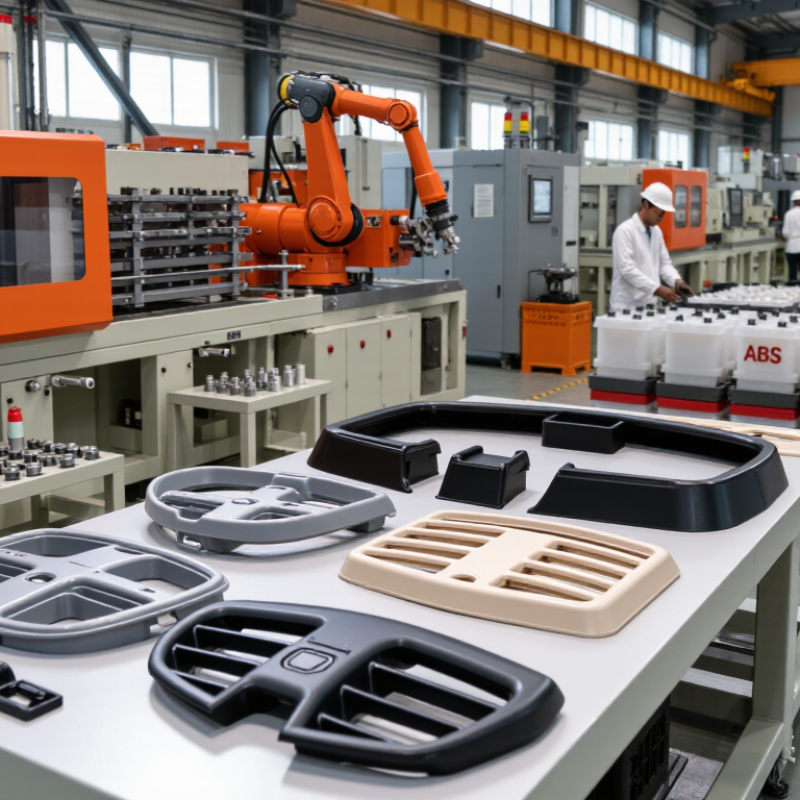
China Top Automotive Plastic Injection Molding Companies?

Automotive Plastic Injection Molding in China: Industry Landscape

Automotive Plastic Injection Molding in China: Industry Landscape

China’s automotive molding sector draws on a broad network of mold makers, resin suppliers, and production facilities. Companies serve needs ranging from interior trim and console parts to clips, housings, and under-hood components. Capabilities vary widely. Some suppliers focus on high-volume production, while others handle complex tooling or smaller development runs. Buyers should assess process control, engineering support, and experience with the specific part—not just equipment lists. A polished factory tour is useful, but it cannot replace production records.

Tips: Ask how mold trials are documented. Check sample dimensions, surface finish, and defect limits. Discuss resin traceability and change control before approving a tool. Small details matter.

For automotive programs, stable output depends on more than a well-designed mold. Gate placement, cooling balance, material drying, and cycle settings can affect appearance and fit. Suppliers should explain how they monitor these variables and respond when results drift. Request a clear plan for validation, inspection, and corrective action. The picture is not perfectly uniform; communication and documentation can be uneven. Build time for technical review, and verify claims against samples and recorded process data.

Common Processes and Materials Used in Automotive Molding

Automotive plastic molding starts with the part’s job, not a resin catalogue. A dashboard vent needs accurate edges and smooth movement; an under-hood clip must handle heat, vibration, and fluid contact. Standard injection molding suits high-volume housings, trim, and clips, producing fine ribs and mounting details. Tool temperature, gate location, and cooling time influence shrinkage and surface finish.

Small changes matter.

Insert molding can secure metal bushings inside a plastic part, while overmolding adds a softer grip or seal. Gas-assisted molding may help create hollow sections with less material, though tooling and process control become more demanding.

Polypropylene is common for trim and housings because it is lightweight and resists many chemicals. ABS and PC/ABS are used where impact strength and appearance matter; polyamide can suit warmer, mechanically loaded areas, but moisture may affect its dimensions.

Material choice needs testing. A resin that works in a cabin may fail near an engine. Engineers should check temperature, chemical exposure, wall thickness, and expected loads using actual part conditions. Simulation helps, but it cannot replace inspection of molded samples.

One easy detail to overlook: a sharp corner can concentrate stress.

Leading Chinese Automotive Plastic Injection Molding Companies

Leading Chinese automotive plastic injection molding companies distinguish themselves through process control, not machine size alone. Their work may include instrument panels, door components, HVAC housings, and under-hood covers, where fit and heat resistance matter. A capable supplier reviews resin selection, wall thickness, gate location, and production volume before cutting steel. Mold-flow analysis can flag air traps or uneven cooling, but it cannot replace a trial run. Small details matter. Ask how teams record tool changes, manage material lots, and check dimensions across shifts.

A useful assessment includes more than a sample part. Request evidence from a recent production trial: cycle-time records, measurement results, defect trends, and corrective actions. Check whether engineering, tooling, molding, and quality staff communicate directly when designs change. That takes discipline. Also consider spare-part support, preventive maintenance, and the supplier’s ability to scale without sacrificing consistency. Presentations can look flawless; factory conditions are less tidy. A visit may reveal bottlenecks, and a reliable supplier should explain them clearly. No single company suits every program, so compare technical fit, transparent records, and response speed against your part requirements.

Products and Capabilities of Major Suppliers

China’s automotive plastic injection molding suppliers make a broad range of parts, from dashboard trim and door panels to clips, ducts, and electrical housings. Capabilities vary by factory. Some focus on high-volume, small components; others handle larger visible parts with tighter surface-finish requirements. Small parts matter. A loose clip can create noise that drivers notice every day.

Common processes include insert molding, multi-material molding, and overmolding for soft-touch surfaces. Suppliers may also offer mold design, tooling trials, color matching, and assembly. For a new part, useful checks include mold-flow analysis, dimensional inspection, and tests for heat, impact, and chemical resistance. Ask how measurements are recorded and how mold wear is monitored. Details count.

A polished brochure can make production seem simpler than it is. In practice, resin choice, gate location, cooling, and wall thickness can all affect warpage or visible sink marks. Not every supplier has the same testing equipment or experience with the same part geometry. Buyers should compare sample parts, process records, and corrective-action methods—not just quoted cycle times. Even then, early samples may not reveal every production issue. A small pilot run can expose problems before volumes rise.

Representative Densities of Automotive Injection-Molding Plastics

Typical densities for unfilled resin grades, in g/cm³. These materials serve different automotive applications, from lightweight interior trim to durable engineering components. Actual values vary by grade and formulation; this chart describes materials, not supplier performance.

Criteria for Comparing Automotive Molding Manufacturers

When comparing automotive molding manufacturers, look beyond quoted part prices. The U.S. Department of Energy reports that a 10% reduction in vehicle weight can improve fuel economy by 6–8%. That makes material selection, wall thickness, and dimensional control practical comparison points, not just engineering details. Ask how suppliers validate resin performance, manage shrinkage, and inspect critical dimensions across production runs.

Production readiness matters. Compare mold design reviews, trial schedules, cavity balancing, and documented process controls. Grand View Research valued the global automotive plastics market at USD 32.15 billion in 2023 and projected 6.5% annual growth from 2024 to 2030. Rising demand makes capacity and change control worth checking. Request evidence such as capability studies, defect records, and traceability from resin lot to finished component. Numbers help.

Also assess engineering support and delivery resilience. Can the team explain how it handles a warped sample, a late design change, or a tool repair? Review backup equipment, maintenance plans, and realistic lead times rather than accepting a best-case schedule. A scorecard can still miss shop-floor realities. Visit the facility when possible, and observe how operators record process adjustments. One awkward detail may matter: a clean presentation does not prove stable production.