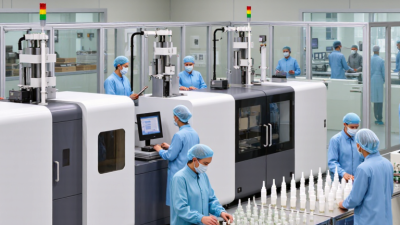

How to Choose a Medical Injection Moulding Supplier
Choosing a medical injection moulding supplier is more than comparing prices or reviewing a polished capabilities brochure. The choice can affect part consistency, production readiness, and the records available when a design or process changes. Small details matter: a resin lot number, a cavity’s surface finish, or a clear explanation of inspection methods. They matter.
A dependable supplier should be able to discuss material selection, tooling design, process validation, traceability, and production capacity in specific terms. Ask how operators monitor critical dimensions, manage nonconforming parts, and document changes. Request relevant quality-system records, such as ISO 13485 certification when appropriate, and confirm that the supplier’s experience matches your device and production needs. Claims deserve verification. A confident sales presentation is not evidence of stable output.
There is no perfect scorecard. A supplier with advanced equipment may still be a poor fit if communication is slow or responsibilities are unclear. Conversely, a smaller manufacturer may offer useful attention but lack the capacity your launch requires. This guide outlines practical questions for comparing candidates, checking their evidence, and spotting gaps before they become expensive surprises. Some trade-offs will remain. The goal is not to find a flawless partner, but one whose capabilities, controls, and limitations are understood before production begins.
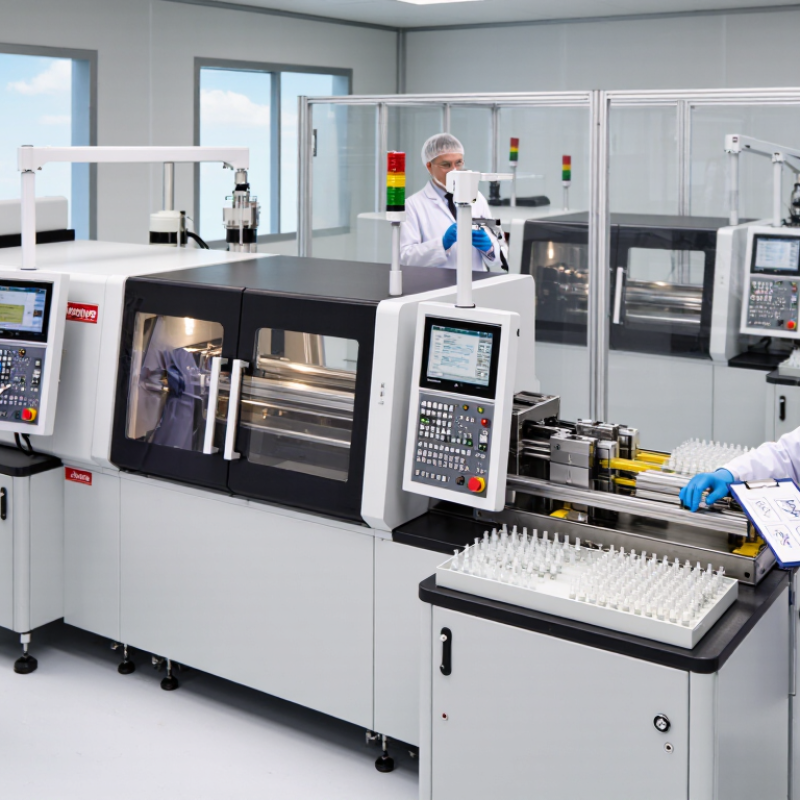
Define the Medical Device Requirements and Regulatory Scope
Before comparing suppliers, define what the molded part must do within the medical device. A small connector may need to hold pressure, while a housing may mainly protect electronics. Specify dimensions, tolerances, expected production volume, and the loads or fluids the part may encounter. Be precise. Small details matter.
Select materials according to intended use, not just a familiar resin name. Record whether the part contacts tissue, medication, or only an external surface, and for how long. Consider cleaning, sterilization, and aging conditions; these can affect strength, color, and fit. A resin that works in a prototype may behave differently after repeated sterilization. It is worth checking.
Define regulatory scope by target market, device classification, and relevant documentation and quality requirements. Confirm specifics with qualified regulatory personnel, since obligations depend on the device and its intended use. Ask potential suppliers how they manage material traceability, lot records, process changes, validation, and inspection evidence. Request examples of relevant experience without seeking confidential customer files. Early specifications are often imperfect. Mark assumptions, especially sterilization method and annual volume, and revisit them as the design matures.
How to Choose a Medical Injection Moulding Supplier: Define Device Requirements and Regulatory Scope
FDA review-time goals are measured in FDA days and are not estimates of total elapsed time; review pauses and current FDA goals can affect timelines. The appropriate pathway depends on the device’s intended use, risk, and regulatory context. Define these requirements, along with material, patient-contact, and sterilization needs, before assessing a moulding supplier’s capabilities.
Assess Supplier Expertise in Medical-Grade Injection Moulding
A capable medical injection moulding supplier can do more than quote cycle times and tooling costs. Ask for evidence. Ask how the team selects resins, manages drying, and controls mould temperature for the intended device. A useful answer links each setting to a risk, such as short shots, flash, or material degradation. Engineers should also explain how they handle design changes without losing part history. Discuss process qualification, acceptance criteria, and what changes may require revalidation. If every response sounds perfect, probe further.
Review process controls, not just equipment lists. Request examples of inspection plans, measurement methods, and lot traceability from resin receipt through shipment. Small details matter. Ask whether operators document start-up checks and what happens when a cavity produces an out-of-spec part. A cleanroom may be appropriate, but its value depends on contamination risks and handling steps. During a visit, watch how samples are labelled and whether gauges have current calibration records. No supplier is flawless; the useful sign is a team that shares limitations and corrective actions plainly. That candour deserves weight.
Review Quality Systems, Cleanroom Controls, and Traceability
How to Choose a Medical Injection Moulding Supplier
Review Quality Systems, Cleanroom Controls, and Traceability
A capable medical injection moulding supplier should show how its quality system works on the production floor. Ask to see validation records, change-control procedures, and examples of nonconformance investigations. A certificate alone cannot show whether operators follow procedures during a busy shift. That matters.
Cleanroom claims need measurable evidence. ISO 14644-1:2015 sets an ISO Class 7 limit of 352,000 particles, 0.5 micrometres or larger, per cubic metre. Ask how the supplier monitors particle counts, manages gowning, and responds to excursions. WHO’s 2017 surveillance report estimated one in ten medical products in low- and middle-income countries is substandard or falsified. This broad estimate is not moulding-specific, but it underlines why supplier controls matter.
Traceability should connect each finished component to its resin lot, machine, mould cavity, production date, and inspection results. Request a sample batch record, then test whether staff can retrieve the relevant records quickly. Small gaps travel. A tidy spreadsheet may still miss a resin substitution or an undocumented process adjustment. Ask how electronic and paper records are reconciled, and whether corrective actions are checked for effectiveness. No system is flawless; the important question is whether problems are visible and investigated.
Compare Design Support, Production Capacity, and Validation Processes
A medical injection moulding supplier should contribute before the first tool is cut. Ask engineers to review wall thickness, draft angles, gate locations, and material choices against the part’s intended use. A design-for-manufacturing review can expose sink marks or difficult ejection early. Useful evidence includes marked-up drawings, documented design changes, and sample parts measured against agreed tolerances. A polished presentation is not enough.
Capacity needs proof, not promises. Grand View Research’s Medical Injection Molding Market report estimated the market at about US$22 billion in 2023 and forecast continued growth through 2030. That trend makes questions about available presses, validated production space, tooling maintenance, and backup plans practical. Ask for real production schedules and recent process-capability data. Ask for evidence. For validation, review documented installation, operational, and performance qualification, plus lot traceability and change control. FDA process-validation guidance stresses validating processes when later inspection cannot fully verify the result. Match the supplier’s controls to your product’s risk and cleanliness needs; a cleanroom is not automatically necessary for every part. A short pilot run can reveal issues that paperwork misses. Sometimes, the first plan needs revision.
Evaluate Costs, Risk Management, and Long-Term Supplier Fit
Choosing a medical injection moulding supplier means looking beyond the quoted part price. Ask for a cost breakdown covering tooling, material, inspection, packaging, and expected maintenance. A low initial quote may not include the work needed to control variation. Request sample production records and clarify how changes to resin, tooling, or process settings are reviewed. For a molded component, even a small dimensional shift can affect assembly or performance.
Risk management should be visible in daily practice. Ask how the supplier identifies critical dimensions, handles nonconforming parts, and maintains lot traceability. Review examples of process validation and equipment maintenance records, not just polished capability statements. These checks cannot remove every risk. They can show whether the supplier notices problems early and documents decisions clearly. A spreadsheet can simplify comparisons, but it may miss the value of responsive engineering support. I have seen that trade-off underestimated.
Tips: Compare total ownership costs, not unit price alone. Ask who owns and maintains the tooling. Confirm how quickly the supplier reports a quality issue. Discuss capacity for future demand, staff training, and continuity plans. Then assess communication during a difficult scenario, such as a delayed material shipment. The answer may be imperfect; pay attention to how openly limits are explained. A long-term fit depends on consistent evidence, candid conversations, and practical follow-through.
How to Choose a Medical Injection Moulding Supplier – Evaluate Costs, Risk Management, and Long-Term Supplier Fit
Illustrative comparison: The anonymized supplier profiles and figures below are planning estimates, not verified quotes or supplier-specific claims. Cost assumptions are for a hypothetical validated medical component at approximately 250,000 units per year; actual costs depend on part geometry, resin, tolerances, tooling, validation scope, and region. Verify all certifications, capabilities, and estimates directly during supplier qualification.
| Evaluation dimension | Supplier A Established medical moulder |
Supplier B Cost-focused regional moulder |
Supplier C High-volume specialist |
Supplier D Development-focused moulder |
|---|---|---|---|---|
| Indicative tooling investment | $90,000–$150,000 | $65,000–$115,000 | $110,000–$180,000 | $75,000–$130,000 |
| Indicative piece price at assumed volume | $0.38–$0.62 | $0.30–$0.52 | $0.34–$0.55 | $0.42–$0.70 |
| Validation and transfer planning | Typically quoted separately; confirm IQ/OQ/PQ scope and acceptance criteria | Confirm validation documentation, engineering support, and responsibility split | Confirm process-validation schedule and capacity for qualification lots | May offer close development support; define when development work becomes production scope |
| Indicative tooling lead time | 12–18 weeks | 10–16 weeks | 16–24 weeks | 10–18 weeks |
| Quality-system evidence to verify | Verify current ISO 13485 certificate scope, audit history, CAPA effectiveness, and device-record controls | Verify certification status and scope; review procedures, training records, and internal audit evidence | Verify site-specific certification, process controls, and quality support across shifts | Verify whether the quality system covers both development activities and routine production |
| Traceability and material control | Request lot-level resin traceability, component genealogy, retention periods, and recall records | Check resin identity, supplier controls, lot segregation, and traceability through shipment | Check high-volume lot controls, material-change notification, and records retrieval time | Confirm development samples and production lots use controlled, traceable materials |
| Business-continuity exposure | Assess alternate presses, backup utilities, disaster recovery, and recovery-time targets | Assess financial resilience, critical equipment redundancy, and dependence on key personnel | Assess capacity allocation, site concentration, and contingency plans for demand spikes | Assess production capacity after development handoff and plans for scaling or staff turnover |
| Engineering and change control | Confirm written approval process for tooling, process, material, and sub-tier changes | Confirm change-notification timelines and customer approval before implementation | Confirm changes can be controlled consistently across production lines and shifts | Confirm design-for-manufacture input, design ownership, and controlled transfer to production |
| Best potential fit | Programs prioritizing established medical-device quality processes and mature production controls | Cost-sensitive programs where quality-system evidence and continuity risks are thoroughly addressed | Stable, higher-volume demand that can use dedicated capacity and repeatable processes | Newer designs needing close engineering collaboration before production scale-up |
| Key diligence question | Can the supplier demonstrate comparable validated processes and sustained performance? | Do lower quoted costs include the required controls, documentation, and ongoing support? | Will capacity remain available as other customer demand changes? | Can development capability transition into reliable, validated serial production? |
Decision guidance: Compare total cost of ownership rather than unit price alone. Include tooling ownership and maintenance, validation, inspection, packaging, logistics, change control, and the cost of supply interruption. Treat ISO 13485 certification as evidence to verify—not as a substitute for a site audit, product-specific risk review, or documented supplier qualification.
Related Posts
-
2026 Best Medical Injection Moulding Companies?
-

2026 Best Medical Plastic Injection Molding Companies
-
10 Essential Tips for Successful Medical Injection Molding Process
-
Exploring Innovative Alternatives to Mold Plastic Injection in Modern Manufacturing: Trends and Insights
-
China Top 10 Injection Molding Manufacturers to Learn From
-

Why Automotive Plastic Injection Molding is Essential for Modern Manufacturing